In chiropractic and rehabilitative care settings, accurate procedural coding is essential for clear documentation, compliant billing, and proper reimbursement. One commonly used but often misunderstood code is CPT Code 97530, which relates to therapeutic activities aimed at improving functional performance.
Because chiropractic visits frequently include movement-based therapy, functional training, and task-oriented exercises, CPT 97530 plays an important role in capturing the work performed during these encounters. In this article, our team at Healthsure Hub explains what CPT Code 97530 means, how it’s used in chiropractic care, documentation requirements, and common billing pitfalls to avoid.
What Is CPT Code 97530?
CPT Code 97530 is used to report therapeutic activities that involve direct, one-on-one patient contact and are designed to improve functional performance. These activities typically focus on dynamic movements that simulate real-life tasks, such as lifting, reaching, pushing, pulling, balance training, or transitional movements.
Unlike passive treatments, the 97530 CPT code reflects active participation by the patient and skilled instruction by the provider. The code is billed in 15-minute units and requires constant attendance by the clinician during the activity.
In chiropractic settings, CPT 97530 is often used alongside spinal manipulation or other therapeutic services when functional rehabilitation is part of the treatment plan.

When Is CPT Code 97530 Used in Chiropractic Care?
CPT 97530 may be appropriate in chiropractic care when treatment includes functional, task-oriented activities rather than isolated exercises or passive modalities. These services are intended to help patients restore or improve their ability to perform daily activities.
Common chiropractic scenarios where CPT 97530 may be used include:
- Functional lifting or carrying retraining
- Balance and coordination activities
- Postural reeducation involving dynamic movement
- Work-related or activity-specific movement training
- Transitional movement training (e.g., sit-to-stand, bending mechanics)
The key factor is that the activity must be therapeutic and functional, not purely strengthening or stretching.
CPT Code 97530 vs. 97110: Key Differences
CPT Code 97530 is frequently confused with CPT 97110, but the two codes represent different types of therapeutic services.
CPT 97530 (Therapeutic Activities)
This code focuses on functional, dynamic activities that replicate real-world tasks. Movements are typically multi-joint and goal-oriented, aimed at improving the patient’s ability to perform daily or work-related activities.
CPT 97110 (Therapeutic Exercise)
This code is used for isolated exercises intended to improve strength, range of motion, endurance, or flexibility. Exercises are often repetitive and not necessarily tied to functional tasks.
Choosing the correct code depends on the intent of the treatment and how it is documented in the clinical record.
Documentation Requirements for CPT Code 97530
Clear documentation is critical when billing CPT 97530, especially in chiropractic practices where audits and denials are common.
Documentation should include:
- A description of the specific therapeutic activities performed
- The functional goal of the activity
- How the activity relates to the patient’s condition or limitations
- Total time spent performing therapeutic activities (in 15-minute increments)
- Confirmation of direct one-on-one provider involvement
- Patient response or progress during the activity
Generic statements such as “performed therapeutic activities” are often insufficient. The record should clearly explain what the patient did and why it was clinically necessary. Such documentation lapses are often reflected in broader trends of medical billing inefficiencies, as seen in industry statistics on common billing issues.
Documentation should also clearly connect the therapeutic activities to the patient’s diagnosed condition, such as functional exercises performed to address cervical mobility or postural limitations related to a neck pain diagnosis (ICD-10 M54.2) when no more specific cervical condition is documented.
Common Billing Errors With CPT Code 97530
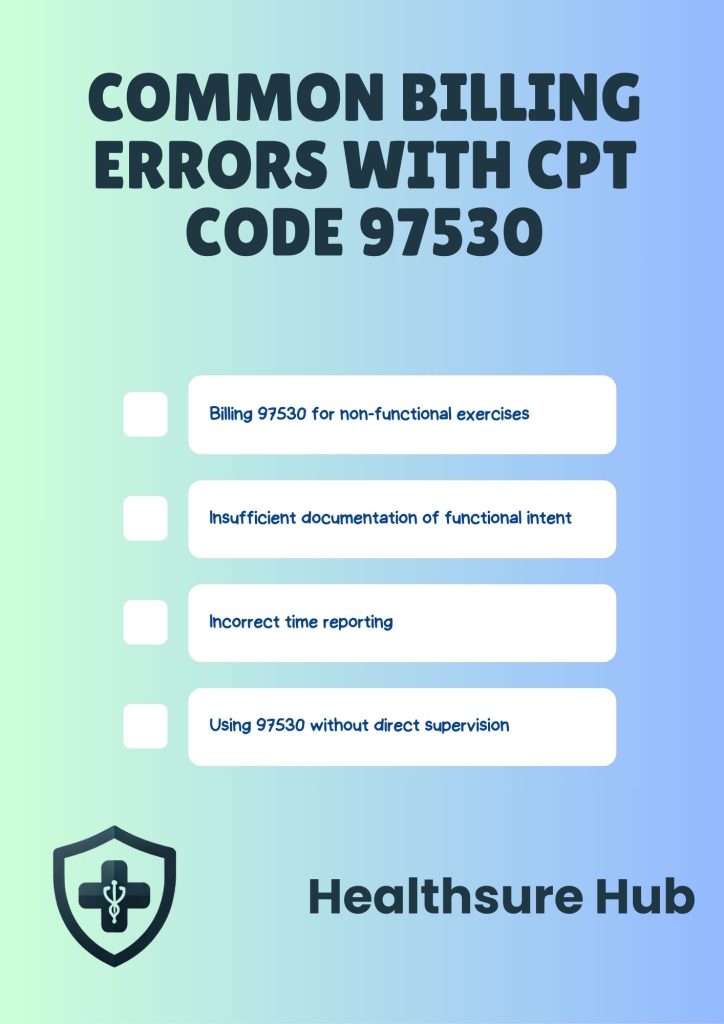
Even experienced practices can make mistakes when using CPT Code 97530. Some of the most common issues include:
Billing 97530 for non-functional exercises
If the activity is primarily strengthening or stretching, CPT 97110 may be more appropriate than 97530.
Insufficient documentation of functional intent
Failing to connect the activity to a real-world task or functional goal can lead to claim denials.
Incorrect time reporting
CPT 97530 must be billed in 15-minute units, and time must be clearly documented to support the number of units reported.
Using 97530 without direct supervision
This code requires constant attendance by the provider; it cannot be billed for unsupervised or group activities.
Can CPT Code 97530 Be Billed With Other Chiropractic Services?
CPT Code 97530 can sometimes be billed alongside other services, such as chiropractic manipulative treatment (CMT), as long as:
- Each service is distinct and medically necessary
- Proper documentation supports both services
- Appropriate modifiers are used when required
- The services are not overlapping or duplicative
Payers may closely review claims that include multiple timed therapy codes, making accurate documentation especially important.
Conclusion
CPT Code 97530 is an important billing code in chiropractic care when treatment includes functional, task-based therapeutic activities that require skilled, one-on-one provider involvement. Understanding when to use the 97530 CPT code, how it differs from therapeutic exercise codes, and how to document services properly can help chiropractic practices improve coding accuracy and reduce billing errors.
By aligning documentation with functional goals and clearly describing therapeutic activities, providers can support compliant use of CPT Code 97530 while accurately reflecting the care delivered during chiropractic visits.
About the Author