Foot pain is one of the most common complaints in medical practice, affecting millions of adults worldwide. Accurate documentation of this symptom is essential for effective treatment, proper insurance claims, and reliable health records. In medical coding, the ICD-10 code M79.672 refers to a particular pain in the foot.
Whether you are a clinician, medical coder, or patient seeking information, Healthsure Hub’s thorough explanation and understanding of this code is crucial for proper healthcare management.
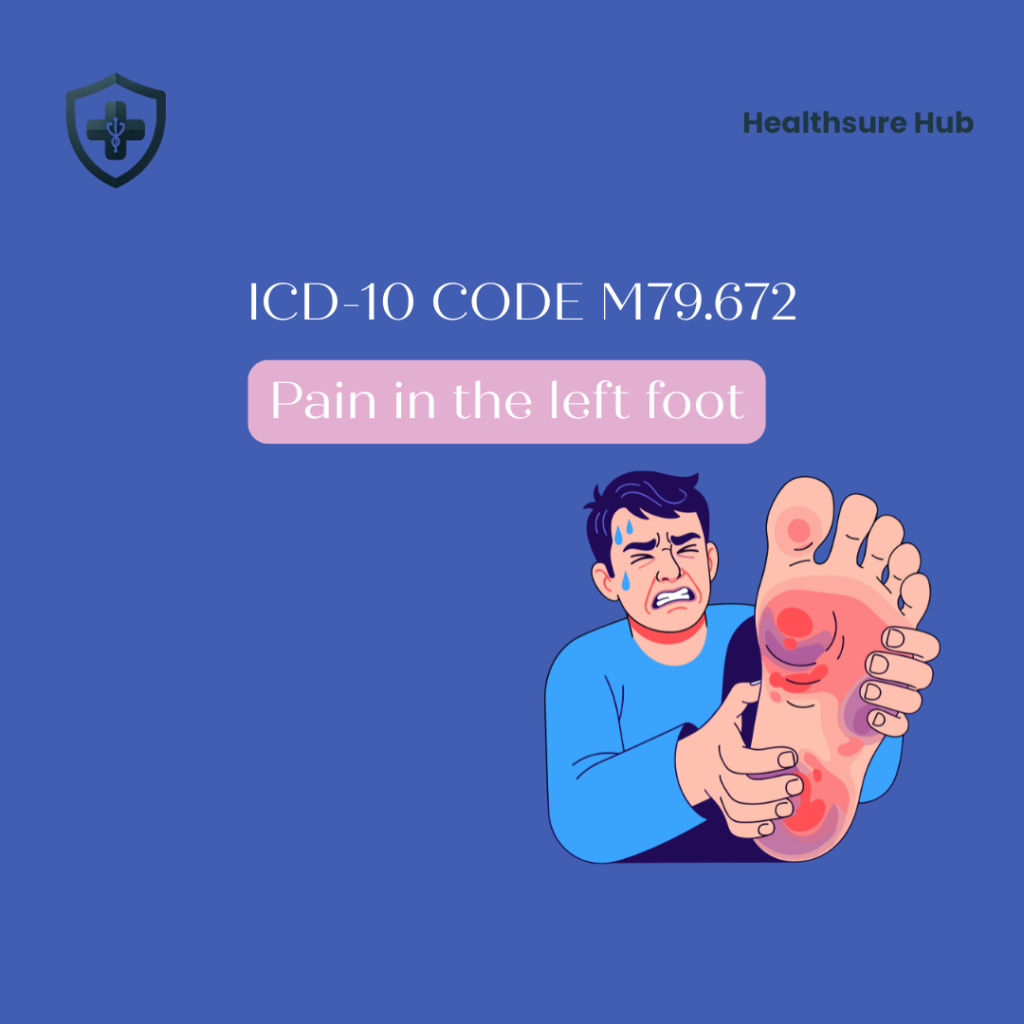
What is ICD-10 Code M79.672?
The International Classification of Diseases, 10th Revision (ICD-10) is a standardized system used globally to code diseases, symptoms, and medical conditions. M79.672 specifically refers to pain in the left foot.
It is important to note that this is a symptom code, meaning it describes what the patient feels rather than the underlying diagnosis. The actual cause of the pain may vary, including injuries, inflammation, or nerve conditions.
Using the correct ICD-10 code ensures accurate documentation in electronic health records (EHRs) and supports seamless processing of insurance claims.
Breaking Down the ICD-10 Code M79.672
Understanding each component of M79.672 can help healthcare providers, coders, and patients interpret it accurately:
| Code Segment | Meaning |
| M79 | Diseases of the musculoskeletal system and connective tissue, specifically “other soft tissue disorders, not elsewhere classified.” |
| .672 | Denotes pain located in the left foot. |
For comparison, M79.671 is used for right foot pain, illustrating how ICD-10 coding accounts for laterality. This breakdown clarifies the symptom’s type and location, which is essential for precise medical records and billing.
Foot Pain Trends in 2025: Why Accurate Coding Matters
Foot pain continues to affect a substantial portion of the adult population, reinforcing its importance as a frequently documented symptom in clinical settings. Recent surveys indicate that more than four out of five adults in the United States report experiencing foot discomfort at some point in their lives, a figure that has remained consistently high over the years
More notably, foot pain is no longer just a long-term issue. Nearly two-thirds of adults report experiencing foot pain within the past year, reflecting a growing number of recent or acute cases compared to prior periods. Chronic discomfort also remains prevalent, with a significant portion of individuals reporting symptoms lasting several years, and a smaller but notable group living with foot pain for over a decade.
As foot pain remains both widespread and multifactorial, precise ICD-10 coding, such as using M79.672 for left foot pain when no definitive diagnosis is established, becomes essential for accurate medical records, effective treatment planning, and clean insurance claims.
Symptoms Associated with Left Foot Pain
Patients with left foot pain may experience a variety of symptoms, which can range from mild discomfort to debilitating pain:
- Sharp, burning, or throbbing pain in the foot or heel.
- Swelling or tenderness, making walking or standing difficult.
- Stiffness or limited mobility, sometimes affecting balance.
The symptoms may be constant or intermittent, worsening with prolonged standing, walking, or physical activity.
When to Use ICD-10 Code M79.672
The ICD-10 code M79.672 should be used when a patient presents with pain localized to the left foot and the underlying cause has not yet been clearly identified or is being evaluated. It is appropriate in situations where foot pain is the primary complaint, such as during an initial clinical encounter, follow-up visits for ongoing symptoms, or when documenting nonspecific left foot pain that does not meet criteria for a more definitive diagnosis. This code is commonly applied in outpatient visits, emergency settings, and primary care evaluations when the symptom itself requires documentation.
When Not to Use ICD-10 Code for Pain in Left Foot
ICD-10 code for left foot pain should not be used when a more specific diagnosis has been established. If the pain is attributable to a confirmed condition such as a:
- Fracture
- Plantar fasciitis
- Arthritis
- Infection
- Nerve disorder
The corresponding diagnosis code should be reported instead. Likewise, this code should not be used when the pain is part of a broader, already-documented condition affecting another anatomical site or when laterality is incorrect. Accurate selection ensures proper clinical documentation, avoids claim denials, and supports appropriate treatment planning.
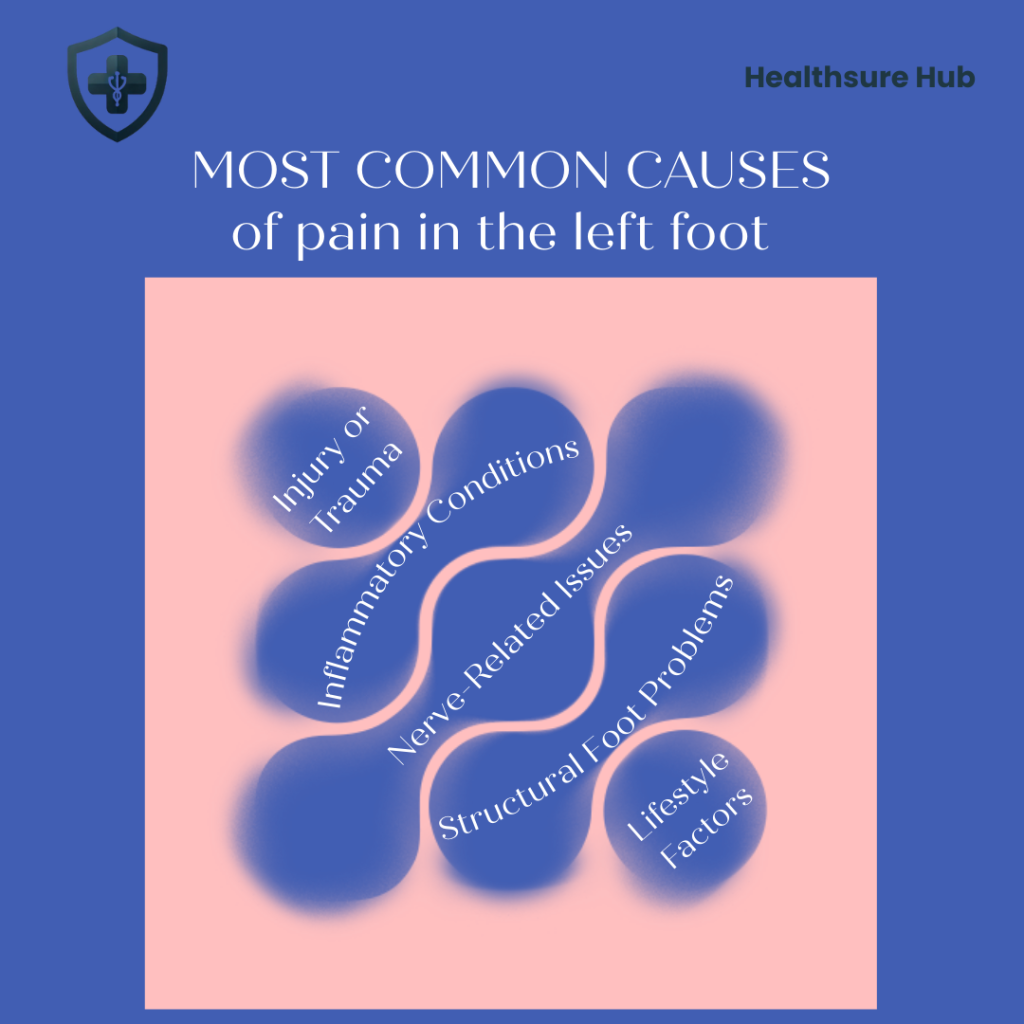
Common Causes of Pain in the Left Foot
Understanding potential causes helps both patients and providers address the problem effectively. Some frequent causes include:
- Injury or Trauma: Sprains, fractures, or contusions from accidents or sports activities.
- Inflammatory Conditions: Plantar fasciitis, tendinitis, or gout causing localized pain and swelling.
- Nerve-Related Issues: Peripheral neuropathy, tarsal tunnel syndrome, or nerve entrapment.
- Structural Foot Problems: Flat feet, bunions, or foot misalignment leading to chronic discomfort.
- Lifestyle Factors: Obesity, prolonged standing, or wearing ill-fitting shoes can exacerbate foot pain.
Accurate evaluation is essential, as the code identifies the symptom but not root cause. Healthcare providers may use this code while investigating the underlying condition.
Diagnosing Left Foot Pain
Diagnosis usually begins with a detailed medical history and physical examination, followed by tests tailored to the suspected cause:
- Imaging Tests: X-rays, MRI, or ultrasound may reveal fractures, ligament damage, or inflammation.
- Laboratory Tests: Used to detect systemic or inflammatory conditions such as gout or infection.
- Specialist Referrals: Patients may be referred to a podiatrist, orthopedist, or neurologist depending on the symptoms.
By accurately diagnosing the underlying condition, clinicians can provide appropriate care, even as the code documents the symptom in medical records.
Importance of Accurate ICD-10 Coding
Using the correct ICD-10 code for left foot pain has multiple benefits:
- Precise Documentation: Ensures electronic health records reflect the patient’s condition accurately.
- Insurance Processing: Supports proper billing and reduces claim denials.
- Data Tracking: Allows healthcare providers to monitor symptom prevalence, treatment outcomes, and healthcare trends.
Accurate coding also enhances patient safety by minimizing errors in treatment plans and ensuring continuity of care.
Quick Coder Checklist: ICD-10 Code M79.672 (Left Foot Pain)
Why Claims Get Denied for Left Foot Pain ICD-10 Code
Health Insurance claims involving M79.672 may be denied when documentation or coding errors occur. One common reason is insufficient specificity, particularly when laterality is not clearly documented or conflicts with the selected code. Using the ICD-10 code for left fot pain without clearly stating “left foot” in the clinical notes can lead to claim rejection. For example, submitting a M79.671 when the notes clearly show that the pain is the left foot leads to a denied claim.
Claims may also be denied if a more specific diagnosis is documented in the medical record but the symptom M79.672 code is billed instead. Payers expect the most definitive code available at the time of billing. Additionally, lack of supporting clinical details, such as examination findings or medical necessity, can trigger denials.
Ensuring alignment between provider documentation, diagnosis codes, and billed services reduces denial risk and supports timely reimbursement.
Conclusion
The ICD-10 code M79.672 is used to document pain in the left foot, serving as an important symptom code in clinical care and medical billing.
While it does not identify the underlying cause, accurate use of this code supports proper documentation, insurance processing, and continuity of care.
Understanding how M79.672 is applied helps healthcare professionals, coders, and patients ensure clarity and precision in managing left foot pain.
About the Author