Wrist pain is a frequent complaint among adults, athletes, and office workers. Proper documentation and coding of wrist pain are crucial for clinical care, treatment planning, and insurance purposes. M25.531 is the ICD-10 code specifically used to denote pain in the right wrist, allowing clinicians and medical coders to accurately record the symptom while ensuring compliance with billing requirements.
Our team at HealthSure Hub provides a detailed explanation of what the code is and the importance of proper documentation for right wrist pain.
Overview of ICD-10 Code M25.531
The ICD-10 code M25.531 belongs to the “M” chapter, which covers diseases of the musculoskeletal system and connective tissue. This particular entry is used when pain is reported in the right wrist, regardless of etiology.
Unlike codes for fractures, sprains, or inflammatory wrist conditions, M25.531 is symptom-focused. It allows clinicians to document wrist pain when a specific injury, degenerative change, or systemic disorder has not been identified or confirmed.

Breaking Down the Code Structure
Every ICD-10 code is composed of meaningful components. For M25.531:
- M – Musculoskeletal system and connective tissue
- 25 – Other joint disorders, not elsewhere classified
- .53 – Pain in the wrist
- 1 – Right wrist
This structure ensures that medical records consistently identify both the type of symptom (pain) and the affected side (right wrist).
What “Pain in Right Wrist” Means in Documentation
The phrase “pain in right wrist” does not indicate uncertainty that the patient is experiencing discomfort. Instead, it reflects that the symptom is localized to the right wrist, without specifying a particular ligament, tendon, or structural abnormality.
This is particularly common in fast-paced clinical environments, such as urgent care or primary care offices, where initial visits focus on symptom relief, assessment, and ruling out severe injuries before detailed anatomical investigation.
Clinical Scenarios Where M25.531 Is Used
M25.531 is most frequently applied in situations such as:
- Initial visits for wrist discomfort following repetitive strain or minor trauma
- Emergency or urgent care visits where wrist pain is the primary complaint
- Orthopedic evaluations for nonspecific wrist pain without confirmed injury
- Documentation of pain associated with degenerative or inflammatory conditions before further tests
In these scenarios, clinical notes typically emphasize pain intensity, location, functional limitations, and range of motion, rather than identifying a specific tendon, ligament, or fracture.
Common Causes of Right Wrist Pain
Right wrist pain can result from multiple conditions, ranging from acute injuries to chronic systemic issues. Common causes include:
- Trauma and Injury- sprains, ligament injuries, fractures, dislocations, falls, sports injuries, and accidents often lead to acute wrist pain
- Repetitive Strain and Overuse- Carpal tunnel syndrome, tendonitis from typing, sports, or assembly-line work, ganglion cysts causing localized discomfort
- Degenerative Conditions- osteoarthritis of the wrist joint or post-traumatic arthritis following prior injury
- Inflammatory Disorders- rheumatoid arthritis, gout or pseudogout, bursitis affecting wrist tendons
- Systemic and Occupational Factors- diabetes or thyroid conditions contributing to stiffness or neuropathy
Understanding the underlying cause is crucial for subsequent management, documentation, and coding accuracy.
Relationship to Other ICD-10 Wrist Codes
The ICD-10 system includes multiple wrist-related codes. For example:
- M25.532 – Pain in left wrist
- M25.539 – Pain in unspecified wrist
- Specific injury codes (e.g., S63.501A – Sprain of right wrist) are used when anatomical details are known
This structured approach ensures that laterality, symptom type, and injury specifics are consistently recorded, supporting accurate billing, analytics, and patient care.
Importance of Accurate Coding in Insurance and Analytics
Using M25.531 correctly is critical not only for reimbursement but also for healthcare analytics. Accurate coding contributes to:
- Reliable national and institutional data on wrist pain prevalence
- Resource planning and utilization analysis
- Compliance with payer requirements, reducing the risk of claim denials
Healthcare providers and billing professionals must ensure documentation includes laterality, symptom details, and functional limitations to justify the use of this code.
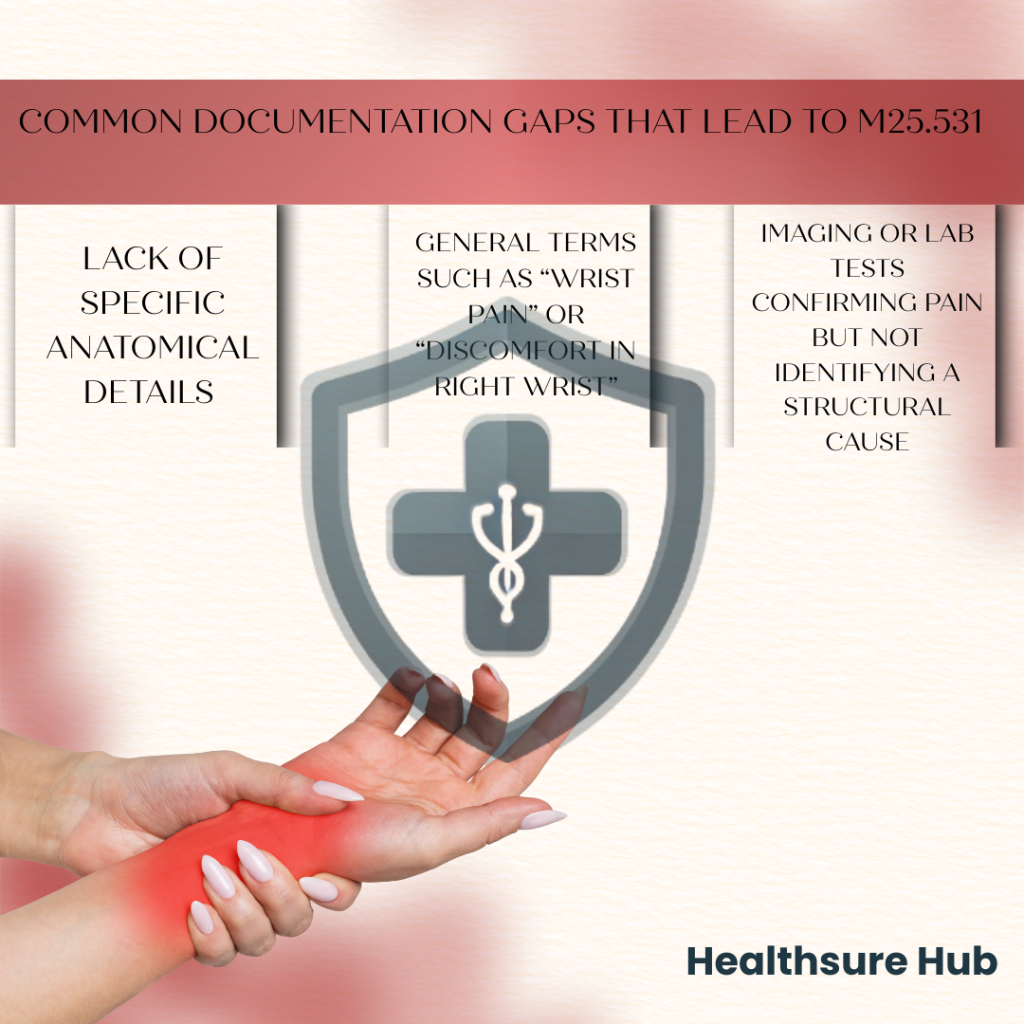
Common Documentation Gaps That Lead to M25.531
M25.531 is frequently selected due to documentation limitations, including:
- Lack of specific anatomical details during initial evaluations
- General terms such as “wrist pain” or “discomfort in right wrist”
- Imaging or lab tests confirming pain but not identifying a structural cause
These gaps are common in real-world practice and do not indicate poor care; they simply reflect situations where symptom management precedes definitive diagnosis.
Conclusion
ICD-10 code M25.531, pain in right wrist plays a critical role in standardizing the documentation of wrist pain when the underlying cause is not fully specified. By encoding laterality and symptom type, this code ensures medical records, insurance claims, and analytics are accurate and consistent.
For clinicians, coders, and patients, understanding M25.531 helps interpret medical records, support reimbursement, and improve continuity of care. Accurate documentation combined with appropriate follow-up ensures wrist pain is evaluated effectively, contributing to better patient outcomes.
About the Author