Falling object injuries are more common than many people realize. From tools slipping off shelves to boxes tumbling from overhead storage, these incidents occur in workplaces, retail environments, construction sites, and even homes. While the injuries themselves may range from minor bruises to serious trauma, accurately documenting how the injury happened is essential for proper medical records, billing, and compliance.
This is where our team at Healthsure Hub explains the ICD-10-CM code W20.8XXA and its critical role in billing and coding.
Understanding ICD-10 Code W20.8XXA
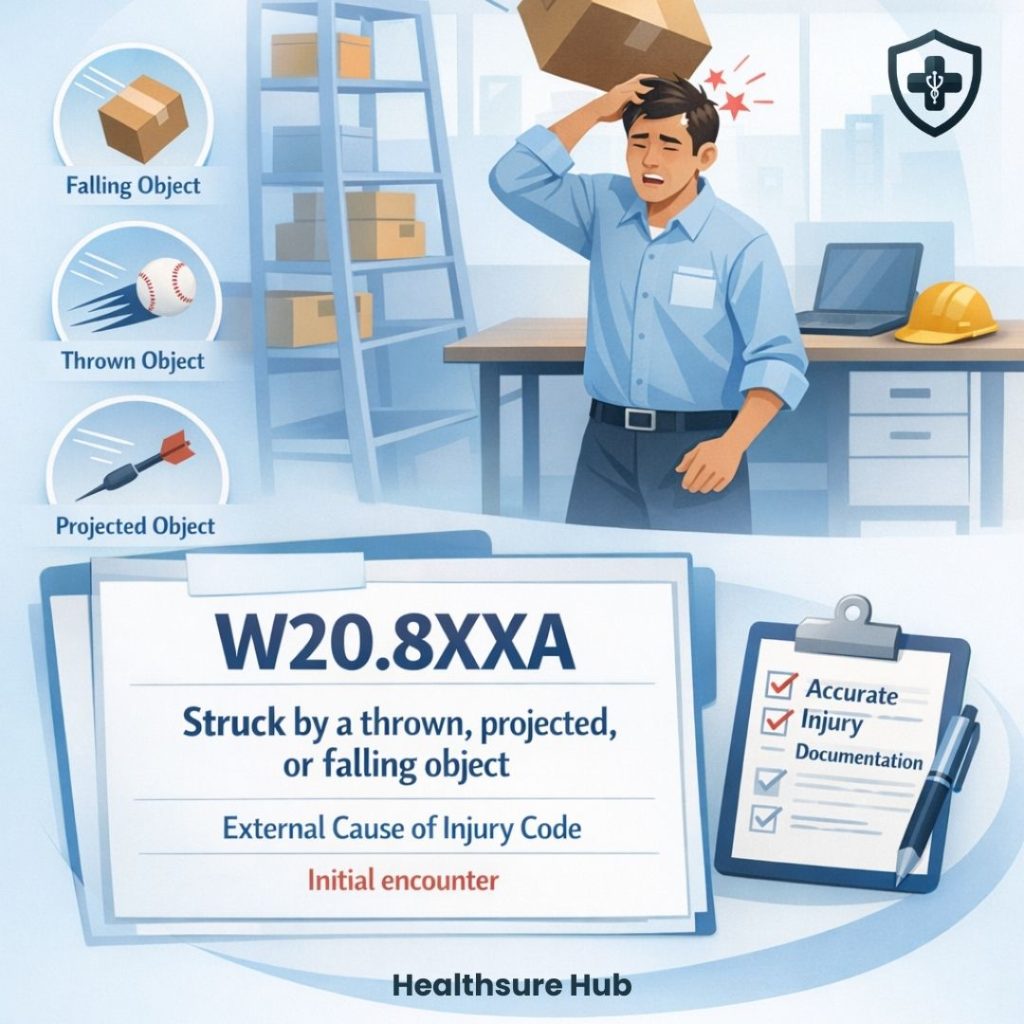
ICD-10 code W20.8XXA is an external cause code used to document injuries sustained when a person is struck by a falling object. The “other” designation applies when the object does not fit a more specific category, such as a ladder or heavy machinery, and the 7th character “A” indicates this is the initial encounter for active treatment.
This code does not describe the injury itself (e.g., fracture or contusion) but captures the mechanism of injury, which is essential for accurate medical documentation, insurance claims, and occupational safety tracking. Pairing W20.8XXA with a specific injury diagnosis ensures compliance and enables workplaces to identify and mitigate hazards effectively.
Initial Encounter Explained: Why the “A” Matters
The 7th character in ICD-10-CM codes communicates the timing of care. The “A” in the code indicates an initial encounter, meaning the patient is receiving active treatment. Active treatment may include:
- Physical examination and evaluation
- Imaging studies
- Wound care or splinting
- Pain management or referrals
Once the patient transitions to routine healing or follow-up care, a subsequent encounter code would be used instead. Accurate encounter selection helps ensure compliance and reduces claim issues.
What Qualifies as an “Other Falling Object”?
In ICD-10 coding, the term “other” is used when the falling object does not fit a more specific W20 subcategory, making accurate documentation essential. W20.8XXA applies to objects that fall due to gravity and strike a person, distinguishing these incidents from collisions, thrown objects, or self-inflicted injuries. Common examples include:
- Tools or equipment dropping from ladders, scaffolding, or elevated work platforms.
- Boxes, merchandise, or inventory falling in warehouses, retail environments, or storage areas.
- Construction materials like lumber, pipes, or loose debris not classified elsewhere.
- Household items such as appliances, cabinets, or items from overhead shelves.
To justify this external cause code, clinical documentation should clearly describe: the object type, source or height, mechanism of the fall, and the body part affected. For instance, a box slipping from a high warehouse shelf and striking the shoulder would qualify, whereas a box thrown or dropped intentionally would not. Precise documentation not only ensures accurate coding and billing but also contributes to workplace safety analysis, helping employers identify and mitigate recurring hazards.
Common Injuries Associated With W20.8XXA
Falling objects can cause a wide range of injuries depending on the object’s weight, height, and point of impact. The code is commonly reported alongside diagnosis codes for:
- Head injuries, concussions, or facial trauma
- Shoulder, arm, wrist, and hand injuries
- Neck and back strain
- Foot and toe injuries
- Soft tissue contusions, lacerations, fractures, or crush injuries
Even seemingly minor incidents may require imaging or follow-up care, making accurate external cause coding important for both clinical and administrative purposes.
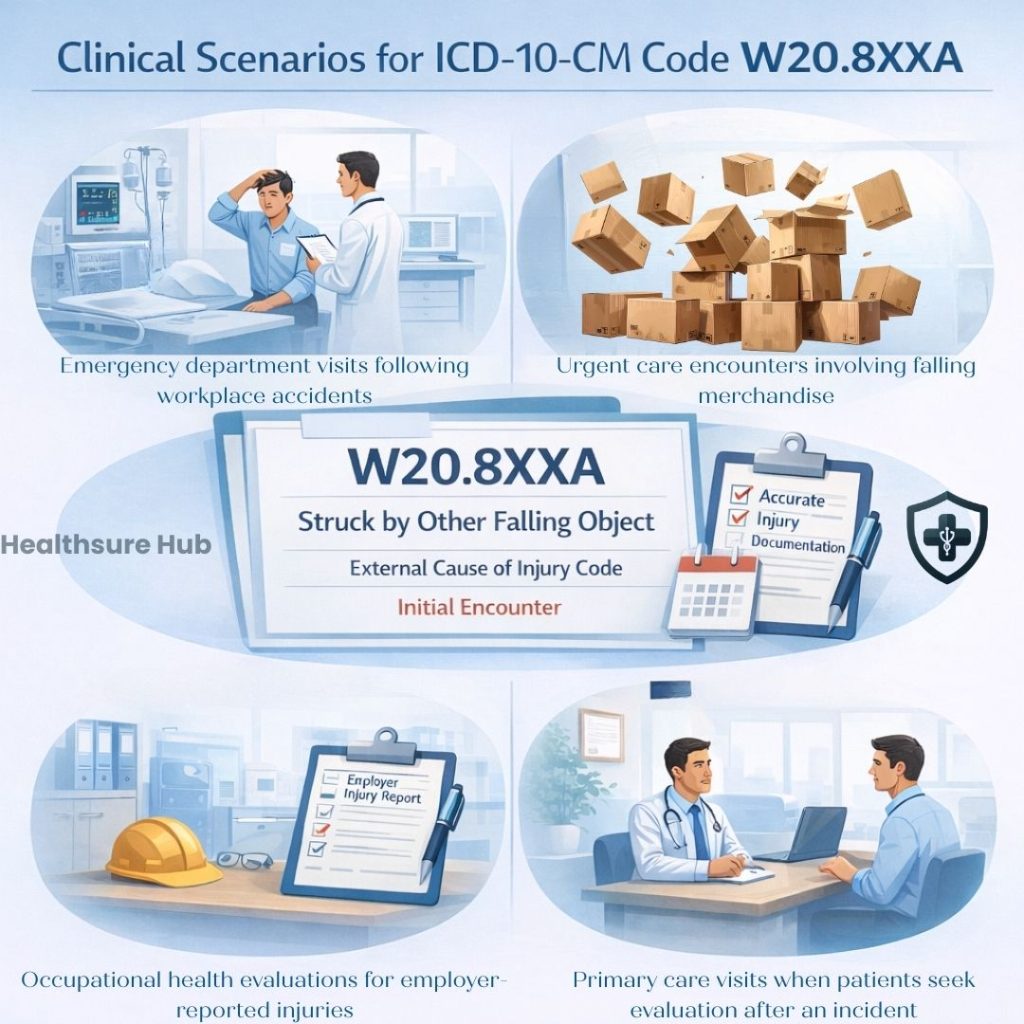
Clinical Scenarios Where W20.8XXA Is Commonly Used
ICD-10 code W20.8XXA is widely applied in clinical settings to document injuries caused by falling objects, particularly in workplaces and high-risk environments.
- Emergency Department Visits – Patients arriving after a workplace accident, such as a construction worker struck by a falling tool, are coded under the external cause code to capture the mechanism of injury. Accurate coding ensures proper billing and supports workers’ compensation claims.
- Urgent Care Encounters – Retail or warehouse employees may seek urgent care after being hit by falling merchandise. Documenting the code alongside the specific injury helps providers convey the severity and context, improving reimbursement and record accuracy.
- Occupational Health Evaluations – Employers reporting incidents to occupational health clinics rely on this ICD-1o code to track workplace hazards. Consistent coding allows organizations to identify patterns, implement preventive measures, and maintain regulatory compliance.
- Primary Care Visits – Even outside immediate accidents, patients may present for evaluation of lingering effects from a falling object incident. The code records the original mechanism, aiding follow-up care and clinical decision-making.
In all scenarios, detailed documentation of the object, environment, and affected body part ensures claims accuracy, injury tracking, and workplace safety improvements.
Documentation Requirements for Accurate Use of W20.8XXA
Strong documentation supports medical necessity, claim approval, and audit readiness. To properly apply the code, records should include:
- A clear description of the falling object
- Circumstances of the incident (workplace, home, public setting)
- Body part(s) affected
- Clinical findings and injury severity
- Confirmation that this is the initial encounter
Incomplete or vague documentation can lead to denied claims or coding inaccuracies.
Why W20.8XXA Matters
Workplace injuries caused by falling objects are more common than many realize, making accurate coding critical for clinical, billing, and safety purposes. According to national data, over 50,000 OSHA-recordable incidents occur each year due to objects falling on workers. That’s around roughly 116 incidents per day. Construction, manufacturing, and warehouse settings are particularly high-risk, with falling tools, boxes, and materials accounting for a significant share of injuries and even fatalities.
ICD-10 code W20.8XXA allows clinicians and coders to document the precise mechanism of injury, differentiating it from collisions or other impact events. Pairing this external cause code with the specific injury diagnosis, such as a fracture or contusion, ensures accurate claims, compliance, and workplace injury tracking. Proper documentation not only supports insurance and compensation claims but also contributes to occupational safety programs, helping employers identify patterns, prevent future incidents, and protect workers from avoidable hazards.
W20.8XXA vs W22.8XXA: Understanding the Key Differences
One of the most common coding challenges is distinguishing between falling object injuries and impact injuries.
- W20.8XXA is used when an object falls onto the patient due to gravity.
For example, if a box falls from a shelf and strikes the patient’s shoulder, it would be billed under the ICD-10 code for being struck by other falling object, initial encounter - W22.8XXA is used when the patient is struck by or collides with an object, but the object does not fall. For example, when a patient walks into a doorframe or is struck by a swinging object.
Selecting the correct code ensures accurate reporting, reduces claim denials in insurance companies, and improves injury tracking.
Common Coding and Billing Errors to Avoid
Despite its straightforward definition, this ICD-10 code is often misused. Frequent errors include:
- Using the code without an associated injury diagnosis code
- Selecting the code when W22.8XXA better describes the incident
- Missing or incorrect 7th character
- Insufficient documentation of how the injury occurred
These mistakes can delay reimbursement and raise compliance concerns.
Conclusion
W20.8XXA is an essential external cause code used to document injuries caused by falling objects during an initial encounter. It should always be paired with a specific injury diagnosis and supported by clear clinical documentation. Understanding how it differs from similar codes, such as W22.8XXA, helps providers and coders maintain accuracy, support claims, and ensure high-quality medical records.
About the Author