A single misstep or sudden pivot can permanently compromise knee stability. Anterior cruciate ligament (ACL) injuries are among the most frequently diagnosed ligament injuries, often leading to pain, instability, and extended recovery. These injuries commonly present in urgent care, sports medicine, or orthopedic clinics, making precise documentation from the first encounter essential.
This is where ICD-10 code S83.511A and our team at HealthSure Hub come in. We explain what the code specifically identifies while supporting accurate classification for treatment, follow-up, and reimbursement.
What Is ICD-10-CM Code S83.511A?
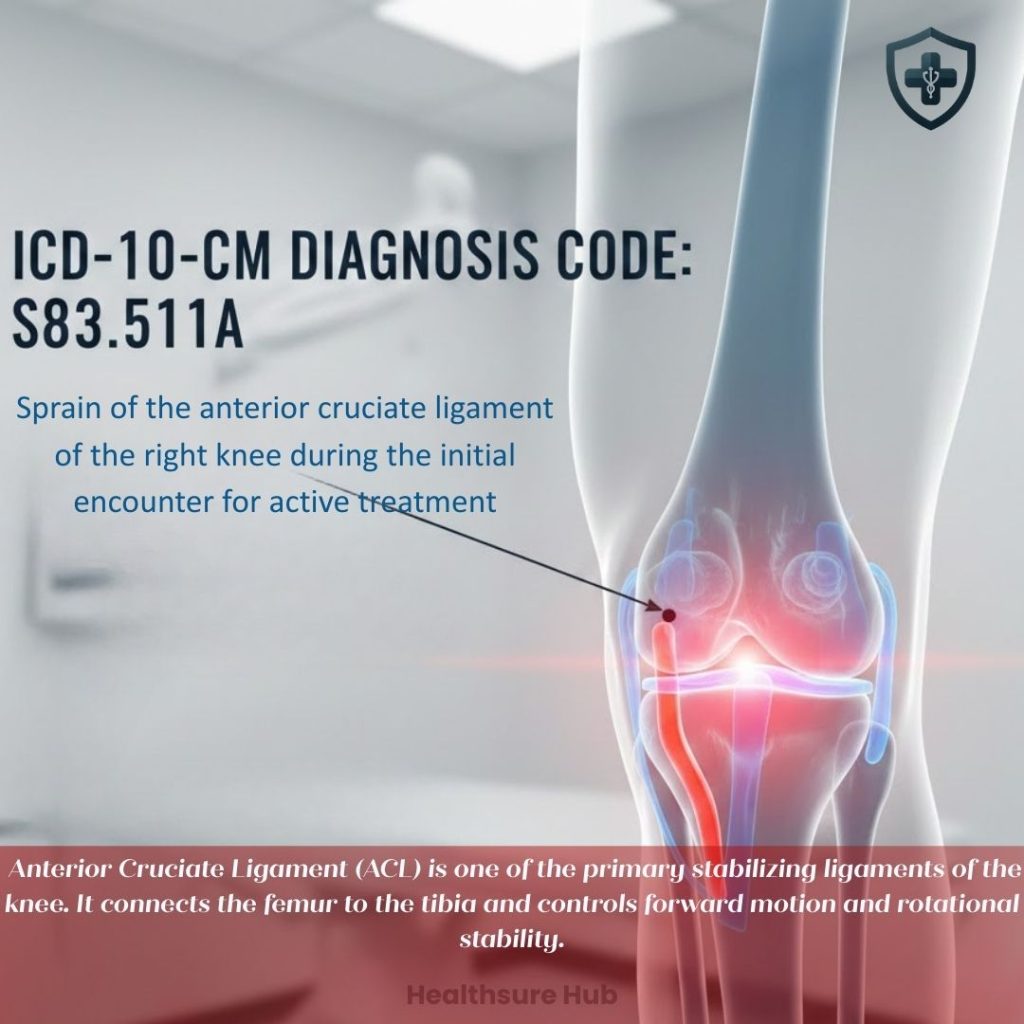
S83.511A is an ICD-10-CM diagnosis code used to report a sprain of the anterior cruciate ligament of the right knee during the initial encounter for active treatment. The breakdown of the code includes:
- S83: Dislocation and sprain of joints and ligaments of the knee
- .511: Specifies injury to the ACL of the right knee
- A: Initial encounter, meaning the patient is receiving active treatment
This code applies to both partial and complete ACL tears when they are documented as sprains and evaluated or treated for the first time.
Initial, Subsequent, and Sequela Encounters Explained
ICD-10-CM requires encounter specificity:
- Initial encounter (A): Active treatment
- Subsequent encounter (D): Routine healing or follow-up care
- Sequela (S): Residual effects such as chronic instability or pain
Using the correct encounter character ensures proper claim processing and accurate injury tracking.
Understanding the Anterior Cruciate Ligament (ACL)
The Anterior Cruciate Ligament (ACL) is one of the primary stabilizing ligaments of the knee. It connects the femur to the tibia and controls forward motion and rotational stability. Damage to the ACL disrupts normal knee mechanics, often resulting in instability during walking, running, or pivoting movements.
ACL injuries are common among athletes but also occur in non-sports settings, such as falls or motor vehicle accidents. Due to the ligament’s essential role, early recognition and management are critical to prevent long-term complications.
Common Causes of ACL Sprains
ACL sprains typically result from non-contact mechanisms, though direct trauma can also be involved. Common causes include:
- Sudden twisting or pivoting motions
- Rapid deceleration or change in direction
- Improper landing from a jump
- Slips, trips, or falls
- Motor vehicle or occupational accidents
For accurate coding, documentation must clearly specify right-knee involvement and identify the ACL as the injured structure.
Clinical Presentation and Symptoms
Patients with an ACL sprain often present with:
- Acute knee pain
- Rapid swelling within hours of injury
- Sensations of instability or “giving way”
- Decreased range of motion
- Difficulty bearing weight
Some patients report an audible or palpable “pop” at the time of injury. Symptom severity may vary depending on whether the tear is partial or complete, but both qualify under S83.511A when treated during the initial encounter.
Coding Guidelines and Documentation Best Practices
S83.511A should be used when:
- The patient is seen for the first time for this ACL injury
- Active evaluation or treatment is provided
- The injury involves the right knee ACL
Documentation should clearly include:
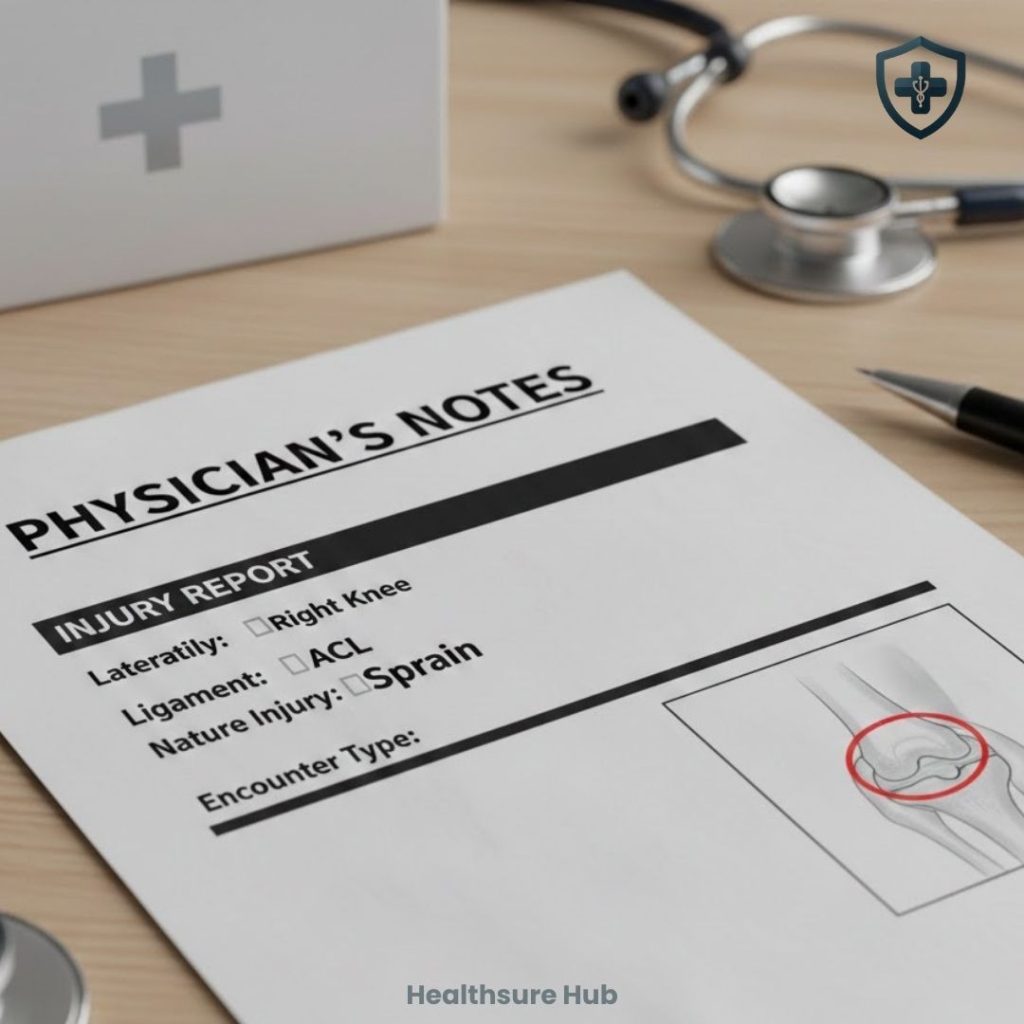
- Laterality (right knee)
- Specific ligament injured (ACL)
- Nature of the injury (sprain)
- Encounter type (initial)
Incomplete or vague documentation increases the risk of claim delays or denials.
Associated and Concurrent Knee Injuries
ACL sprains frequently occur alongside other knee injuries, including:
- Meniscal tears
- Medial collateral ligament (MCL) sprains
- Bone contusions
When documented, these conditions should be coded separately to fully reflect injury severity and complexity.
Why Accurate Use of S83.511A Matters
Correct coding supports:
- Appropriate treatment planning
- Care coordination across providers
- Accurate reimbursement
- Reliable injury data for clinical and public health analysis
For clinicians and coders alike, precise use of S83.511A ensures that right-knee ACL injuries are captured accurately from the first point of care.
Conclusion
S83.511A is a critical ICD-10-CM code used to document an initial encounter for a right-knee ACL sprain. Clear clinical documentation, proper encounter designation, and accurate laterality are essential for effective care delivery and administrative accuracy. When applied correctly, this code supports both patient outcomes and healthcare system efficiency.
About the Author