Did you know that ankle sprains account for up to 40% of sports injuries in adults, yet many go misclassified in medical records? One often overlooked but clinically important category is a sprain of the other ligaments of the right ankle. In medical coding, this injury is represented by ICD-10-CM code S93.491A.
Accurate coding ensures proper treatment, seamless documentation, and smooth insurance claims. Our team at Healthsure Hub breaks down the code, its clinical significance, proper documentation practices, and real-world scenarios where it is applied.
Overview of ICD-10 Code S93.491A
S93.491A belongs to the “S” chapter of ICD-10, which covers injuries to specific body regions. It applies when a ligament in the right ankle other than the main lateral or medial ligaments is sprained, and the patient is receiving active treatment for the first time.
The “A” extension indicates this is an initial encounter, meaning the patient is being seen for the first time for this injury, whether in an emergency department, urgent care, or outpatient setting.

When the Initial Encounter Extension Applies
The “A” extension is used whenever a patient is in the active treatment phase for a right ankle ligament sprain:
- First visit to an emergency department or urgent care after trauma
- Initial orthopedic or podiatric evaluation
- Imaging referrals confirming ligament injury
Visits for rehabilitation, follow-up, or long-term complications use subsequent encounter (D) or sequela (S) codes. Correct use ensures proper treatment tracking and billing compliance.
Breaking Down the Code
| Code Segment | Meaning | Explanation |
| S93 | Injury of ankle and foot | Indicates the general body region affected |
| .491 | Sprain of other ligaments, right ankle | Covers ligaments not otherwise specified, outside main lateral or medial ligaments |
| A | Initial encounter | First active treatment visit |
Related codes for reference:
- S93.492A – Sprain of other ligaments, left ankle, initial encounter
- S93.499A – Sprain of other ligaments, unspecified ankle, initial encounter
- S93.401A – Sprain of lateral collateral ligament, right ankle, initial encounter
Using the correct code ensures accurate documentation, prevents claim denials, and supports clear clinical communication.
What a Sprain of Other Ligaments in the Ankle Means
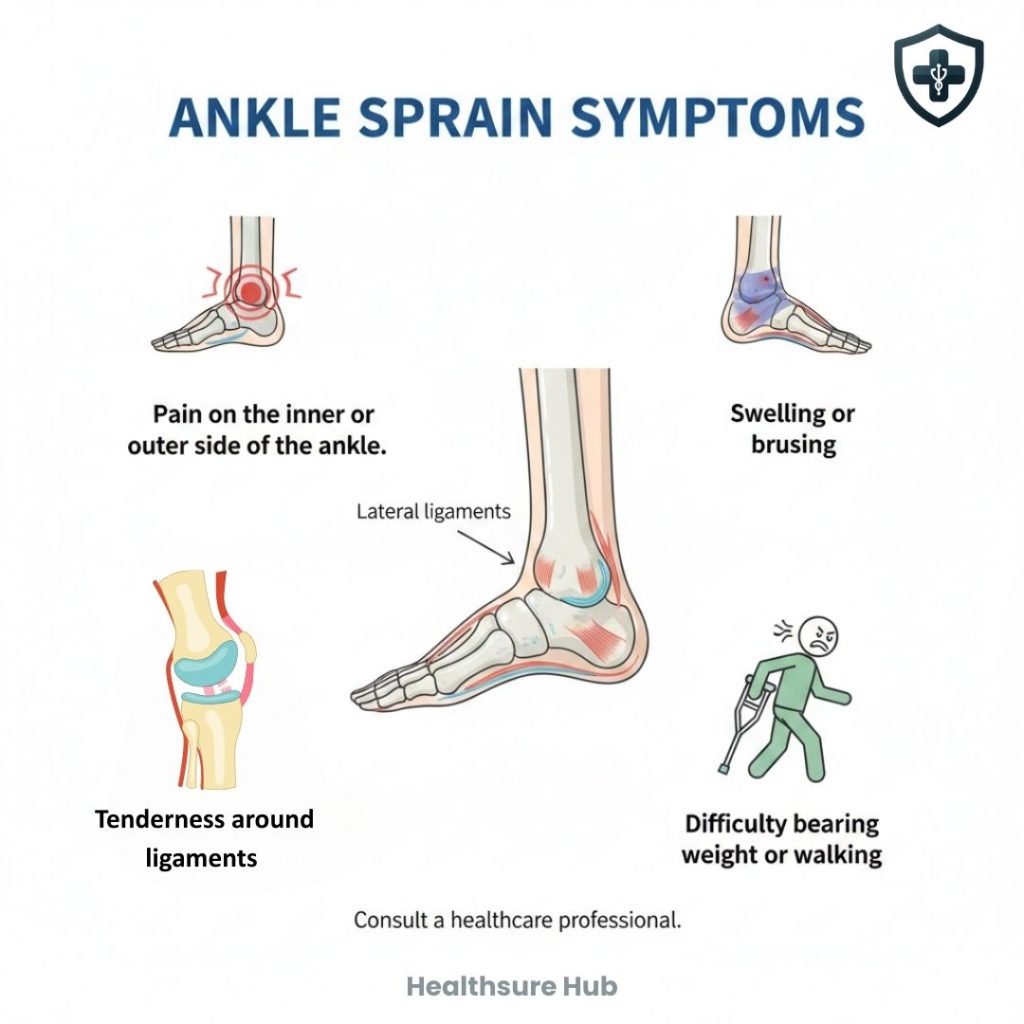
The ankle is stabilized by multiple ligaments, including lateral, medial, and smaller accessory ligaments. A sprain occurs when these ligaments are stretched or partially torn, often due to twisting, rolling, or sudden impact.
Symptoms may include:
- Pain on the inner or outer side of the ankle
- Swelling or bruising
- Tenderness around the ligament
- Difficulty bearing weight or walking
Even if the specific ligament or severity grade is not noted, S93.491A applies as long as it is the initial encounter for active treatment.
Clinical Scenarios Where S93.491A Is Used
The code is commonly applied in real-world settings:
- A soccer player rolls the ankle while pivoting
- An adult slips on a wet floor, causing pain on the inner ankle
- First-time orthopedic or urgent care visits confirming ligament injury via imaging or examination
In these cases, documenting injury, laterality, and initial treatment is critical, while grading the severity is secondary unless specifically noted.
Common Documentation Gaps Leading to S93.491A
This code is often used due to common clinical documentation practices:
- Notes may simply state “right ankle sprain” without specifying the ligament. In some cases, providers may document only an unspecified ankle injury before a definitive diagnosis is established.
- Lack of specific physical exam findings– the documentation needs to clearly state the specific location of pain or tenderness that confirm the affected ligament
- Absence of laterality- in the documentation it clearly needs to state whether the injury is on the left or right ankle.
- Missing encounter character– there’s lack of information whether the visit is the initial encounter or a follow-up treatment.
- Early visits often prioritize stabilization over detailed assessment
These gaps reflect real-world workflow rather than mistakes in care, but accurate coding depends on clear documentation.
When to Use S93.491A
Use S93.491A only during the initial encounter for active treatment of a right ankle ligament sprain:
- Emergency room or urgent care visits after acute ankle trauma
- Outpatient orthopedic or podiatric consultations
Physical therapy evaluations following the acute injury
Do not use for:
- Follow-up visits (use subsequent encounter codes)
- Long-term complications (sequela codes apply)
- Injuries to the left or unspecified ankle
Correct timing ensures proper reimbursement and continuity of care.
Clinical Relevance of Accurate Coding
Accurate S93.491A coding supports:
- Patient care: Ensures appropriate treatment plans, referrals, and rehabilitation
- Insurance and reimbursement: Avoids delays and ensures proper payment
- Research and public health: Supports reliable injury statistics and resource planning
Even minor ligament sprains contribute to broader healthcare processes, from population health data to administrative reporting.
Conclusion
S93.491A is more than a simple code; it plays a critical role in ensuring precise clinical documentation, accurate billing and reimbursement, safe and continuous patient care, and reliable research and population health data.
Attention to laterality, encounter type, and injury specifics is essential for proper coding. Whether you are coding, treating, or studying ankle injuries, understanding and applying the ICD-10 code correctly provides clarity and precision, supporting accurate medical records and optimizing care outcomes
About the Author