Accurate medical coding is essential for documentation, billing, and compliance in obstetric care. Among pregnancy-related ICD-10-CM codes, O36.80X0 is specifically used for cases where fetal viability is inconclusive during the initial encounter. Proper application of this code ensures clinical clarity, supports reimbursement, and maintains compliance with coding guidelines.
In addition, it helps healthcare providers track early pregnancies that require ongoing monitoring, which can be critical in preventing complications during the first trimester. Our team at Healthsure Hub breaks down the code structure and meaning and explains the common mistakes to avoid when used in medical billing.
What is O36.80X0?
O36.80X0 represents a pregnancy with inconclusive fetal viability, unspecified, initial encounter. The terminology used within the code description is deliberate and clinically significant. “Inconclusive” does not mean abnormal or failed pregnancy; it means that available diagnostic information is insufficient to determine viability. This distinction is essential because premature classification of a pregnancy as viable or non-viable can lead to incorrect clinical pathways, inappropriate counseling, or coding errors that affect reimbursement.
It is applied when:
- A pregnancy is confirmed, but diagnostic tests cannot definitively confirm fetal life.
- Ultrasound fails to detect a heartbeat or fetal movement.
- Maternal serum hCG levels are inconclusive in early gestation.
The “unspecified” element indicates that viability is not yet determined, distinguishing it from codes for confirmed non-viable or viable pregnancies. This specificity is crucial for accurate clinical documentation, billing, and statistical tracking.
In one clinical study of first‑trimester pregnancies with indeterminate ultrasound results — a scenario similar to inconclusive viability — approximately *30.8% of patients had indeterminate findings, and only about 23.9% of these pregnancies continued to ≥20 weeks, with a majority experiencing early loss.
When to Use O36.80X0
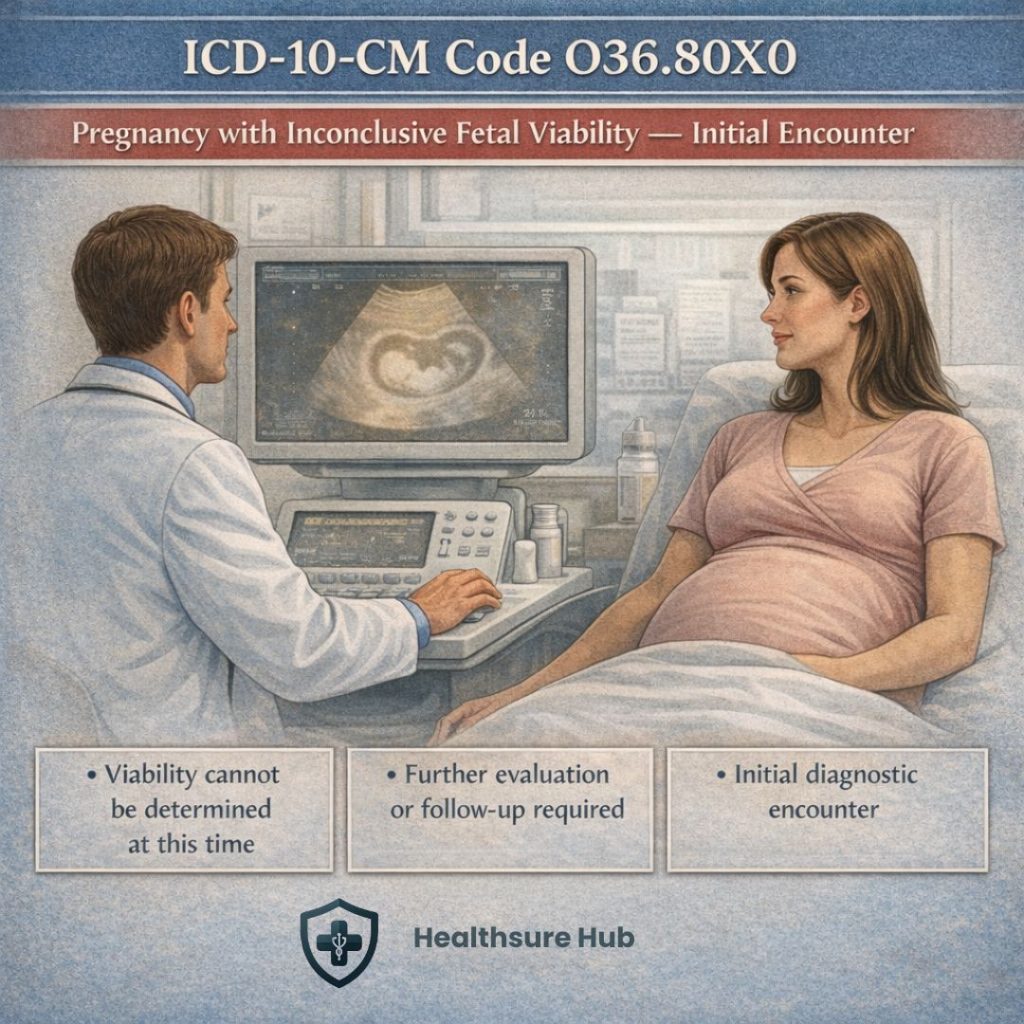
O36.80X0 is reserved strictly for the initial encounter when inconclusive viability is first documented. The timing element is not optional; it is embedded in the code definition. It should be reported when a clinician evaluates a patient and determines that available findings cannot establish fetal life with certainty. This most often occurs during early prenatal visits when imaging or laboratory testing is still evolving. Typical scenarios include:
- Early ultrasound with no detectable heartbeat
- Positive pregnancy test with inconclusive imaging
- Technical limitations preventing confirmation
Equally important is knowing when not to use the code. Once viability is confirmed through repeat imaging or clinical progression, subsequent encounters must be coded differently. Similarly, if diagnostic evidence confirms pregnancy loss, codes indicating non-viable pregnancy must replace O36.80X0. Continued use after viability has been established is a common coding error that can trigger payer scrutiny.
Clinical Documentation Requirements
Proper documentation is vital for assigning O36.80X0 accurately. The medical record should include:
- Date of initial encounter
- Gestational age (if known)
- Diagnostic tests performed (ultrasound, hCG, etc.)
- Observations leading to inconclusive fetal viability
Detailed documentation ensures coders can assign O36.80X0 correctly, supports claims auditing, and maintains compliance. It also provides a foundation for clinical decision-making, enabling providers to schedule appropriate follow-up and reduce risk of complications.
Clinical Scenario Illustrating Proper Use
A patient comes in for her first prenatal visit at about six weeks pregnant based on her last menstrual period. She has a positive home pregnancy test and mild cramping but no bleeding. During the visit, an ultrasound shows a gestational sac, yet no fetal pole or heartbeat is visible. Blood tests confirm pregnancy but still cannot verify viability.
At this stage, the provider documents that the pregnancy is confirmed but viability is inconclusive and schedules a follow-up scan. This is when the ICD-10 code is used. The code accurately reflects the situation: pregnancy is present, evaluation has begun, but fetal viability cannot yet be determined.
ICD-10 Guidelines and Compliance
O36.80X0 falls under Chapter 15 of ICD-10-CM: Pregnancy, childbirth, and the puerperium (O00–O9A). Within the O36 series, this code is for maternal care related to suspected fetal problems when viability is uncertain.
Within the O36 category, this specific code is used when a provider is caring for a pregnant patient and fetal viability cannot yet be determined. In other words, it communicates diagnostic uncertainty rather than a confirmed complication or outcome.
Because the code is designated for an initial encounter, confirming visit status is essential before assigning it. It should not be used once fetal viability has been established or if diagnostic findings confirm pregnancy loss. Proper documentation is equally important. The patient record must clearly support why viability is considered inconclusive, including relevant test results, clinical observations, and provider assessment.
Following ICD-10 guidelines ensures proper billing, reduces claim denials, and maintains regulatory compliance. Pregnancies initially coded under this code often require close monitoring until fetal viability is confirmed.
Clinical and Administrative Importance
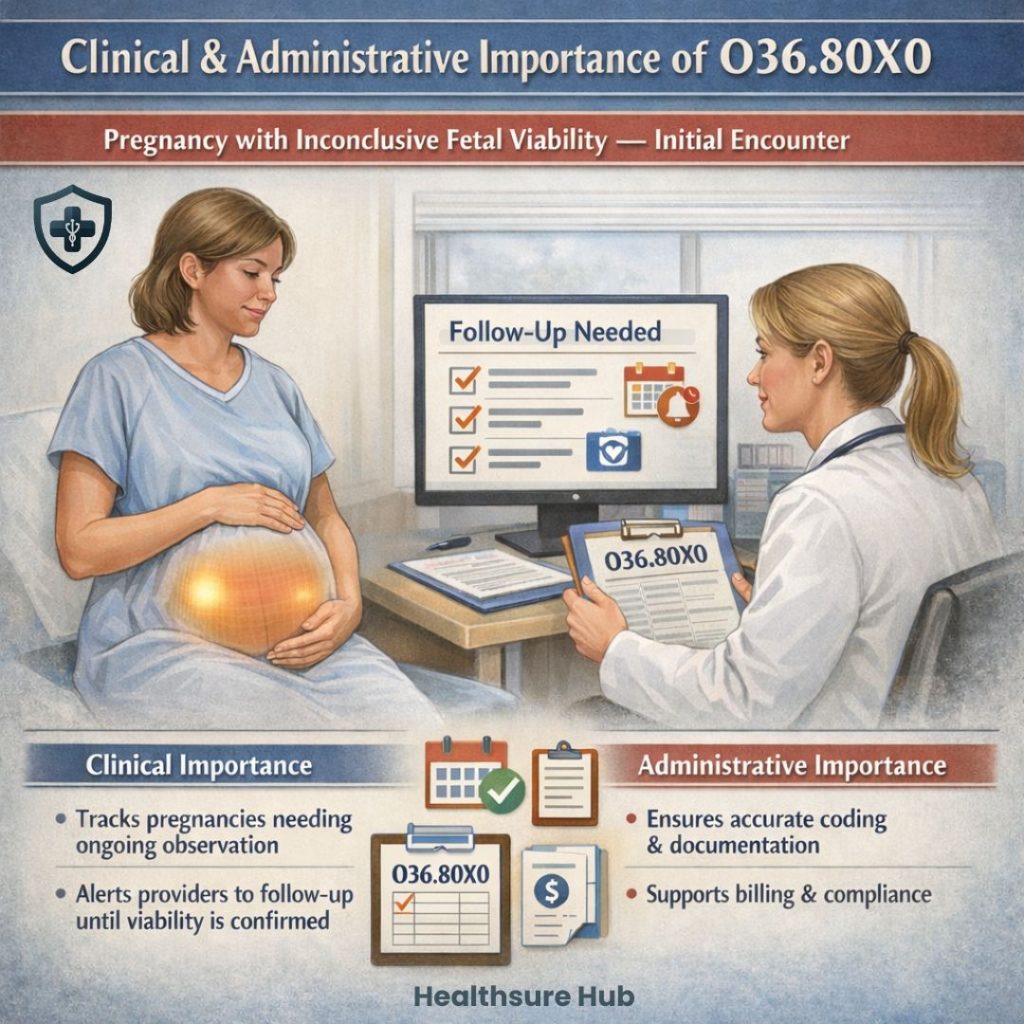
Accurate use of O36.80X0 serves both clinical care and healthcare operations. From a clinical perspective, the code signals that a pregnancy requires continued observation. This alerts providers that follow-up testing, repeat imaging, or closer monitoring may be necessary before definitive conclusions can be made. Clear documentation of this status supports coordinated care, especially when multiple clinicians are involved.
Administratively, the code plays an important role in billing and data reporting. Insurance carriers rely on diagnosis codes to evaluate medical necessity for services such as repeat ultrasounds or laboratory monitoring. When used correctly, this specific ICD-10 code supports reimbursement by accurately reflecting the patient’s clinical status. At a systems level, it also contributes to reliable healthcare data used for research, quality measurement, and maternal-fetal outcome tracking.
Ultimately, precise coding benefits both patients and providers. It ensures medical records reflect the true clinical picture, supports appropriate payment for services rendered, and strengthens the accuracy of healthcare analytics used to improve care standards.
Common Mistakes to Avoid
- Using the code for confirmed non-viable pregnancies.
- Coding follow-up visits as initial encounters.
- Failing to include supporting diagnostic documentation.
In some cases, if the pregnancy is later considered high-risk due to maternal factors or complications, providers may document the encounter using O09.90 for supervision of a high-risk pregnancy. Collaboration between coders and clinicians ensures accurate application of this ICD-10 code, reduces errors, and protects reimbursement. Educating staff about proper coding practices can significantly reduce administrative errors and support compliance with payer requirements.
Conclusion
ICD-10 code O36.80X0 is essential for documenting pregnancies with inconclusive fetal viability during the initial encounter. Proper usage improves patient care, ensures accurate billing, and supports compliance with coding standards. Accurate documentation and collaboration between clinicians and coders are key to leveraging this ICD-10 code effectively in clinical and administrative settings.
Correct application of the code only emphasizes the importance of precision in early pregnancy care and highlights the role of ICD-10-CM codes in modern obstetric practice.
About the Author