Family history can be one of the most powerful predictors of future health outcomes. For cardiovascular disease, knowing your relatives’ heart health can make the difference between early prevention and late-stage complications. In medical documentation, this critical information is captured using ICD-10-CM code Z82.49, which specifically denotes a family history of ischemic heart disease and other circulatory system disorders.
Our team at HealthSure Hub, explains how this code helps clinicians identify individuals at higher risk, guides preventive care decisions, and ensures accurate medical billing.
What is ICD-10 Code Z82.49?
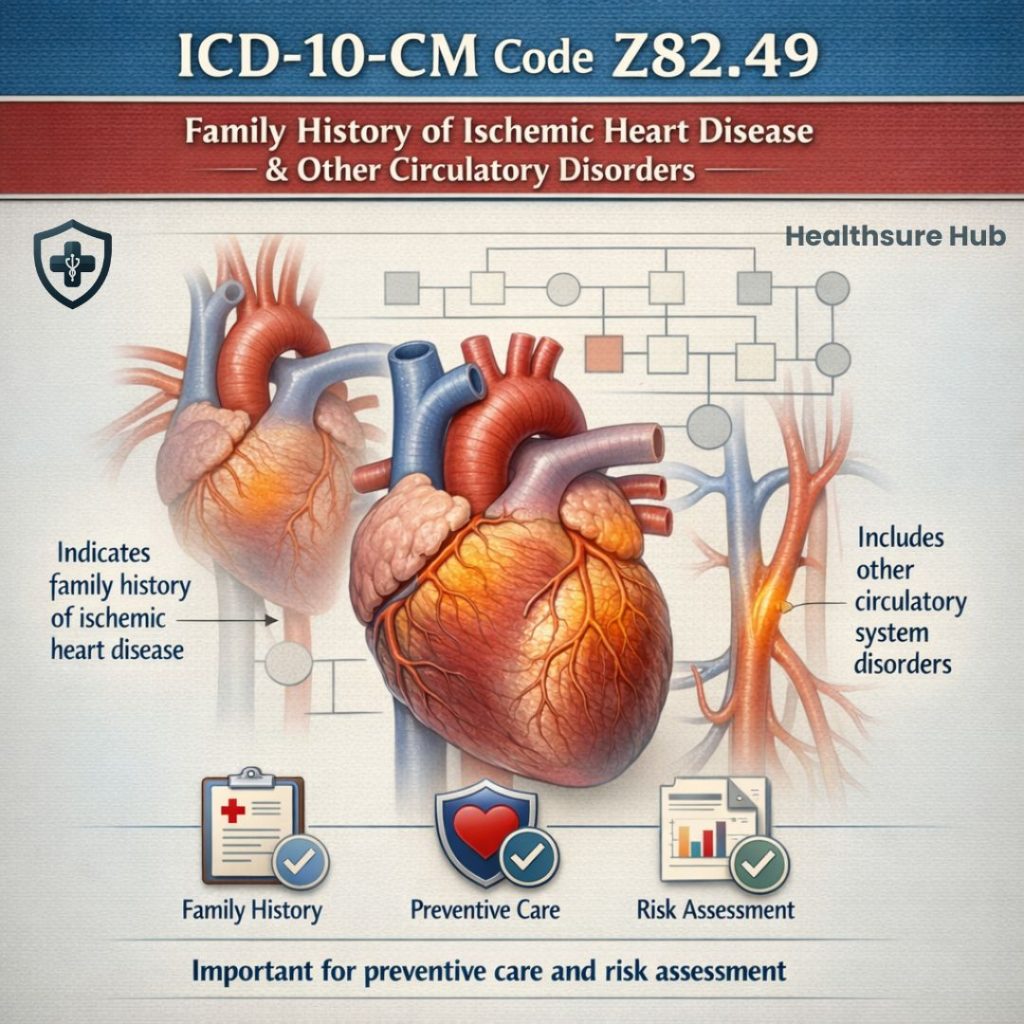
Z82.49 is an ICD-10-CM diagnosis code used to indicate a patient has a family history of ischemic heart disease and other circulatory system disorders. This code does not imply the patient has any of these diseases themselves, but rather that their relatives, such as parents, siblings, or grandparents, have been diagnosed with these conditions.
In simplified terms, this ICD-10 code acts as a risk flag in the patient’s medical record. It helps healthcare providers recognize that a patient may have a higher likelihood of developing cardiovascular disease based on their family history.
Clinically, this can trigger earlier screening tests, lifestyle interventions, and monitoring strategies. From a medical billing perspective, accurately documenting this code ensures correct reporting, supports preventive care incentives, and aligns with quality care metrics.
Clinical Relevance
Family history is widely recognized as a major risk factor for heart disease. Studies indicate that genetic predisposition accounts for up to 30–40% of cardiovascular risk. Using Z82.49, clinicians can identify patients who may benefit from early interventions, even before symptoms appear.
For example, if a patient’s parents experienced early-onset ischemic heart disease, this patient may require more frequent cholesterol testing, blood pressure monitoring, and lifestyle counseling. Similarly, if a sibling has a history of stroke or peripheral artery disease, providers can implement targeted screening strategies.
In some cases, patient outcomes are also influenced by medication adherence, which can affect how effectively preventive and long-term treatment strategies are carried out.
Z82.49 in Medical Billing and Documentation
In medical billing, Z82.49 serves a crucial role in tracking patients at risk due to family history, even if they are currently asymptomatic. Proper use of this code allows healthcare providers to:
- Report risk factors accurately for preventive care visits
- Support claims for wellness examinations or counseling services
- Align documentation with quality reporting measures and risk adjustment programs
Example scenarios for coding Z82.49:
- A patient’s mother had ischemic heart disease diagnosed at age 52
- A sibling has a history of stroke
- Multiple relatives have documented circulatory disorders
Patients with a family history of ischemic heart disease (Z82.49) may also have a personal history of circulatory and cerebrovascular events, such as TIA or cerebral infarction, coded as Z86.73. Documenting both codes helps clinicians tailor preventive strategies and monitor for recurrent cardiovascular events
Epidemiology and Impact of Family History of Circulatory Disease
Family history of cardiovascular disease is common. Studies estimate that the risk is especially significant if the condition appeared at an early age — defined as before 55 for men and 65 for women.
Globally, cardiovascular disease remains the leading cause of death, responsible for nearly 18 million deaths per year. Documenting family history with Z82.49 is therefore not just a billing formality — it is a preventive strategy that helps identify at-risk individuals and reduce morbidity and mortality.
Identifying patients with a positive family history allows healthcare providers to recommend interventions such as:
- Lifestyle modifications: diet, exercise, smoking cessation
- Screening tests: lipid panels, ECGs, blood pressure monitoring
- Preventive medications: statins or antihypertensive therapy in select high-risk cases
How to Document Z82.49 Accurately
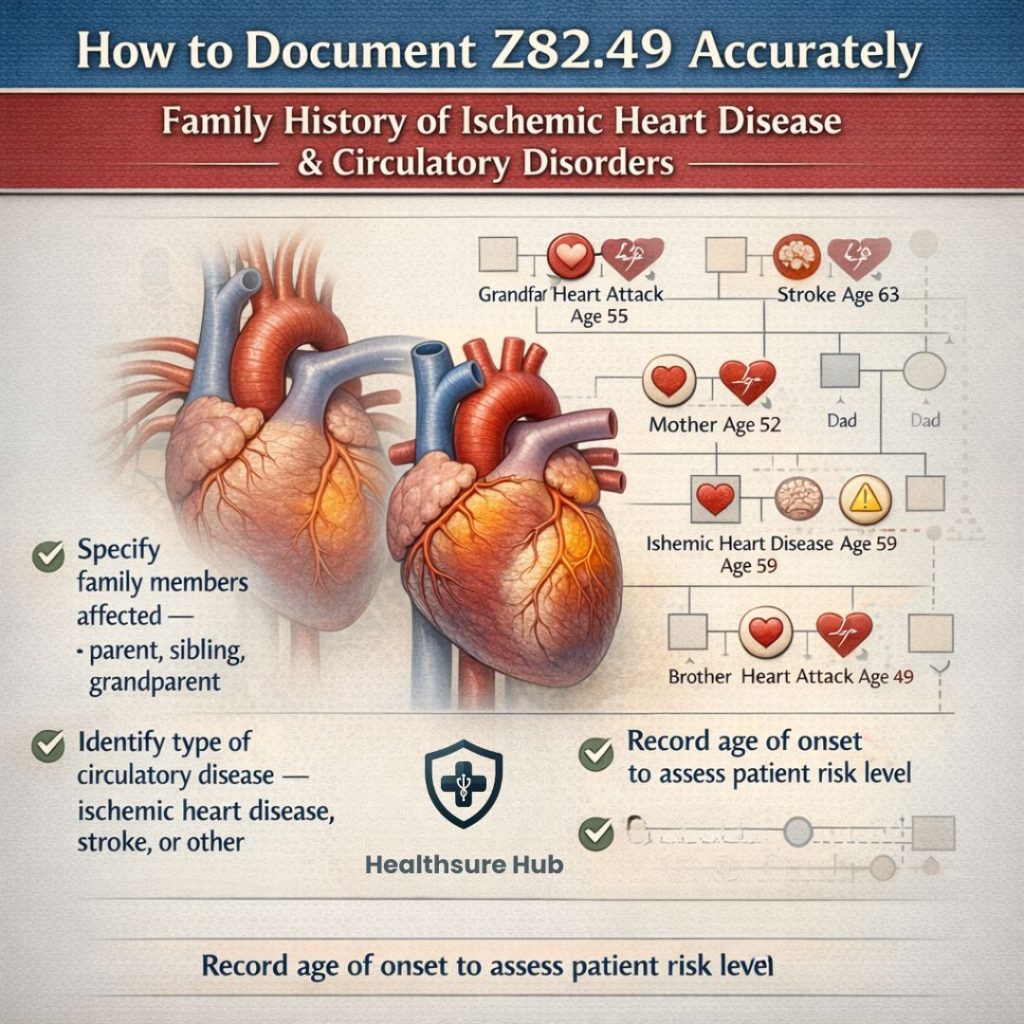
Accurate documentation ensures the code is useful for clinical decision-making and billing purposes. Key elements to capture include:
- Specific family members affected – parent, sibling, grandparent
- Type of circulatory disease – ischemic heart disease, stroke, or other relevant disorders
- Age of onset – helps determine risk level
When evaluating a patient’s cardiovascular risk, it’s important to consider both non-modifiable and modifiable factors. For instance, a patient with Z82.49 and a personal history of nicotine dependence (Z87.891) may be counseled on lifestyle changes to reduce their risk of heart disease. As a clinician you could:
- Update family history at every visit, as new diagnoses in relatives may change risk assessment
- Use structured EHR fields to minimize errors and omissions
- Avoid using this code when the patient already has a personal diagnosis
Proper documentation supports preventive care, risk stratification, and compliance with quality metrics and reimbursement requirements.
Conclusion
With cardiovascular disease being the leading cause of death worldwide, proper use of Z82.49 allows healthcare providers to implement early interventions that can save lives. By documenting family history accurately, clinicians enhance patient outcomes, improve compliance with preventive screenings, and strengthen medical record quality.
About the Author