Every year, millions of patients visit healthcare providers with urinary or genitourinary symptoms that remain unresolved after initial evaluation. From frequent urination to unexplained discomfort, these symptoms can significantly impact daily life. In many cases, despite thorough testing, clinicians cannot immediately pinpoint a diagnosis. This is where ICD-10 code R39.9 plays a critical role.
Our team at Healthsure Hub explains the proper use of this code and how it ensures correct billing, facilitates continuity of care, and how it contributes to reliable healthcare data collection. While it may seem vague at first glance, R39.9 is a cornerstone for capturing unresolved urinary and bladder-related complaints in clinical practice.
What is ICD-10 Code R39.9?
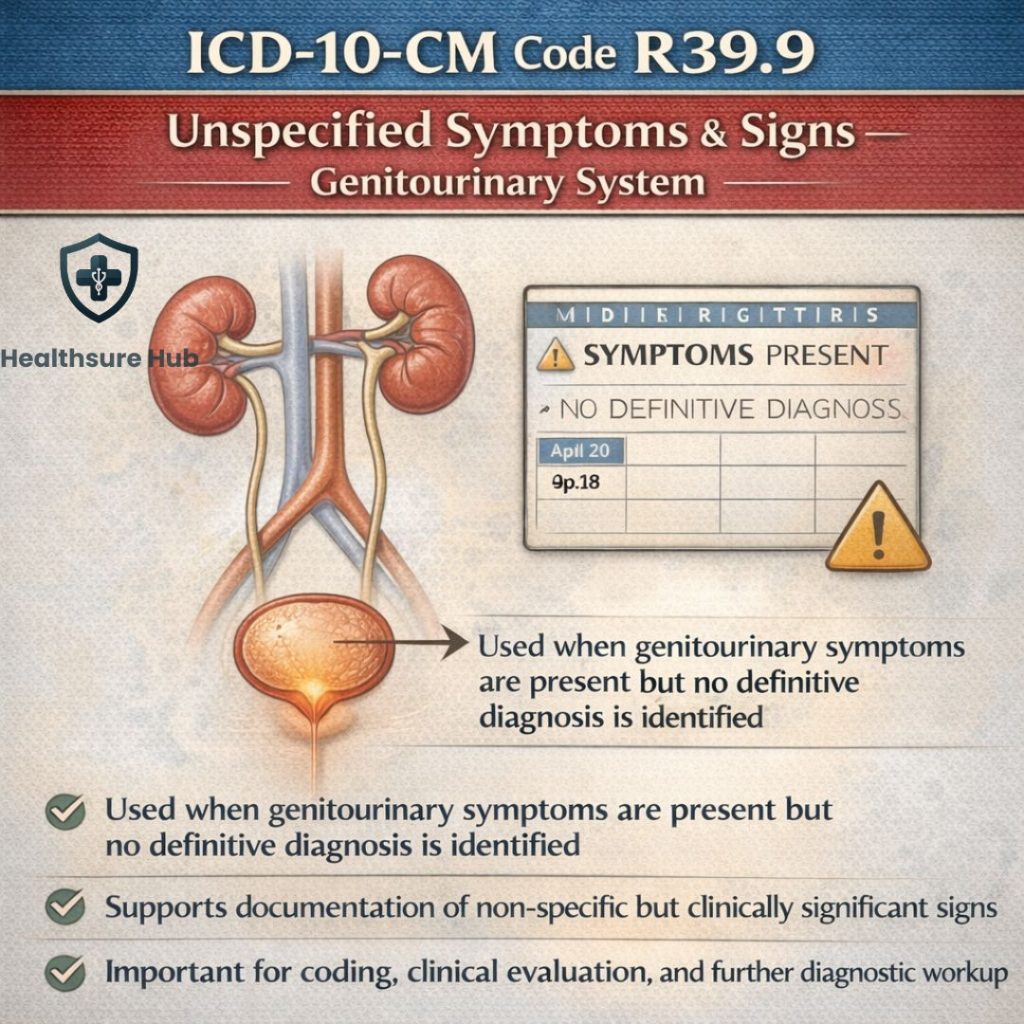
ICD-10-CM code R39.9 is defined as unspecified symptoms and signs involving the genitourinary system. In simpler terms, it is used when a patient presents with genitourinary symptoms, but no definitive diagnosis is identified after examination or testing.
Some common examples of symptoms that may fall under this include:
- Frequent urination (polyuria)
- Painful urination (dysuria)
- Blood in urine (hematuria) without a confirmed cause
- Other urinary discomfort or signs not linked to a specific disease
When and Why R39.9 is Used in Medical Billing
This ICD-10 code is commonly used in medical billing and coding for several important reasons:
- Accurate Documentation: It allows clinicians to record patient complaints even when the underlying cause is not yet identified.
- Claims Submission: Using the code ensures that providers can bill for visits and services without waiting for a confirmed diagnosis.
- Data Tracking: The code helps track cases that may require follow-up, further evaluation, or referral.
Common scenarios include:
- A patient reporting urinary frequency with normal lab results
- Hematuria detected during routine screening with no confirmed infection or malignancy
- Painful urination that does not match any specific condition
Clinical and Administrative Importance
While this code may appear vague, it carries significant clinical and administrative value:
- Continuity of Care: Alerts future providers to unresolved genitourinary symptoms.
- Quality Reporting: Supports tracking of population health trends related to urinary and kidney complaints.
- Preventing Claim Denials: Provides a valid ICD-10 code for visits where a diagnosis is pending.
- Research and Trends: Enables epidemiologists and healthcare planners to monitor emerging patterns of genitourinary complaints.
Coding Tips and Documentation Guidelines
Accurate coding with this code requires careful documentation:
- Detail Symptoms: Clearly document the patient’s symptoms, onset, frequency, and severity.
- Use as a Placeholder: Assign this code only when no more specific ICD-10 code applies.
- Avoid Overuse: If a definitive diagnosis is established (e.g., urinary tract infection, kidney stones), update the code accordingly.
- Review Labs and Imaging: Ensure all tests and patient history are reviewed before coding.
Common Misconceptions
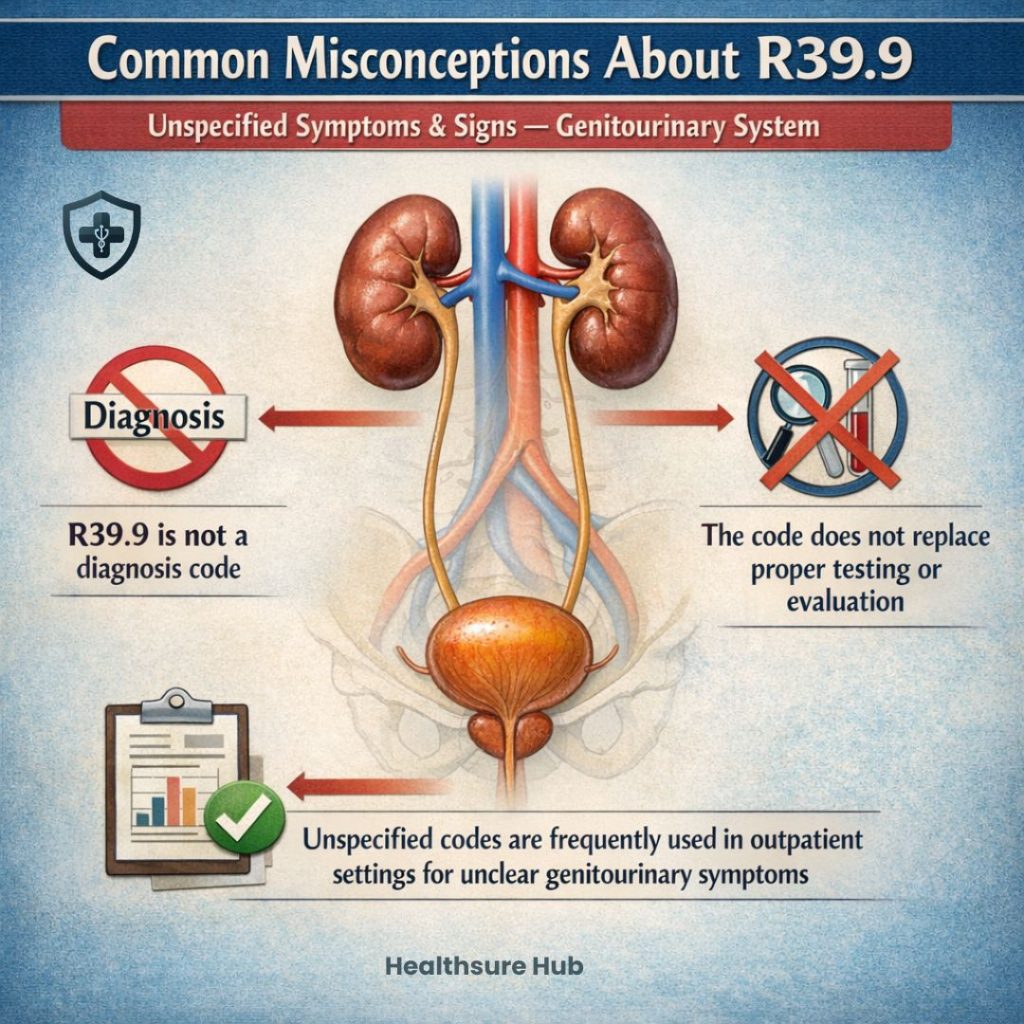
Several misconceptions exist about R39.9:
- It’s a diagnosis code: This ICD-10 code is not a diagnosis; it is a symptom code.
- It replaces testing: The code does not eliminate the need for proper testing and evaluation.
- It’s rarely used: In reality, unspecified codes like the code are frequently applied in outpatient coding for unclear genitourinary symptoms.
Trends and Statistics in Genitourinary Symptom Coding
Understanding trends in genitourinary coding helps providers and coders appreciate the importance of this code:
- Prevalence: Unspecified genitourinary complaints are common in outpatient care, particularly among women over 40.
- Gender Trends: Women are more likely to report urinary frequency or urgency, while men may present more often with obstructive symptoms.
- Global Relevance: Unresolved urinary symptoms are a common reason for repeat visits worldwide, highlighting the universal need for accurate symptom coding.
Conclusion
While R39.9 does not identify a specific diagnosis, its proper use safeguards patient care and enhances the quality of healthcare data. Thoughtful documentation and follow-up ensure patients receive the evaluation and treatment they need, even when the exact cause of their symptoms is initially unknown.
About the Author