Imagine a patient walking into a clinic complaining of fatigue, weakness, or malaise, yet after extensive testing, no specific diagnosis can be pinpointed. These nonspecific symptoms are surprisingly common in healthcare settings, and accurately documenting them is essential, not just for patient care but also for proper medical coding and billing. This is where ICD-10 code R68.89 comes into play.
R68.89 is used to classify other general symptoms and signs that do not fit neatly into any other diagnostic category. While it may seem like a “catch-all” code, its correct use ensures healthcare providers capture patient encounters accurately, support billing claims, and contribute to reliable healthcare data collection. That’s why our team at Healthsure Hub breaks down the code and explains the need for proper and accurate coding.
What is ICD-10-CM Code R68.89?
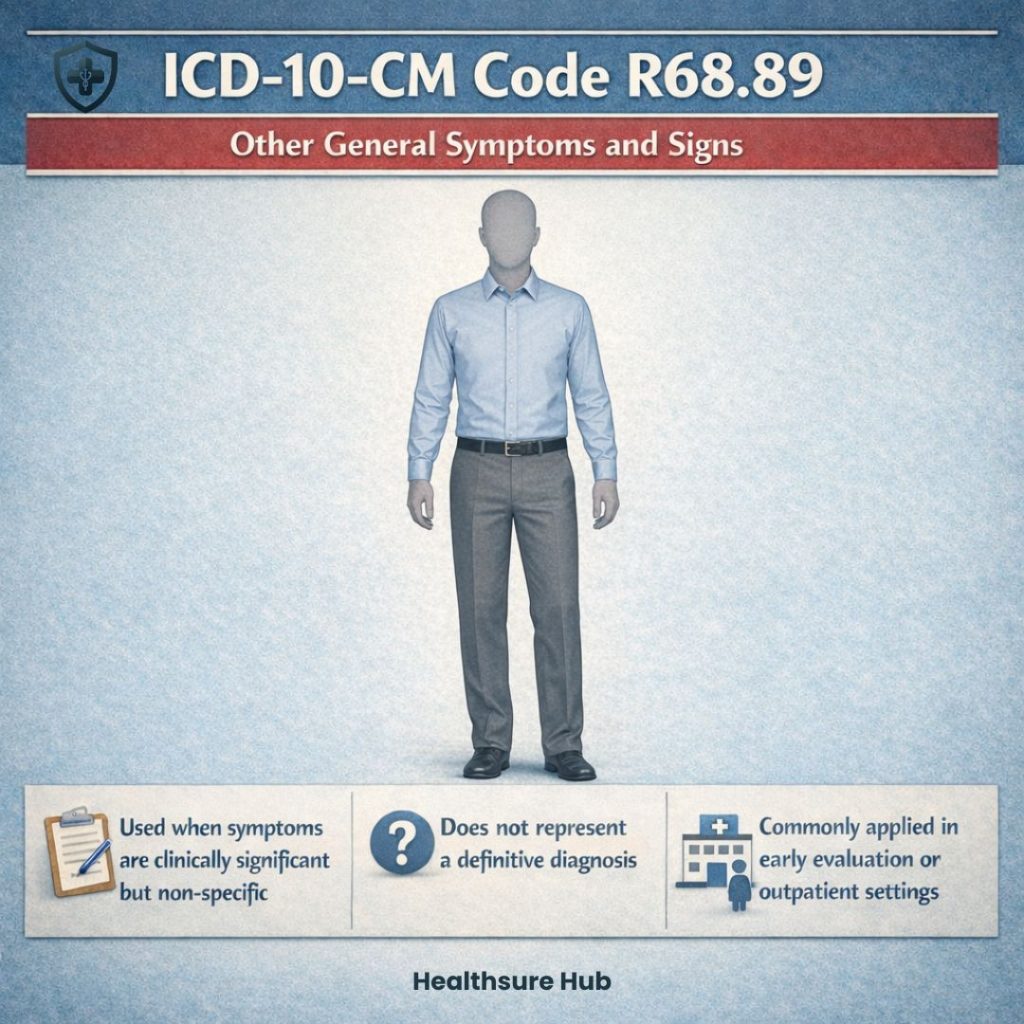
ICD-10-CM code R68.89 refers to “Other general symptoms and signs.” It is applied when a patient presents with symptoms that are real and clinically relevant but do not meet the criteria for a specific diagnosis.
In practice, R68.89 is used for documentation when a patient experiences nonspecific or generalized symptoms such as fatigue, malaise, or weakness. The code ensures that the encounter is properly recorded for billing purposes and for future reference in the patient’s medical record.
Examples of General Symptoms
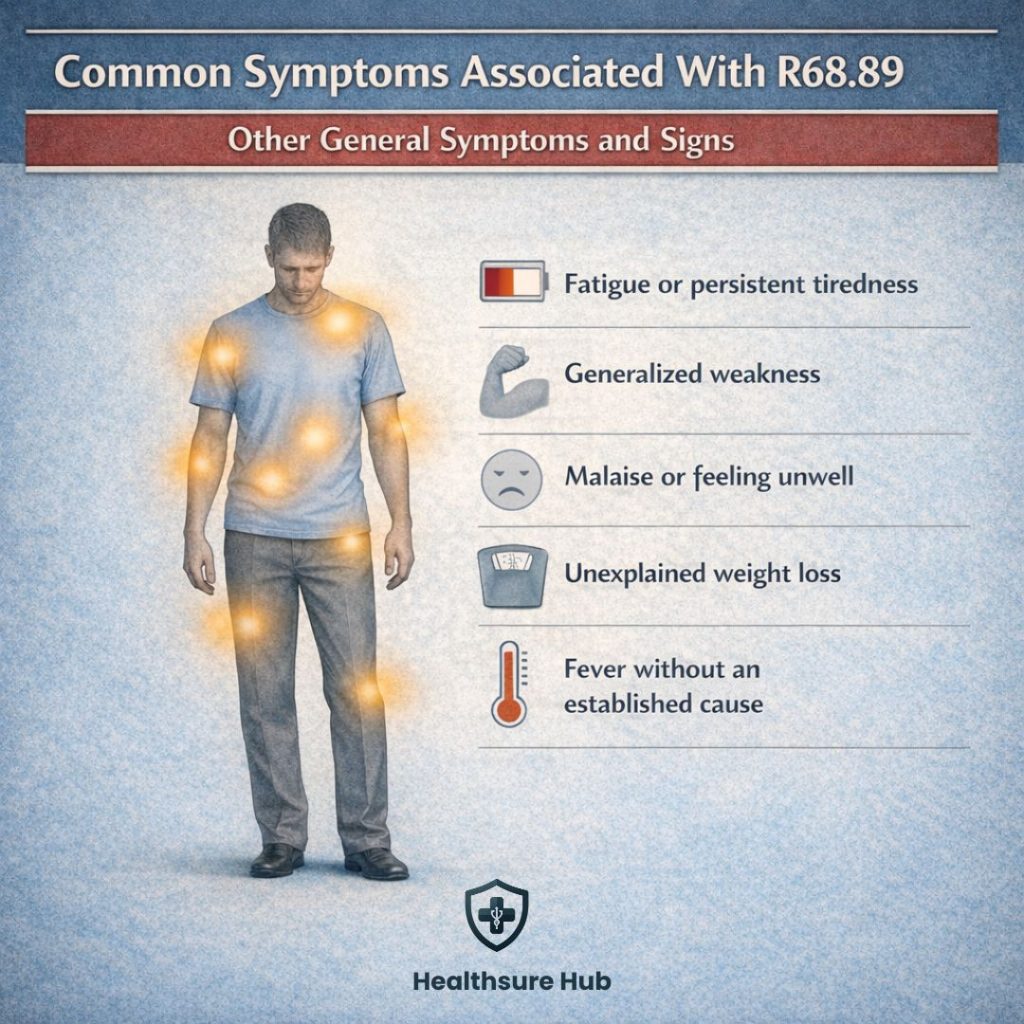
- Fatigue or persistent tiredness
- Generalized weakness
- Malaise or feeling unwell
- Unexplained weight loss
- Fever without an established cause
How R68.89 is Used in Medical Billing and Documentation
Healthcare providers frequently encounter patients whose symptoms are genuine but do not immediately correspond to a specific illness. For instance:
- A patient reports generalized fatigue and muscle weakness; lab tests return normal results.
- An individual presents with intermittent low-grade fever and malaise, but no infection or chronic condition is detected.
In such cases, R68.89 allows providers to document the encounter accurately without assigning an incorrect or premature diagnosis. For patients presenting with circulatory or respiratory symptoms, coders may also consider R09.89 – other specified circulatory and respiratory symptoms for accurate coding.
Importance in Billing
Using R68.89 properly ensures that outpatient and inpatient visits are captured for insurance reimbursement, even when the exact cause of symptoms is unknown. Claims submitted without a valid diagnosis can be denied, making nonspecific codes like R68.89 crucial for compliance.
Documentation Tips
- Record the onset, severity, and duration of symptoms.
- Note any tests or procedures performed, even if results are normal.
- Avoid using the code repeatedly without updated assessments; insurers may flag this.
Improper coding of nonspecific symptoms contributes to 10% of claim denials in outpatient settings, emphasizing the need for precise documentation.
Common Symptoms Included Under R68.89
Fatigue and Weakness
Fatigue is one of the most commonly reported nonspecific symptoms in primary care. Studies show that approximately 30% of adults experience fatigue each year, and many visits may result in R68.89 coding when no clear cause is found.
Malaise and General Discomfort
Malaise refers to a generalized feeling of unwellness and can be associated with numerous conditions. Older adults frequently report malaise, making careful documentation essential.
Fever and Other Unspecified Signs
R68.89 is often used when a patient experiences fever or other signs without a confirmed diagnosis. Data indicate that about 15% of adult emergency visits for fever do not yield a definitive diagnosis at the initial visit.
Other Miscellaneous Symptoms
Other symptoms may include headache, dizziness, night sweats, and generalized pain that cannot be attributed to a specific condition.
Potential Challenges
While the code is invaluable, there are challenges to keep in mind:
- Overuse: R68.89 should not be a default “miscellaneous” code without proper evaluation.
- Insurance Scrutiny: Repeated use without follow-up may trigger claims reviews.
- Clinical Judgment Required: Providers must distinguish between early disease signs and nonspecific complaints.
Conclusion
ICD-10-CM code R68.89 plays a critical role in healthcare documentation by capturing other general symptoms and signs that lack a definitive diagnosis. Its use ensures proper billing, continuity of care, and accurate health data collection. Providers should document symptoms thoroughly, apply the code judiciously, and update records when a specific diagnosis emerges.
About the Author