Choosing the right property insurance starts with understanding what you are actually insuring. The debate around dwelling insurance vs homeowners insurance is one of the most misunderstood topics in property coverage, largely because the two policies protect different risks, ownership situations, and living arrangements.
While both types of insurance are designed to protect buildings, they serve distinct purposes and apply to different kinds of properties. We break down dwelling insurance vs homeowners insurance in a clear, practical way, focusing on structure, coverage intent, risk exposure, and real-world use cases.
What is Dwelling Insurance
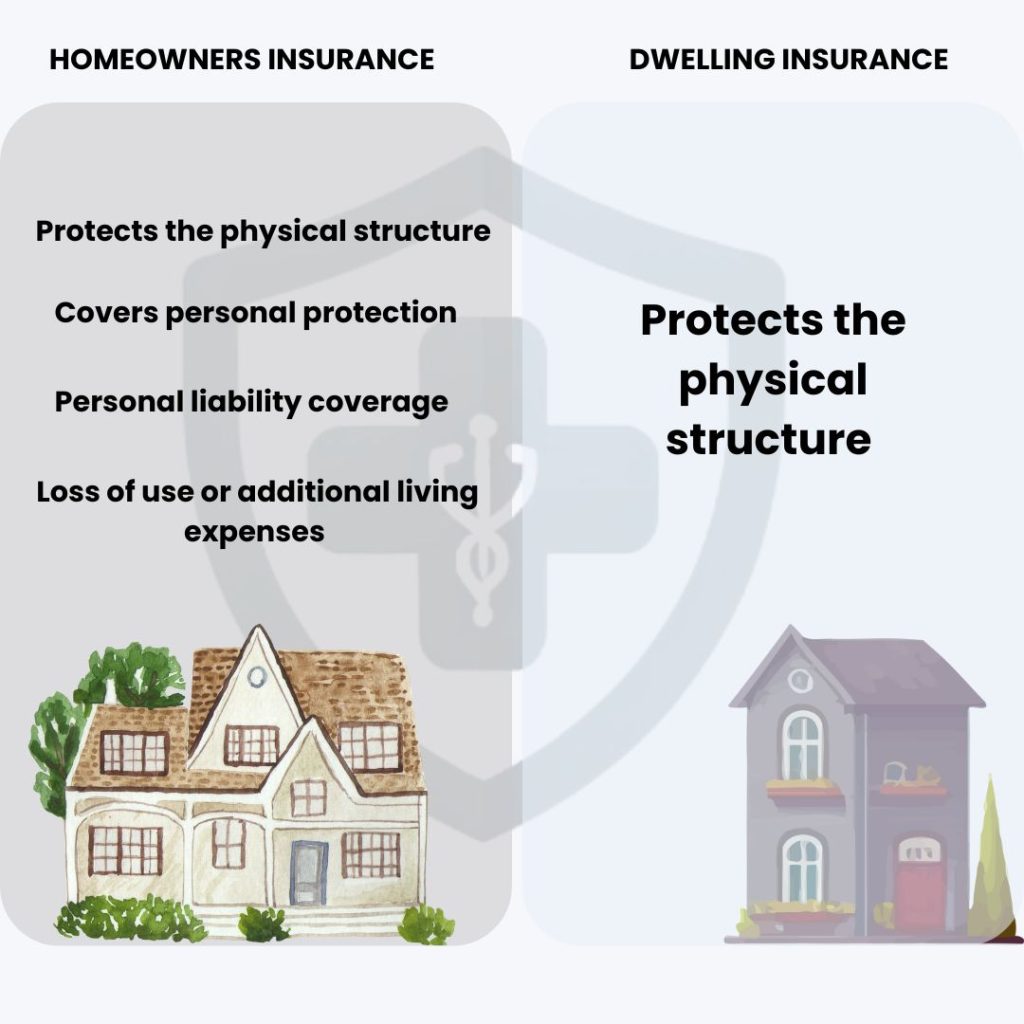
Dwelling insurance is a policy designed to protect the physical structure of a residential building, not the lifestyle inside it. In insurance terms, the “dwelling” refers strictly to the building itself, including permanently attached components such as the roof, walls, foundation, and built-in fixtures.
In the context of dwelling insurance vs homeowners insurance, dwelling insurance is most commonly used when a property is not owner-occupied. This includes rental homes, seasonal properties, inherited houses, or residences under renovation.
Unlike homeowners insurance, dwelling insurance does not assume daily occupancy. That single difference changes how insurers assess risk, price policies, and structure coverage.
What is Homeowners Insurance
Homeowners insurance is built around the assumption that the policyholder lives in the home full time. Because of this, it bundles multiple types of protection into one policy.
When comparing dwelling insurance vs homeowners insurance, homeowners insurance is broader by design. It typically includes:
- Dwelling (structure) coverage – protects the physical home and attached structures
- Personal property protection – covers belongings such as furniture, electronics, and clothing
- Personal liability coverage – protects against legal and medical costs if someone is injured on your property
- Loss of use or additional living expenses – covers temporary housing costs if your home becomes uninhabitable due to a covered peril
This bundled approach reflects how owner-occupied homes present different risks. Damage is discovered faster, maintenance is ongoing, and liability exposure increases when people live on the property daily.
Why Homeowners Insurance Matters
Homeowners insurance is more than just peace of mind, the numbers highlight its importance:
- Claim frequency – about 5–6% of insured homes file a homeowners insurance claim each year
- Claim causes – roughly 97–98% of claims are for property damage, including wind, hail, water damage, freezing, and fire.
- Average payout – most claims result in payouts of $12,000–$18,000, though severe events like fires or hurricanes can cause much larger losses.
Homeowners insurance claims statistics demonstrate that while most homeowners never file a claim annually, the potential financial impact of a single loss can be significant. Integrating comprehensive coverage helps ensure that both the home and personal finances are protected.
Dwelling Insurance vs Homeowners Insurance – Table Comparison
| Feature | Dwelling Insurance | Homeowners Insurance |
| Purpose | Protects the physical structure of a building only | Protects the structure, personal property, liability, and additional living expenses |
| Occupancy | No owner occupancy required; ideal for rentals, seasonal homes, inherited or under-renovation properties | Assumes full-time owner occupancy |
| Coverage Includes | Structure and permanently attached components (roof, walls, foundation, built-in fixtures) | Dwelling coverage, personal property, liability, loss of use/additional living expenses |
| Risk Assessment | Insurers price based on property being unoccupied or tenant-occupied | Insurers price based on active daily occupancy, maintenance, and liability exposure |
| Scope | Focused, limited protection | Broader, comprehensive protection |
Structural Coverage as the Core Difference
The most important distinction in dwelling insurance vs homeowners insurance lies in how coverage is centered. Dwelling insurance, often called Coverage A, protects the physical structure itself. This includes repairs or rebuilding after covered perils such as fire, windstorms, hail, vandalism, or accidental water damage.
Homeowners insurance also includes Coverage A, but it does not stop there. It extends protection to belongings, personal liability, and living expenses, creating a more comprehensive safety net for occupied homes.
Because of this structural focus, dwelling insurance policies are often simpler, more customizable, and lower in premium than homeowners policies.
Occupancy Status and Why Insurers Care
Insurance pricing is driven by risk predictability. In the dwelling insurance vs homeowners insurance comparison, occupancy status is a major underwriting factor.
Owner-occupied homes tend to have:
- Faster damage detection
- Lower vandalism risk
- Ongoing maintenance
- Higher personal liability exposure
Non-owner-occupied homes tend to have:
- Delayed damage discovery
- Increased vacancy risks
- Higher likelihood of tenant-related losses
- Lower personal property exposure for the owner
Dwelling insurance is structured to match those risks. Homeowners insurance is priced and designed for daily living.
Perils Covered and Excluded Across Both Policies
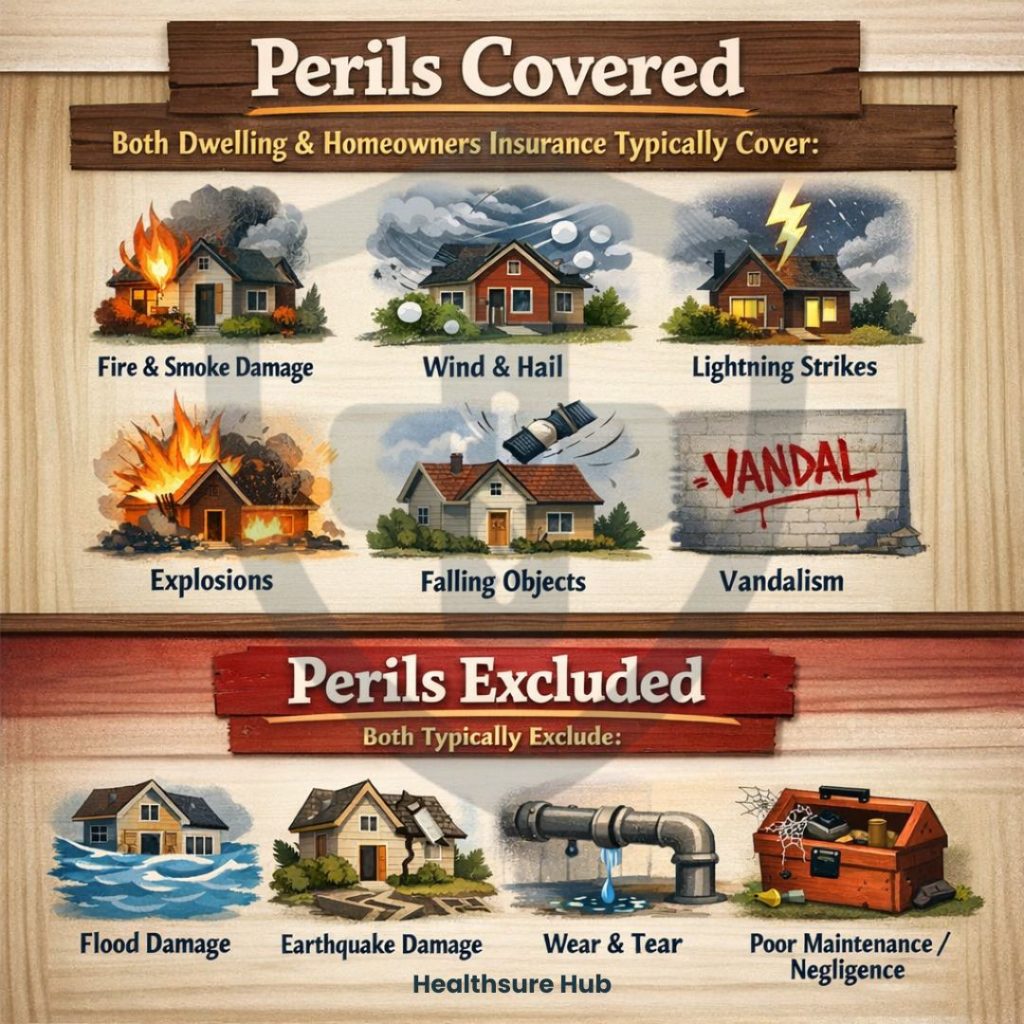
Both policies protect against many of the same sudden and accidental perils. However, exclusions play a critical role in understanding dwelling insurance vs homeowners insurance.
Most standard policies cover:
- Fire and smoke damage
- Wind and hail
- Lightning strikes
- Explosions
- Falling objects
- Vandalism
At the same time, both typically exclude:
- Flood damage
- Earthquake damage
- Wear and tear
- Poor maintenance or negligence
Flood coverage usually requires a separate policy, yet flood insurance statistics show that only 3.3% of U.S. households have flood insurance coverage.
Coverage Limits and Rebuild Cost Logic
Another key distinction in dwelling insurance vs homeowners insurance lies in how coverage limits are calculated.
Dwelling insurance limits are based on the estimated cost to rebuild the structure, not the market value of the property. Factors such as square footage, construction materials, local labor costs, and building codes all influence this figure.
Homeowners insurance uses the same rebuild logic for the dwelling portion, but also adds separate limits for personal property, liability, and loss of use. This layered structure increases both protection and premium cost.
Another major factor insurers consider is the rising cost of rebuilding homes after a loss. Structural replacement costs have increased nearly 30% over the past five years due to supply chain disruptions, higher material costs, and labor shortages. This rise affects premiums for both owner-occupied and non-owner-occupied properties, but the impact is particularly relevant for homeowners insurance, where policies cover full replacement costs for daily-living homes.
Why Rental Properties Rarely Qualify for Homeowners Insurance
One of the most common mistakes property owners make is trying to insure a rental home with a homeowners policy. In the dwelling insurance vs homeowners insurance comparison, this is where claim denials often occur.
Homeowners insurance generally requires owner occupancy. Once a property is rented out, insurers classify it as a different risk category altogether.
Dwelling insurance is specifically designed for rental properties, covering the structure while allowing landlords to add optional protections such as:
- Fair rental income coverage
- Vandalism endorsements
- Extended vacancy coverage
This flexibility makes dwelling insurance the correct and compliant choice for non-occupied homes.
Personal Property and Liability: A Major Separation Point
Personal property protection is another defining difference in dwelling insurance vs homeowners insurance.
Homeowners insurance protects furniture, electronics, clothing, and other belongings owned by the policyholder. It also provides personal liability coverage for injuries or property damage involving guests.
Dwelling insurance usually does not include personal property or liability by default, because landlords and non-occupants do not keep personal belongings in the home. Tenants typically insure their belongings through renters insurance.
This separation avoids overlapping coverage and keeps premiums more efficient.
Policy Forms and How They Affect Coverage Depth
Dwelling insurance policies are commonly issued in tiers such as DP-1, DP-2, and DP-3, each offering increasing levels of protection.
In contrast, homeowners insurance policies are issued under HO forms, such as HO-3, which provide broader and often open-peril coverage for the dwelling.
When analyzing dwelling insurance vs homeowners insurance, policy form matters as much as policy type. It determines whether coverage is named-peril or open-peril, replacement cost or actual cash value.
Cost Differences Explained Through Risk Design
On average, dwelling insurance premiums are lower than homeowners insurance premiums for comparable structures. This cost difference in dwelling insurance vs homeowners insurance reflects coverage scope, not quality.
Homeowners insurance costs more because it covers:
- Personal property losses
- Liability claims
- Temporary housing expenses
Dwelling insurance costs less because it is narrower, more targeted, and aligned with non-occupancy risk profiles.
How Lenders View Dwelling Insurance vs Homeowners Insurance
Mortgage lenders focus on protecting the structure securing the loan. In many cases, lenders accept dwelling insurance for non-owner-occupied properties as long as the coverage limit meets rebuild requirements.
For primary residences, lenders usually require homeowners insurance due to its broader protections. Understanding lender expectations is essential when choosing between dwelling insurance vs homeowners insurance.
Choosing the Right Policy Without Overinsuring
The smartest choice in the dwelling insurance vs homeowners insurance decision comes down to how the property is used, not how much it is worth.
If you live in the home full time, homeowners insurance aligns with your exposure. If the property is rented, vacant, seasonal, or inherited, dwelling insurance often provides cleaner, more appropriate protection.
Matching coverage to risk improves claim outcomes, reduces premium waste, and strengthens long-term financial protection.
How the Same Loss Is Treated Differently Under Each Policy
Understanding dwelling insurance vs homeowners insurance becomes clearer when comparing real-world claim scenarios.
Consider a fire loss affecting a single-family home that requires a full rebuild. Under a homeowners insurance policy, the insurer evaluates not only the structural damage but also personal property losses, temporary housing expenses, and potential liability exposure. The claim process is broader, more detailed, and often longer.
Under a dwelling insurance policy covering a rental or non-occupied home, the claim focuses almost entirely on rebuilding the structure. There is no assessment of personal belongings or living expenses, which can streamline claim resolution.
Problems arise when a property insured as owner-occupied is later discovered to be rented. In those cases, insurers may limit payment to what would have applied under a dwelling policy or deny coverage altogether due to material misrepresentation.
Conclusion
The difference between dwelling insurance vs homeowners insurance is not about better or worse coverage. It is about fit.
Dwelling insurance protects buildings when people do not live in them. Homeowners insurance protects both buildings and lives inside them. When coverage matches usage, insurance works the way it is supposed to—quietly, efficiently, and reliably.
Understanding this distinction helps property owners make informed decisions, stay compliant with insurers and lenders, and avoid costly surprises when it matters most.
About the Author