Medical bills and lab reports often list codes that feel more confusing than helpful. One of the most common is CPT Code 80053. Patients see it on insurance explanations of benefits, providers order it daily, and billers submit it thousands of times a year. Yet many people don’t fully understand what it actually represents or why it matters.
At Healthsure Hub we explain the CPT 80053 code clearly and thoroughly, so patients, providers, and billing professionals can understand what the code means, what it includes, and why it is so important in modern healthcare.
What Is CPT Code 80053?
CPT 80053 is the billing code used to report a Comprehensive Metabolic Panel (CMP), a bundled set of laboratory blood tests. CPT (Current Procedural Terminology) codes are maintained by the American Medical Association and are used nationwide to standardize how medical services and procedures are documented and billed.
At its core, the CPT code 80053 is not just a single test. It is a bundled laboratory service designed to provide clinicians with a broad, system-wide overview of how key organs and chemical processes in the body are working at the same time. The code exists to reflect how medicine is actually practiced: providers do not evaluate glucose, electrolytes, kidney markers, and liver enzymes in isolation. They assess how these values interact to form a clinical picture.
From a coding and billing standpoint, this code allows laboratories and healthcare providers to report this entire panel as one unified service, rather than submitting separate claims for each individual analyte. This standardization improves efficiency, reduces administrative burden, and helps insurers apply consistent coverage and reimbursement rules.
What Does CPT Code 80053 Refer To?
CPT code 80053 refers specifically to a panel of 14 blood tests that evaluate metabolic function, organ health, and chemical balance in the body. These tests are performed from a single blood sample and interpreted as a group rather than in isolation.
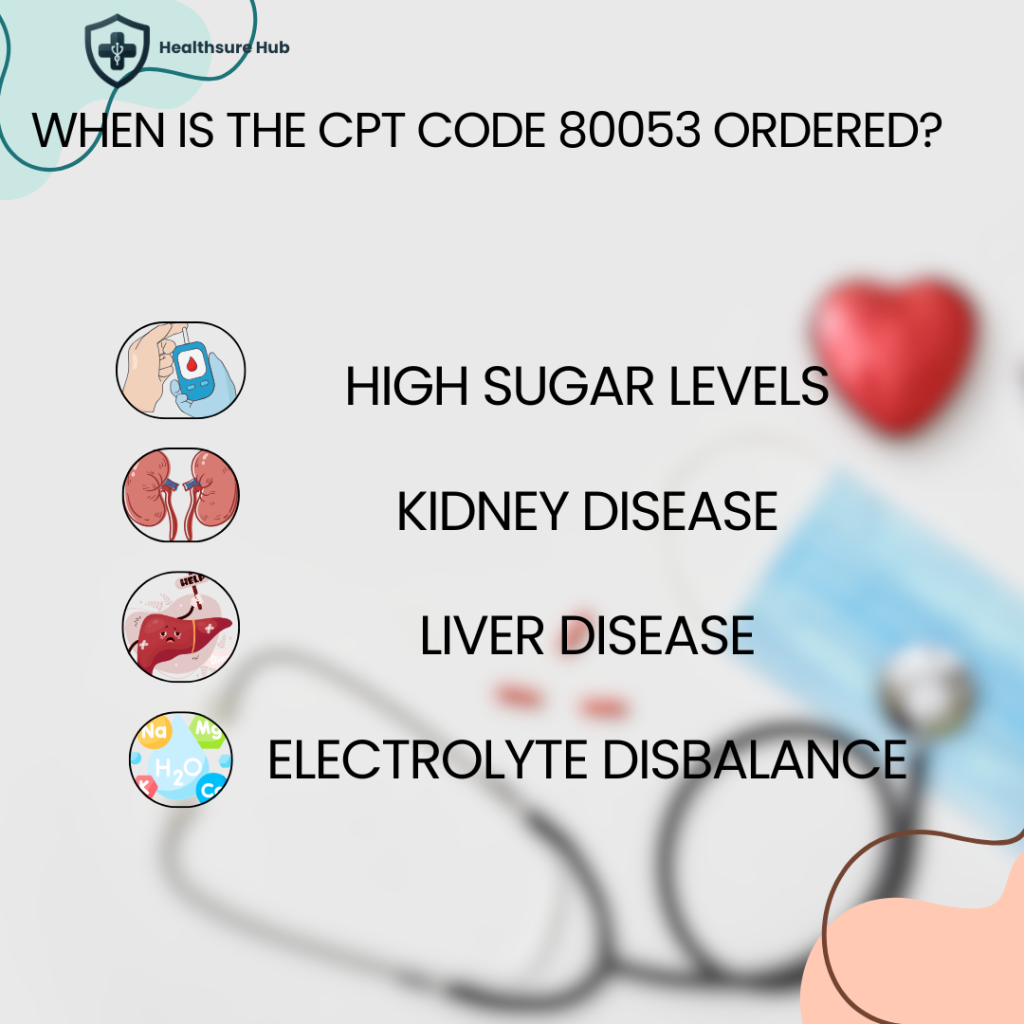
The CPT 80053 is ordered for:
- Kidney disease
- Liver disease
- High sugar levels
- Electrolyte disbalance
Because it spans multiple organ systems, the CMP is one of the most commonly ordered lab tests in both outpatient and inpatient settings.
Tests included in CPT 80053
While CPT code 80048 focuses on core electrolytes, glucose, and kidney function, CPT code 80053 expands the evaluation to include liver enzymes and protein levels. Providers typically choose CPT 80053 when a more comprehensive assessment is needed, and CPT 80048 when a narrower metabolic snapshot is clinically sufficient. Under the CPT code 80053 the provider evaluates the blood test for:
- Glucose– measures blood sugar levels and helps detect diabetes, hypoglycemia, or metabolic stress.
- Calcium- not having enough calcium in your blood may pose significant danger to your nerves, muscles, and heart function.
- Sodium– regulates fluid balance, nerve signals, and muscle function.
- Potassium– critical for heart rhythm and muscle contraction.
- Chloride– helps maintain proper acid-base balance.
- Carbon Dioxide (Bicarbonate)– reflects metabolic and respiratory balance.
- Blood Urea Nitrogen (BUN)– indicates how well the kidneys are removing waste.
- Creatinine– measures kidney filtration efficiency.
- Total Protein– reflects immune and nutritional health.
- Albumin– indicates liver function, kidney health, and nutritional status.
- ALP (alkaline phosphatase), ALT (alanine transaminase), and AST (aspartate aminotransferase)- enzymes found in the liver that help clinicians understand how well the liver is functioning and whether liver cells are under stress or damaged.
- Bilirubin– Evaluates liver processing and red blood cell breakdown.
What Is CPT Code 80053 Used For?
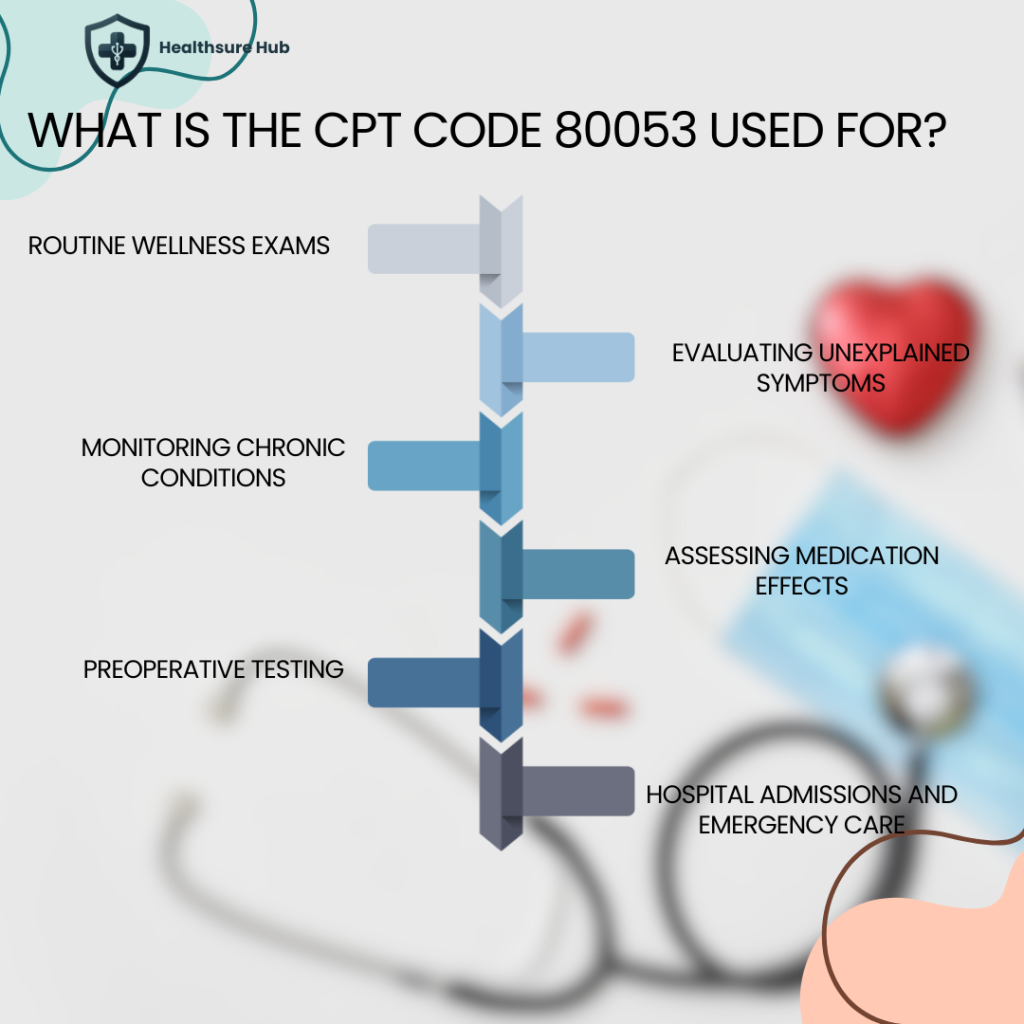
CPT 80053 is used in a wide range of clinical situations because of its broad diagnostic value. Common uses include:
- Routine wellness exams and preventive screenings
- Evaluating unexplained symptoms such as fatigue, nausea, or weakness
- Monitoring chronic conditions, including diabetes, kidney disease, and liver disease
- Assessing medication effects, especially drugs that impact the liver or kidneys
- Preoperative testing to ensure metabolic stability
- Hospital admissions and emergency care
Because the CMP can reveal early abnormalities, it is often used as a first-line test before more specialized diagnostics are ordered.
How CPT 80053 Code Appears on Medical Bills
Patients often encounter CPT 80053 code on:
- Laboratory invoices
- Insurance Explanation of Benefits (EOBs)
- Online patient portals
The description may read “Comprehensive Metabolic Panel” or simply “CMP.” Although it represents multiple tests, it is billed as a single panel code, which can reduce overall costs compared to billing each test individually.
Medical Necessity and Documentation
From a billing and compliance perspective, CPT 80053 must be supported by:
- Clear provider documentation
- Relevant ICD-10 diagnosis codes
- Evidence that the test results will influence clinical decision-making
Accurate documentation protects providers from denials and ensures patients are not billed unnecessarily.
Why CPT 80053 Is So Widely Used
CPT code 80053 remains a cornerstone of laboratory testing because it provides a cost-effective and clinically efficient way to evaluate multiple aspects of a patient’s health at once. By combining key metabolic, kidney, liver, and electrolyte measurements into a single panel, it delivers broad, actionable information without the need for excessive or fragmented testing.
This makes it especially valuable for preventive care, early diagnosis, and ongoing monitoring of chronic conditions. For providers, CPT Code 80053 helps identify potential health issues early while minimizing unnecessary tests, and for patients, it offers a clearer, more comprehensive assessment from just one blood draw
Conclusion
CPT Code 80053 represents more than a billing line item. It reflects a carefully designed panel that helps clinicians understand how the body’s major systems are working together. For patients, understanding this code can reduce confusion and encourage informed conversations with healthcare providers. For professionals, accurate use and documentation of CPT 80053 support better care, cleaner claims, and more reliable outcomes.
About the Author