In the field of hematology, precise evaluation of blood components is essential for diagnosing a wide range of conditions, from infections to complex blood disorders such as leukemia. Among the various laboratory procedures, CPT code 85007 stands out as a specialized test designed for providing insights that automated systems might overlook.
Our team at HealthSure Hub explores the purpose, procedure, and clinical significance of CPT 85007, and explains how it fits into the broader framework of hematology testing.
What is CPT Code 85007?
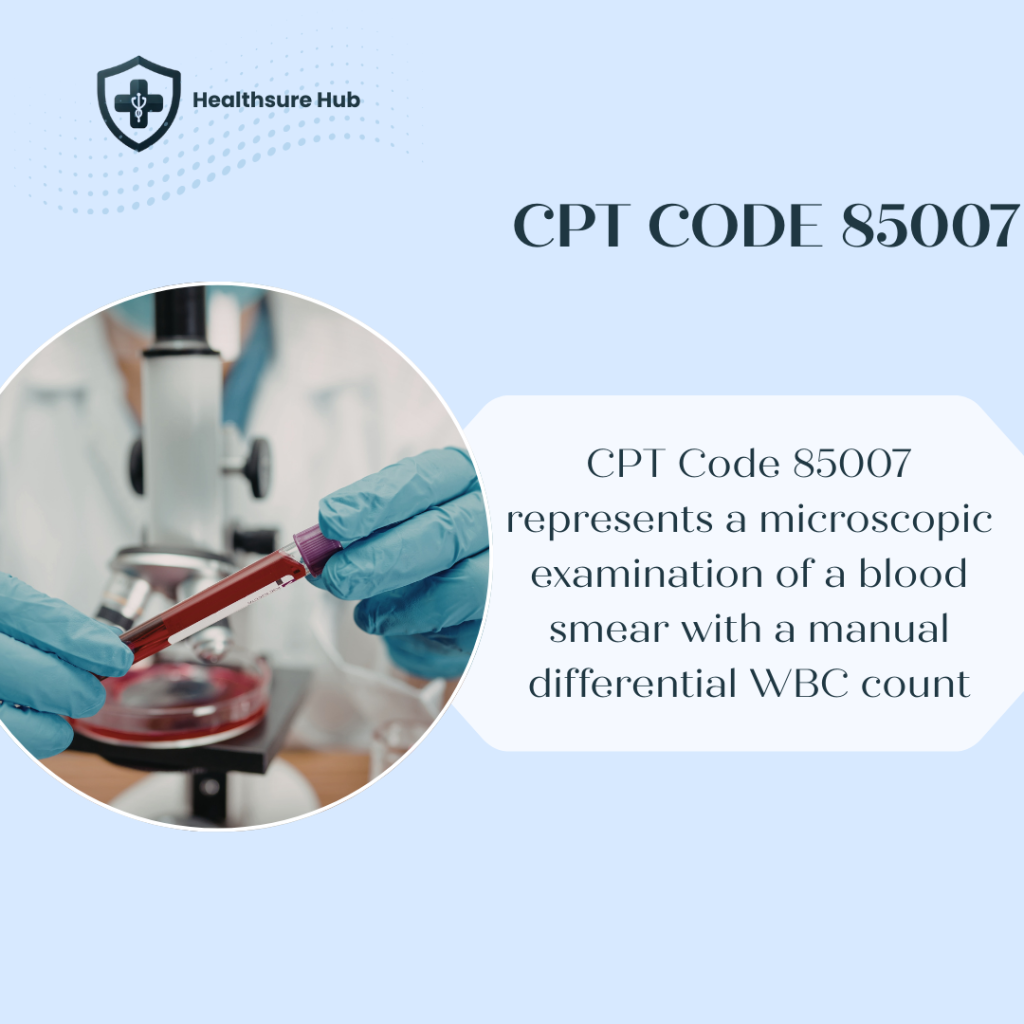
CPT Code 85007 represents a microscopic examination of a blood smear with a manual differential WBC count. Unlike automated complete blood counts (CBCs), which rely on machines to measure blood cells, CPT code 85007 requires a trained laboratory technician or pathologist to manually examine a stained blood smear.
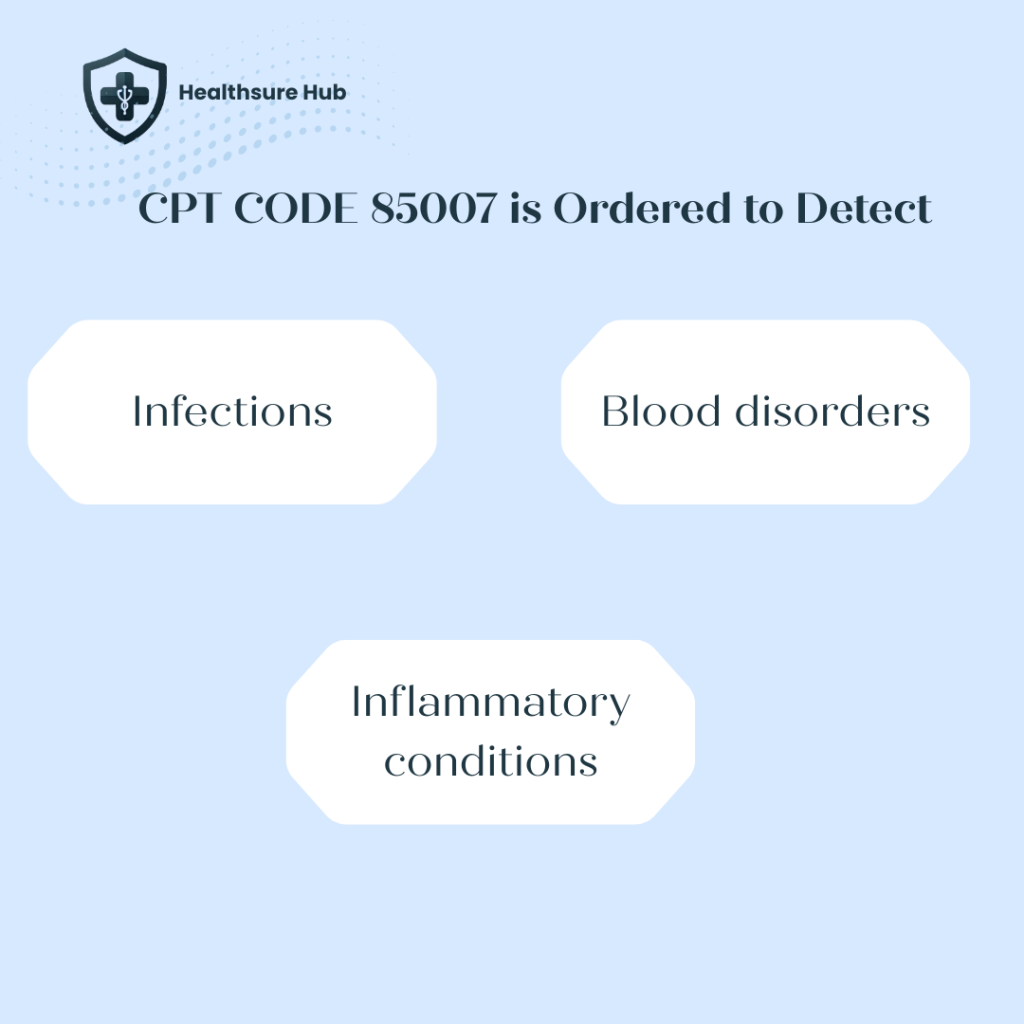
The main purpose of this test is to detect abnormalities in white blood cells that automated counters might miss. By evaluating the morphology of WBCs, including size, shape, and maturity, clinicians can diagnose infections, inflammatory conditions, and blood disorders such as leukemia.
How CPT Code 85007 is Performed
The test starts with a blood smear preparation, where a small blood sample is spread across a microscope slide. The slide is then stained (commonly using Wright or Giemsa stain) to highlight the different types of white blood cells.
During the manual differential analysis, the technician classifies WBCs into their main types:
- Neutrophils: Respond to bacterial infections.
- Lymphocytes: Critical for viral immune responses.
- Monocytes: Involved in chronic inflammation and tissue repair.
- Eosinophils: Elevated in allergic reactions or parasitic infections.
- Basophils: Rare cells involved in allergic responses.
The technician counts at least 100 WBCs to determine the proportion of each type and identifies any abnormal or immature cells. This level of detail provides information that automated tests often cannot capture, making CPT code 85007 particularly valuable for complex cases.
Clinical Importance of CPT Code 85007
CPT code 85007 is often ordered as a follow-up or reflex test when automated CBC results are abnormal. Its clinical significance includes:
- Infection detection- changes in WBC counts can indicate bacterial or viral infections.
- Blood disorders- early detection of leukemia, lymphoma, or other hematologic malignancies often relies on identifying abnormal or immature cells.
- Inflammatory conditions- chronic inflammation can affect WBC morphology, which a manual differential can detect.
- Treatment monitoring: patients undergoing chemotherapy or other therapies may require detailed monitoring of WBC types and counts.
By providing a manual review of WBC morphology, CPT Code 85007 ensures that subtle abnormalities are not overlooked, supporting accurate diagnosis and treatment planning.
Advantages of Manual Differential WBC Testing
While automated analyzers provide fast results, manual differential testing under CPT Code 85007 offers several advantages:
- Detection of immature cells- critical for diagnosing leukemia or other hematologic disorders.
- Identification of abnormal morphology- certain infections and diseases can cause atypical WBC shapes that automated counters may not detect.
- Confirmation of automated results- manual review serves as a quality check when automated systems flag abnormal findings.
- Targeted diagnostic insight- Manual differentials can uncover rare or subtle hematologic abnormalities, guiding further testing or treatment decisions.
This detailed analysis is crucial for patients with complex conditions where precision can significantly affect clinical outcomes.
Billing and Documentation for CPT Code 85007
Correct billing and documentation for CPT 85007 are essential:
- Medical necessity- Must be ordered for a valid clinical reason, often as a follow-up to an abnormal automated CBC.
- Separate reporting- Can be billed with CPT code 85027 but not with automated differential (85025).
- Detailed Lab Records: Reports should document the WBC types, counts, and any abnormal findings, supporting insurance reimbursement and compliance.
Accurate billing ensures that laboratories are properly compensated for the specialized manual work involved in CPT code 85007.
Conclusion
CPT code 85007 is a key hematology procedure that enables a manual differential white blood cell count, providing detailed insights into WBC morphology that automated systems may miss. By identifying immature or abnormal cells, CPT 85007 helps detect infections, inflammatory conditions, and blood cancers, making it indispensable in clinical practice.
For healthcare providers, understanding CPT Code 85007—including its procedure, clinical applications, and billing considerations—is critical for delivering precise, high-quality patient care. By combining automated CBC testing with other hematology codes, the code ensures that even subtle hematologic abnormalities are detected early, improving patient outcomes and supporting accurate medical coding.
About the Author