Medical lab reports can be confusing, especially when you see codes like CPT code 85610. If you’ve ever wondered what this code means, why it appears on your insurance statement, or how it impacts your health, you’re not alone. Understanding CPT codes empowers patients, caregivers, and even healthcare professionals to make informed decisions about care, treatment, and billing.
HealthSure Hub breaks down CPT Code 85610, explains what it measures, why it matters, and how the results can guide your healthcare.
What is CPT Code 85610?
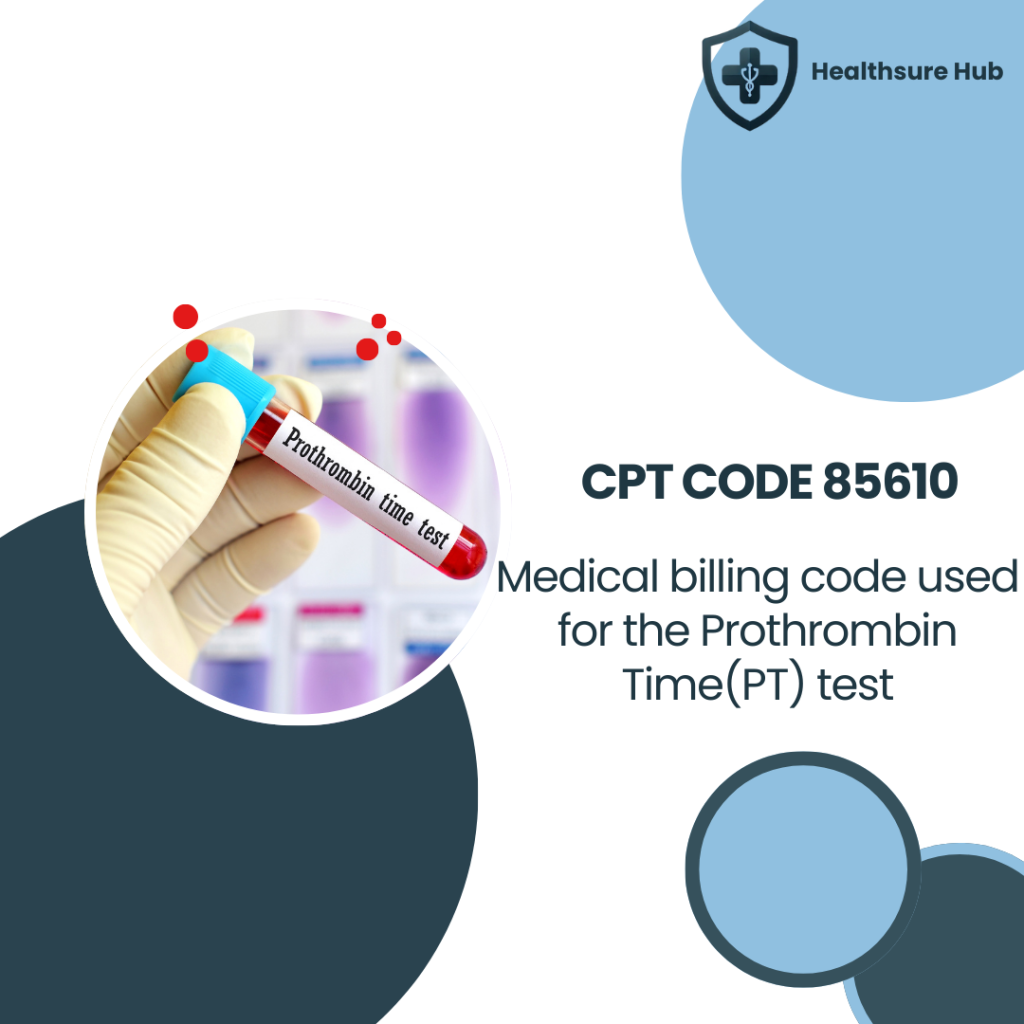
CPT Code 85610 is a medical billing code used for the Prothrombin Time (PT) test. PT tests measure how long your blood takes to clot. This information is essential because proper clotting is vital for preventing excessive bleeding or dangerous clot formation.
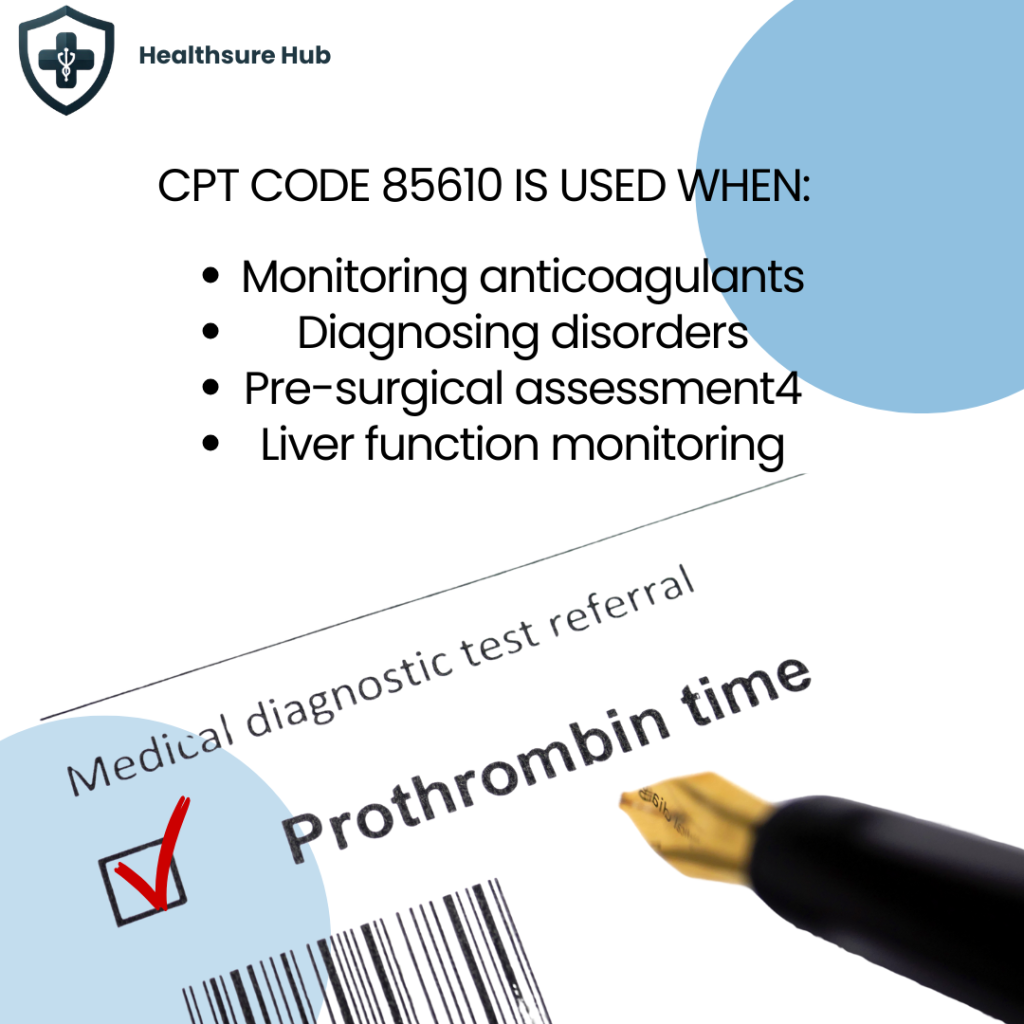
Physicians commonly order this test in several situations:
- Monitoring anticoagulant therapy, such as warfarin
- Diagnosing bleeding disorders or clotting deficiencies
- Pre-surgical evaluation to reduce the risk of excessive bleeding
- Evaluating liver function, as liver health directly affects clotting factors
By standardizing lab procedures with CPT codes like 85610, healthcare providers can ensure consistent documentation and accurate billing for insurance purposes.
Breaking Down the Test
At its core, the Prothrombin Time test measures how long it takes for your plasma (the liquid part of blood) to form a clot. The process is straightforward for patients but scientifically precise for labs:
- Sample Collection- a blood sample is drawn from a vein, usually in the arm.
- Lab Analysis- the plasma is separated, and reagents are added to initiate clotting. The time it takes for clot formation is measured.
- Result Interpretation- the lab reports your PT in seconds. Physicians may also calculate an INR (International Normalized Ratio) to standardize results across different labs and treatment plans.
Normal PT values vary depending on age, health status, and lab standards. Slight deviations aren’t necessarily alarming, but significant changes can indicate underlying health issues that require attention.
Why CPT Code 85610 is Important
Understanding why this test is ordered can make it easier to appreciate its importance:
- Monitoring anticoagulants- for patients on warfarin or similar medications, regular PT tests prevent over- or under-anticoagulation, which could lead to dangerous bleeding or clot formation.
- Diagnosing disorders- PT tests can detect clotting factor deficiencies or conditions like vitamin K deficiency, liver disease, or hemophilia.
- Pre-surgical assessment- Surgeons often require PT testing to minimize the risk of excessive bleeding during operations.
- Liver function monitoring- Since the liver produces most clotting factors, abnormal PT results may indicate liver dysfunction.
In short, CPT Code 85610 represents more than a number on a bill. It’s a critical component of patient safety and treatment planning.
CPT Code 85610 in Clinical Practice
In real-world medical practice, PT results guide important decisions:
- Adjusting medication- a physician may change the dosage of anticoagulants based on PT or INR results.
- Planning procedures-If a patient has prolonged clotting times, elective surgeries may be delayed or additional precautions taken.
- Risk assessment- PT tests can indicate bleeding risks for patients with chronic conditions like liver disease or cardiovascular issues.
Because this code is widely used in both inpatient and outpatient settings, understanding it benefits patients, healthcare staff, and medical coders alike. Accurate use of CPT 85610 ensures proper billing, documentation, and patient care continuity.
Understanding Test Results
Interpreting PT results is best done with a healthcare professional, but having a general understanding can be very helpful. A normal PT result indicates that your blood is clotting at the expected rate, which reflects typical clotting function. If your PT is prolonged, it suggests that your blood is clotting more slowly than usual, which could be caused by medications, liver disease, or deficiencies in clotting factors.
On the other hand, a shortened PT is less common but may indicate a higher risk of abnormal clot formation. For patients taking anticoagulants, PT results are often converted into an INR value, which standardizes readings across different labs and helps doctors adjust medication safely.
It’s important to remember that factors such as diet, other medications, or acute illness can influence PT results, making routine testing and proper follow-up essential for accurate monitoring and effective care.
Conclusion
CPT Code 85610, a common CPT code in hematology, is more a billing number, but rather a cornerstone of patient care and safety. By understanding this code, you can better interpret lab results, follow your treatment plan, and communicate effectively with healthcare providers. Whether you’re a patient managing anticoagulant therapy or a medical professional ensuring accurate documentation, knowledge of CPT 85610 empowers you to make informed decisions and take control of your health.
About the Author