You work hard, live a healthy lifestyle, and rarely think about the possibility of being unable to work. Yet disability can happen to anyone, at any age. Your paycheck isn’t just money—it’s what allows you to pay your mortgage, put food on the table, save for your future, and enjoy life. Protecting that income is just as important as protecting your health, home, or family.
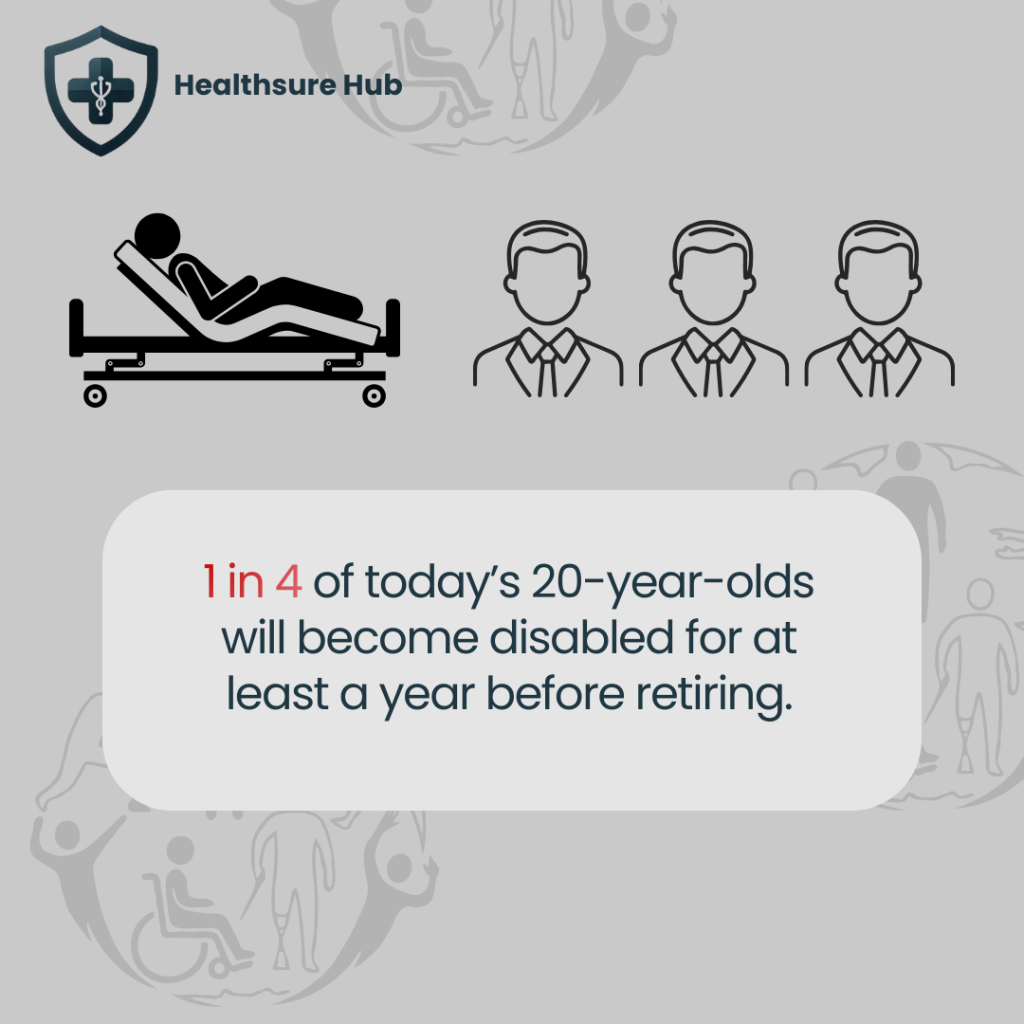
The reality is sobering. According to disability insurance statistics, 1 in 4 of today’s 20-year-olds will experience a disability lasting a year or more before retirement, and about 1 in 7 adults between 35 and 65 will face a disability lasting five years or longer. Out team at Healthsure Hub explores the risks, causes, financial impact, and coverage options so you can protect yourself and your family.
Top Disability Insurance Statistics
- At least 51 million working adults over the U.S. are without disability insurance other than the basic coverage
- There’s a high chance that one in four of today’s 20-year-olds will be out of work for at least a year because of a given disabling condition before reaching retirement.
- Approximately 5.6% of working Americans will experience a short term disability each year.
- The average long-term disability lasts roughly 34–36 months, or just under three years.
- Only 3% of disabling accidents are work-related.
- 97% of disability claims are not covered by workers’ compensation.
- Over 110 million of Americans don’t have long-term disability coverage.
- 64% of American adults don’t understand what disability insurance is.
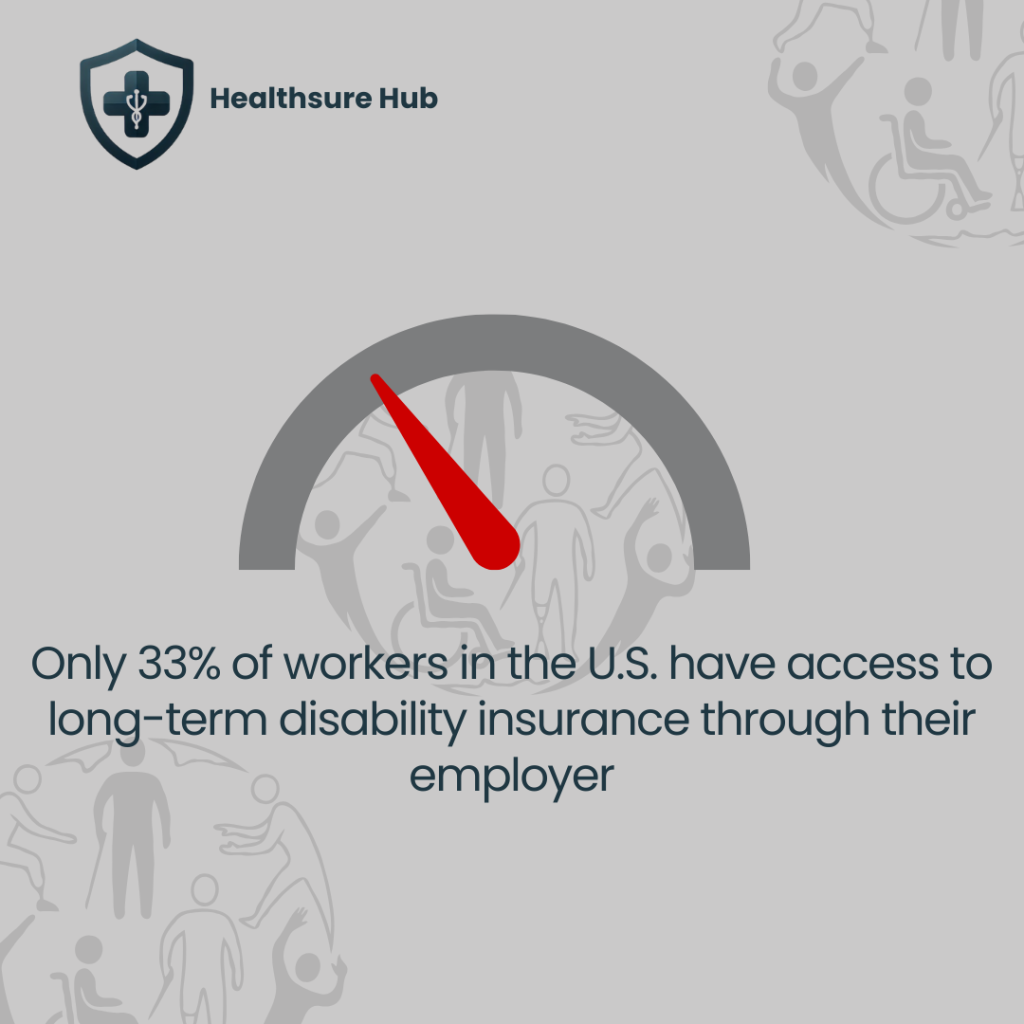
- 33% of workers in the U.S. have access to long-term disability coverage through their employer.
- 39% of workers in the U.S. in the private industry are covered by employer-sponsored short term disability coverage.
- Being totally disabled for six months to a year could wipe out 10 years in savings.
Millions of Americans Lack Proper Disability Coverage
At least 51 million working adults in the U.S. are without disability insurance beyond the basic coverage. This leaves a substantial portion of the workforce vulnerable to unexpected income loss if they become sick or injured. Without proper coverage, even a minor disability could force families to dip into savings, take on debt, or delay important life goals such as buying a home or saving for retirement. The sheer size of this uninsured population highlights the urgent need for awareness and planning.
Disability Insurance Statistics for Young Adults
Disability insurance statistics show that 1 in 4 of today’s 20-year-olds will experience a disabling condition that keeps them out of work for at least a year before retirement. Many young workers mistakenly assume disability is only a risk for older adults, but statistics show otherwise. Early career injuries or illnesses can derail savings plans, delay milestones like buying a house, and even impact long-term financial stability. Planning for disability from a young age ensures income protection and reduces stress if an unexpected event occurs.
Long-Term Disabilities Can Last Years
The average long-term disability lasts roughly 34–36 months, nearly three years. During this period, most workers will struggle to cover living expenses without a reliable income replacement plan. Long-term disabilities often coincide with rising medical costs, ongoing care needs, and potential lifestyle adjustments, underscoring the importance of having a robust long-term disability insurance policy to safeguard both short-term and long-term financial well-being.
Most Disabilities Are Not Work-Related
Based on research for disability insurance statistics, only 3% of disabling accidents occur at work, meaning that 97% of disability claims are unrelated to the workplace. This is an important distinction because most people rely on workers’ compensation for protection, which does not cover non-work-related disabilities. Illnesses such as cancer, heart disease, and chronic conditions are the most common causes of long-term disability, making personal or employer-provided disability insurance essential for comprehensive protection.
Millions Lack Long-Term Disability Coverage
Disability insurance statistics point out that over 110 million Americans do not have long-term disability coverage, leaving a large segment of the workforce at risk of serious income loss. Without coverage, workers facing a long-term illness or injury may have to rely on limited savings, government benefits, or loans, which may not be sufficient to maintain their lifestyle. This gap demonstrates the importance of evaluating personal risk and considering individual disability insurance policies to complement existing coverage.
Lack of Understanding About Disability Insurance
Approximately 64% of American adults do not understand how disability insurance works. This lack of awareness contributes to low coverage rates, leaving many people financially unprepared for unexpected disabilities. Education about disability insurance is critical; understanding policy types, benefit amounts, waiting periods, and exclusions can help individuals make informed choices to protect their income.
Employer-Sponsored Coverage Is Limited
Based on disability insurance statistics, only 33% of workers in the U.S. have access to long-term disability insurance through their employer, and 39% of private-industry employees are covered by short-term disability plans. While employer plans provide some financial support, they often cover only a portion of income and may not be portable if you change jobs. This makes it crucial for workers to assess the adequacy of employer-provided coverage and consider supplementing it with individual disability insurance for complete protection.
The Financial Impact of a Disability
Being totally disabled for six months to a year could wipe out the equivalent of 10 years of savings for the average American. These disability insurance statistics underscore the potentially devastating financial impact of a disability, even for individuals who have managed to save diligently. Without proper income protection, families may have to make difficult choices, such as reducing living expenses, postponing retirement plans, or taking on debt, highlighting the essential role of disability insurance in financial planning.
Short-Term Disability Affects Many Workers
Approximately 5.6% of working Americans experience a short-term disability each year, typically lasting six months or less. While these disabilities may seem brief, they can have a significant financial impact, especially for individuals without short-term disability coverage or emergency savings. Even a few months away from work can disrupt your ability to pay bills, maintain your lifestyle, or support dependents. These disability insurance statistics highlight why short-term coverage is an essential part of protecting your income.
Disability Prevalence and Risk
According to disability insurance statistics, the odds of becoming disabled are higher than most people think. Here’s a quick look at the risk of disability versus death by age:
| Age | Disabilities per 1,000 Lives | Deaths per 1,000 Lives | Disability vs Death Ratio |
| 20s | 5.2 | 1.5 | 3.5:1 |
| 30s | 5.4 | 1.6 | 3.3:1 |
| 40s | 10.2 | 3.2 | 3.2:1 |
| 50s | 17.5 | 6.8 | 2.6:1 |
Common Causes of Long Term Disability Claims
Disability insurance statistics indicate that most disabilities are caused by illnesses, not accidents. The top 5 causes for long term disability claims are:
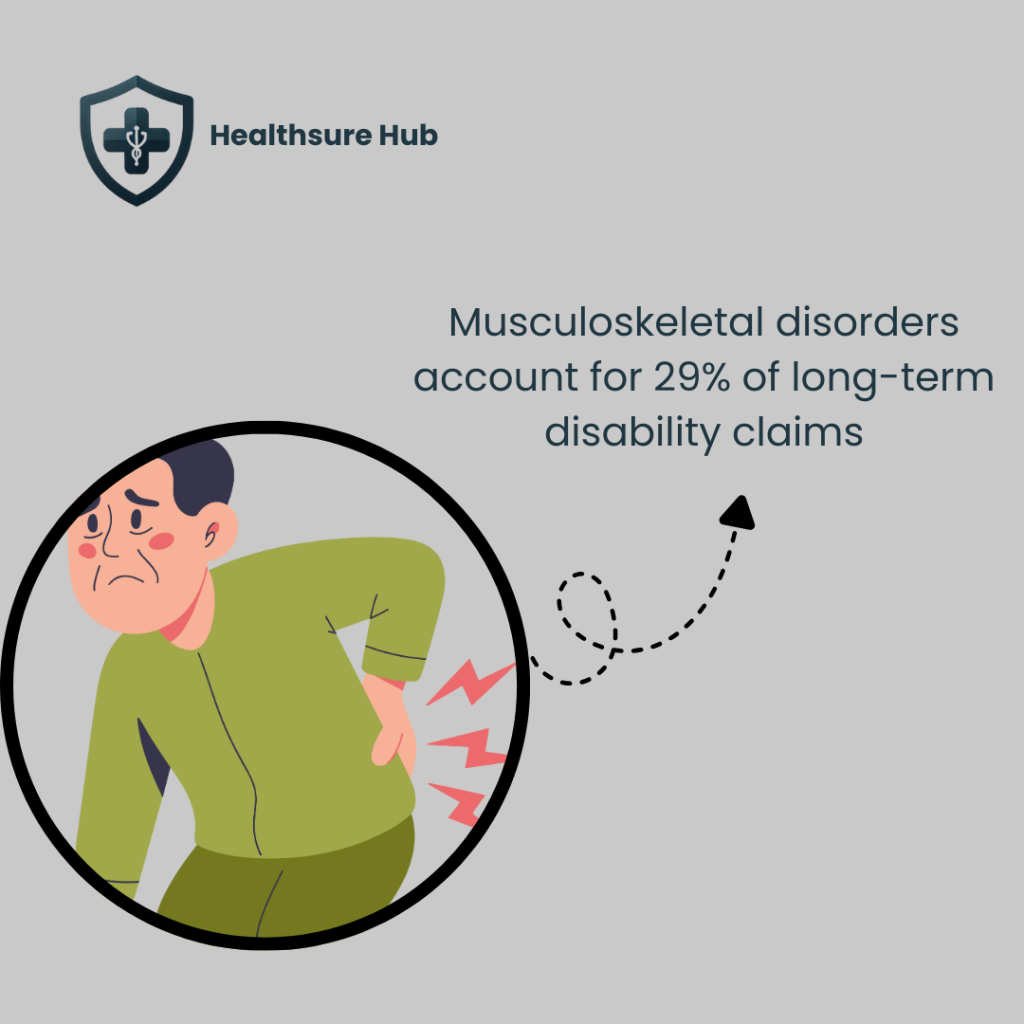
- Musculoskeletal disorders (back, spine, joints) account for 29% of long term disability claims.
- Cancer takes around 15% of long-term disability claims.
- Mental Health Disorders account for 9.1% of long-term disability claims.
- Pregnancy and complications account for 9.1% of long-term disability claims.
- Only 9% of long-term disability claims are because of injuries.
Other contributing factors include heart disease, diabetes, and arthritis. Notably, based on the disability insurance statistics, 97% of disability claims are non-work-related, meaning workers’ compensation often does not cover these events.
Common Reasons for Short Term Disability Claims
The most common reasons for short term disability claims are:
- Pregnancies account for 22% of all short-term disability claims.
- Musculoskeletal disorders account for 17% of all short-term disability claims.
- Mental health issues such as depression and anxiety account for 11% of all short-term. disability claims.
- Only 7% account for digestive disorders.
Conclusion
The disability insurance statistics make one thing clear: the risk of becoming disabled during your working years is higher than most people realize. From young adults to seasoned professionals, millions of Americans face the possibility of a short-term or long-term disability that could severely impact their income and savings. Without proper coverage, even a temporary disability could wipe out years of financial planning, disrupt your lifestyle, and create stress for you and your family.
By understanding the risks, causes, and financial impact outlined in the disability insurance statistics, you can take proactive steps to protect your income and secure your future
Sources:
- https://www.disabilityquotes.com/disability-insurance-statistics
- https://theaiatrust.com/disability-insurance-key-facts-you-need-to-know
- https://www.simplyinsurance.com/disability-statistics
- https://www.policygenius.com/disability-insurance/disability-insurance-and-savings-survey-2024
- https://ahiporg-production.s3.amazonaws.com/documents/IncomeProtection_IssueBrief_Update_Oct.8.15.pdf
- https://docs.rbcwealthmanagement.com/us/4311-disability-income-insurance.pdf
- https://thecdia.org/disability-statistics/
- https://thecdia.org/how-disability-income-works/
About the Author