Fatigue is a common symptom in clinical practice, ranging from mild tiredness to significant exhaustion that affects daily functioning. In the ICD-10-CM classification system, R53.83 is designated for other fatigue. Unlike chronic fatigue or fatigue associated with specific medical conditions, the said code is used when fatigue does not fit into any other defined category.
Accurate coding of this symptom is crucial for clinicians, coders, and healthcare organizations to ensure proper documentation, billing, and healthcare analytics. At HealthSure Hub, we provide comprehensive, up-to-date guidance on ICD-10 codes to help healthcare professionals maintain accuracy and compliance in clinical documentation.
What Is ICD-10-CM Code R53.83?
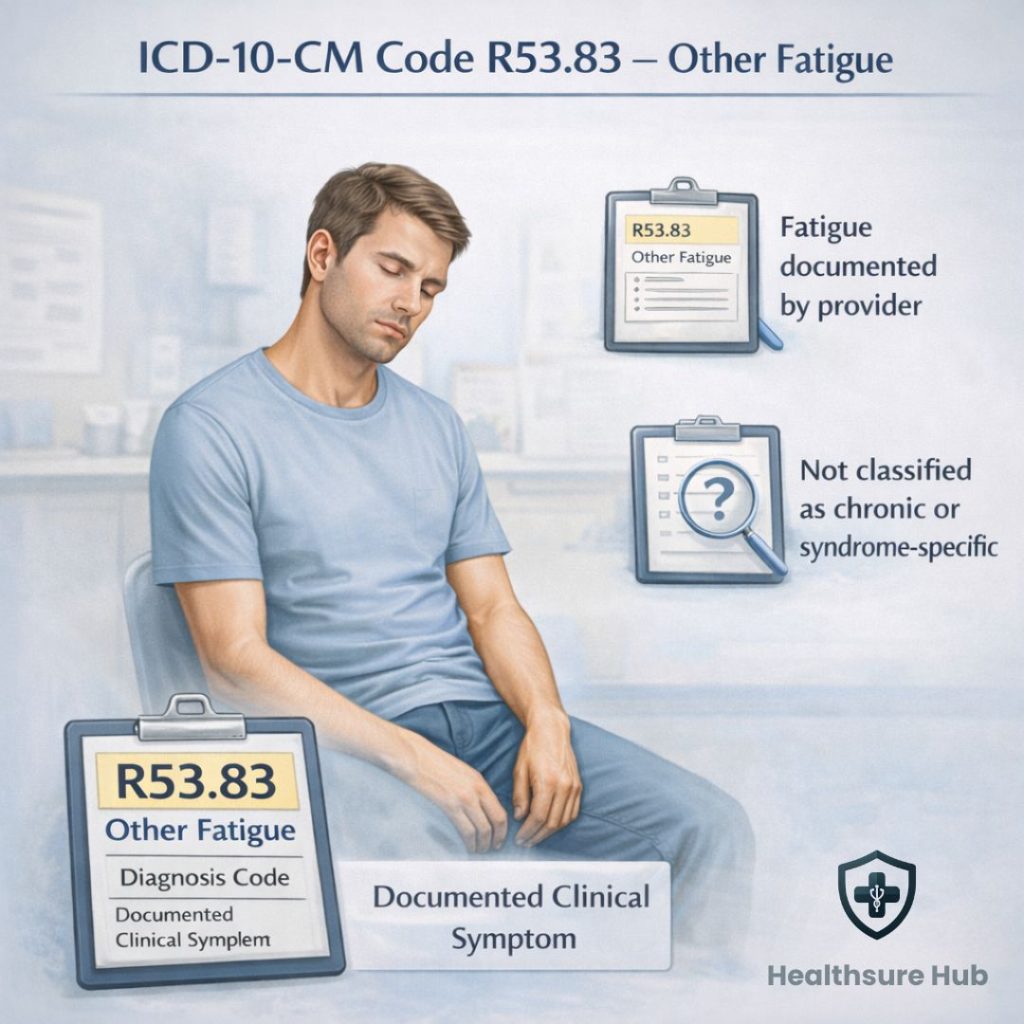
ICD-10 code R53.83 falls under the broader category R53 – malaise and fatigue, which captures general feelings of tiredness and weakness. Specifically, the code is labeled as other fatigue, meaning it applies to instances of fatigue that do not meet the criteria for other codes.
It is important to differentiate R53.83 from related codes within the same category:
- R53.0 – Neoplastic fatigue: Fatigue caused by cancer or cancer treatments.
- R53.1 – Weakness: Generalized muscle weakness without fatigue as the primary complaint
- R53.82 – Chronic fatigue, unspecified: Fatigue lasting six months or longer, not associated with a specific disease.
The code captures fatigue that is temporary, situational, or otherwise unspecified, providing a coding option for cases that do not fit neatly into other categories.
When Is The ICD-10 Code for Other Fatigue Used
The code is appropriate when a patient experiences fatigue that is:
- Not linked to chronic conditions such as chronic fatigue syndrome.
- Not associated with neoplastic diseases or their treatment.
- Not clearly chronic or long-lasting.
Clinical scenarios may include post-exertional fatigue, fatigue following acute illness, or situational tiredness related to lifestyle factors. Coders should avoid using the ICD-10 code for disease-related fatigue, which should instead be coded under the relevant condition-specific code. Accurate use of this code ensures proper documentation and appropriate reimbursement while avoiding claim denials.
Coding Guidelines and Documentation
The official ICD-10-CM guidelines state that R53.83 should be used when fatigue is documented but does not fall under other specified codes. Key documentation tips for clinicians include:
- Clearly stating onset, duration, and context of fatigue.
- Differentiating fatigue from generalized weakness or chronic fatigue.
- Providing supporting notes to justify the use of R53.83 for coders.
For medical coders, best practices include:
- Cross-checking clinician notes to confirm fatigue is unspecified.
- Ensuring that no more specific ICD-10 code applies.
- Documenting the code in primary or secondary diagnosis fields according to the encounter.
Clinical Relevance
Accurate coding of R53.83 impacts multiple areas of healthcare:
- Patient Care Coordination: Ensures all providers understand the patient’s fatigue status for monitoring and follow-up.
- Insurance and Reimbursement: Correct coding avoids denied claims and ensures appropriate compensation.
- Data Analytics: Tracking instances of “other fatigue” can help healthcare organizations understand population health trends and identify areas needing intervention.
This ICD-10 Code is relevant across many settings, including primary care, occupational health, and outpatient clinics, where unspecified fatigue is a frequently reported symptom.
ICD-10 For Other Fatigue in Medical Billing and Insurance
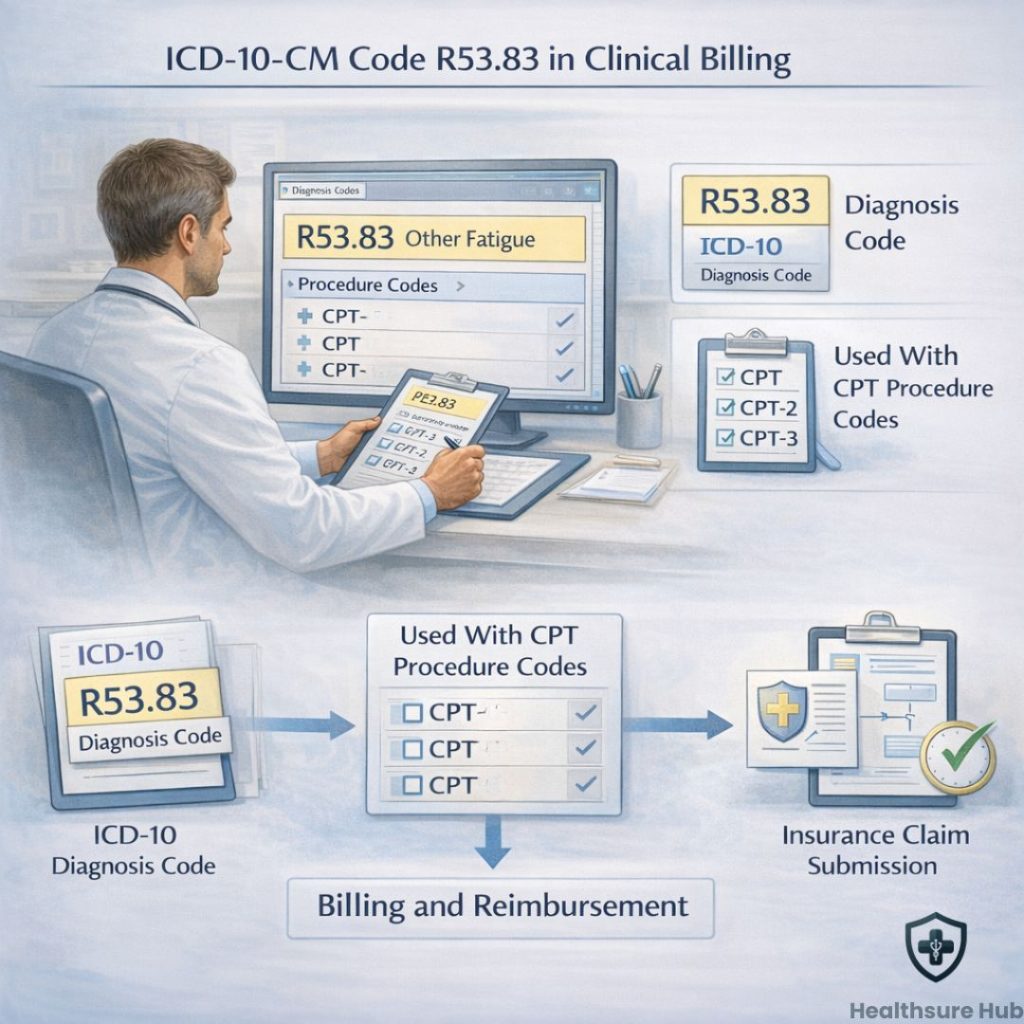
R53.83 is a diagnostic code used in conjunction with procedural codes (CPT codes) for billing purposes. Accurate documentation is essential to prevent denied claims, particularly when fatigue affects the patient’s ability to function or requires medical evaluation. Insurance providers may request additional documentation showing the impact of fatigue on daily activities, making proper notes and clear coding critical.
Conclusion
ICD-10-CM code R53.83- other fatigue provides a standardized method to capture fatigue that is not chronic, disease-related, or syndrome-specific. Correct use of this code relies on careful clinical documentation and adherence to coding guidelines. Proper coding affects patient care, insurance claims, and population health data.
At HealthSure Hub, we provide healthcare professionals with authoritative guidance on ICD-10 codes, ensuring accurate clinical documentation and coding compliance. Using the correctly supports both effective patient care and organizational efficiency.
About the Author