We know that understanding your health can sometimes feel like deciphering a foreign language, especially when it comes to complex medical codes. One such code, R73.03, might pop up in your medical records or lab results, leaving you wondering what it really means.
But what exactly does this code represent, and why does it matter for your long-term health? Here at Healthsure Hub, we’ll break it down in plain language and explore why this ICD-10 code is more than just a number on a chart, it’s a chance to take charge of your wellness before bigger problems arise.
Overview of ICD-10-CM Code R73.03
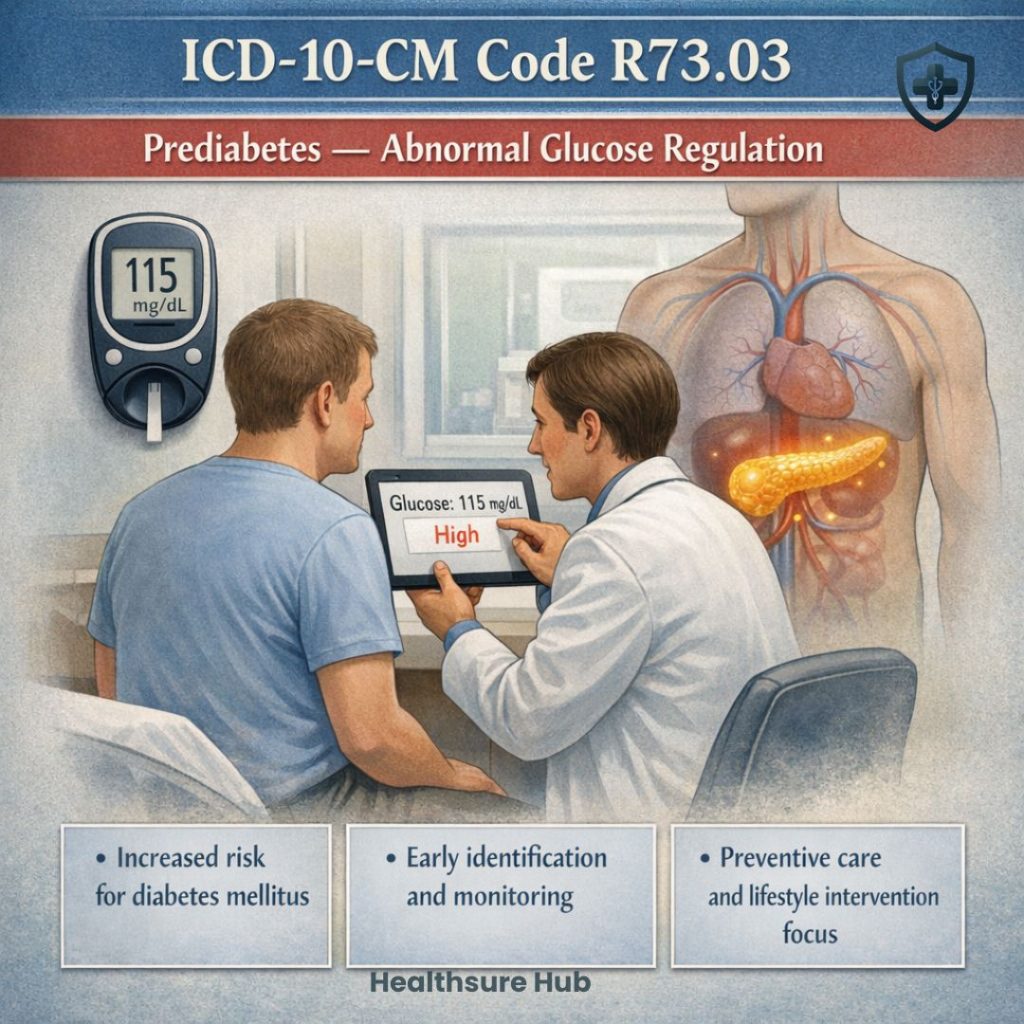
ICD-10-CM code R73.03 is used to document prediabetes, a clinically recognized state of abnormal glucose regulation that places a patient at increased risk for developing diabetes mellitus. This code plays a critical role in early identification, monitoring, and preventive care documentation, particularly in outpatient and primary care settings.
Unlike diabetes codes in the E08–E13 range, the code does not represent an established disease. Instead, it captures a diagnostic assessment of increased metabolic risk, allowing providers to document and track patients who do not yet meet criteria for diabetes but require clinical follow-up.
Accurate use of the ICD-10 code for prediabetes supports preventive interventions, population health management, and compliance with payer and quality reporting requirements.
Official Definition and ICD-10 Classification
R73.03 – Prediabetes is classified under:
- Chapter: Endocrine, nutritional, and metabolic diseases
- Category: Abnormal glucose
The code reflects a provider-diagnosed condition, not merely an abnormal laboratory result. It is distinct from general abnormal glucose findings and from confirmed diabetes mellitus.
Importantly, the ICD-10 code for prediabetes is intended to capture a recognized clinical state, not a temporary or incidental lab abnormality.
Clinical Intent and Appropriate Use
R73.03 is reported when a provider determines that a patient meets criteria for prediabetes based on clinical evaluation and supporting laboratory data. It is commonly used in:
- Primary care and family medicine
- Preventive health visits
- Endocrinology consultations
- Occupational and employer-based health programs
The code allows clinicians to formally document patients who require:
- Ongoing glucose monitoring
- Risk-factor modification counseling
- Follow-up assessments to evaluate disease progression
This specific ICD-10 code should only be assigned when prediabetes is explicitly documented by the provider. It should not be inferred solely from laboratory values without provider interpretation.
Diagnostic Criteria Supporting R73.03
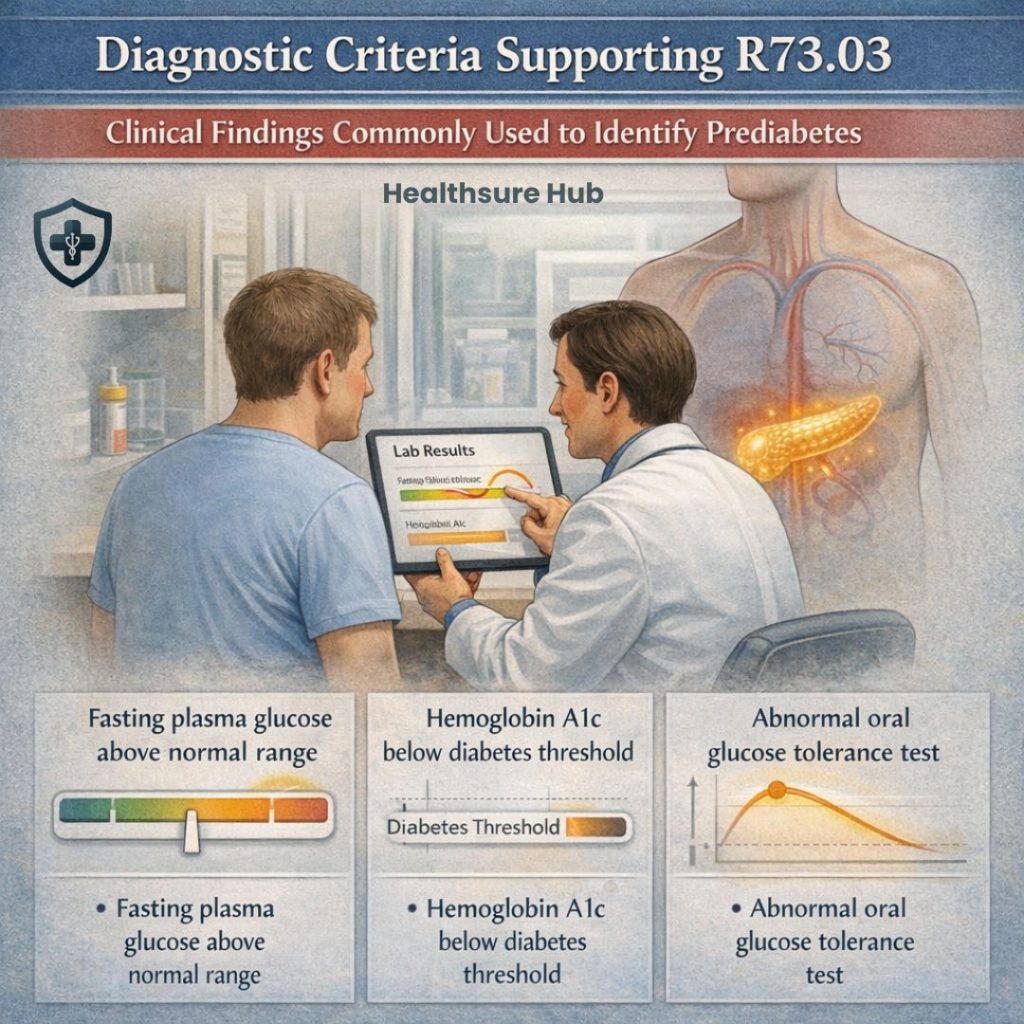
While ICD-10-CM does not define laboratory thresholds, providers commonly rely on recognized clinical standards when diagnosing prediabetes, such as:
- Fasting plasma glucose above normal but below diabetic range
- Hemoglobin A1c levels below the diagnostic threshold for diabetes
- Abnormal oral glucose tolerance test results
From a coding standpoint, the most important requirement is clear provider documentation linking abnormal glucose regulation to a diagnosis of prediabetes. Coders should avoid assigning this ICD-10 code based solely on abnormal lab values or screening results without a documented clinical assessment.
Coding Guidelines and Sequencing Considerations
R73.03 may be reported as:
- A primary diagnosis during visits focused on metabolic risk assessment or preventive care
- A secondary diagnosis when addressed alongside other conditions
It is commonly reported with:
- Preventive examination codes
- Screening encounter codes
- Counseling or monitoring services
When other conditions are present, sequencing should reflect the primary reason for the encounter, consistent with ICD-10-CM Official Guidelines.
Documentation Best Practices
To support accurate coding and compliance, provider documentation should include:
- An explicit diagnosis of “prediabetes”
- Clinical rationale based on evaluation and testing
- A monitoring or follow-up plan
Clear documentation language includes:
- “Patient assessed as prediabetic”
- “Diagnosis: Prediabetes based on glucose trends”
- “Prediabetes—monitoring and follow-up recommended”
Avoid vague or nonstandard terms such as “borderline diabetes” unless clarified as prediabetes.
Reimbursement, Quality Measures, and Risk Management
Although R73.03 is not a hierarchical condition category (HCC), it plays a growing role in:
- Preventive care reimbursement
- Quality improvement programs
- Population health analytics
Accurate reporting supports:
- Early intervention strategies
- Longitudinal risk tracking
- Data-driven preventive care initiatives
Many payers expect documentation demonstrating continued monitoring and reassessment when this ICD-10 code is used over multiple encounters.
Common Coding Errors and Compliance Risks
Frequent mistakes include:
- Assigning R73.03 without provider confirmation
- Using diabetes codes instead of prediabetes
- Confusing abnormal lab findings with a diagnosis
Such errors can lead to claim denials, audit risk, and inaccurate patient records. Coders and providers should ensure documentation clearly supports the diagnosis.
Conclusion
As a risk-based diagnosis rather than a confirmed disease, its accurate use depends on clear provider documentation, correct differentiation from other abnormal glucose and diabetes codes, and appropriate clinical follow-up. When applied correctly, R73.03 supports preventive care initiatives, enables consistent patient monitoring, and strengthens compliance with coding and payer expectations. Proper documentation and coding of prediabetes not only improve individual patient care but also contribute to broader population health tracking and long-term healthcare planning.
About the Author