From athletes sustaining twisting injuries on the field to employees experiencing knee trauma in workplace incidents, meniscus-related injuries affect patients of all ages and activity levels. These injuries often present with pain, swelling, and functional limitations that interfere with daily life and work.
In many early evaluations, however, the precise characteristics of the injury are not immediately clear. This is where ICD-10-CM code S83.209A is frequently used. That’s why our team at HealthSure Hub helps you understand what the code is about, and how S83.209A fits into real-world clinical and billing workflows helps ensure both proper treatment and appropriate reimbursement.
What Is ICD-10-CM Code S83.209A?
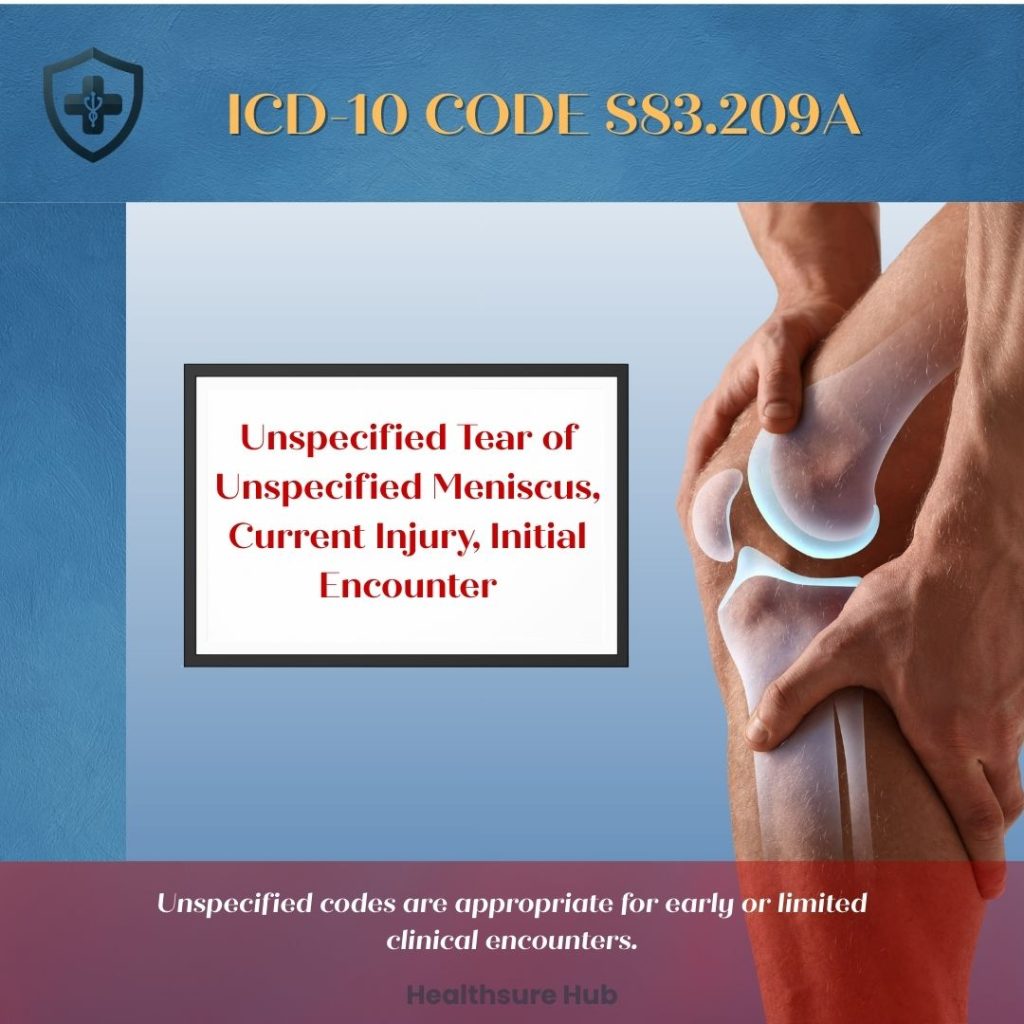
ICD-10-CM code S83.209A stands for an unspecified tear of an unspecified meniscus in an unspecified knee, initial encounter. Each component of the code provides meaningful clinical and administrative context:
- S83: designates injuries involving dislocation, sprain, strain, or tear of the knee’s joint structures and ligaments.
- .209: indicates that the meniscal tear is unspecified, meaning details such as medial versus lateral involvement are not yet documented.
- A: reflects an initial encounter, signifying that the patient is receiving active treatment for the injury.
The use of an unspecified code is common and appropriate during early or limited clinical encounters, particularly when diagnostic imaging is pending or documentation does not yet confirm laterality or tear type.
Meniscus Tear Statistics
Meniscus injuries are among the most common conditions affecting the knee. Studies estimate that about 61 people per 100,000 experience an acute meniscal tear each year. In the U.S., these injuries impact close to one million individuals annually, showing that meniscus tears occur frequently across a wide range of ages and activity levels.
Initial Encounter Explained
In ICD-10-CM terminology, an initial encounter refers to the period during which a patient is actively receiving treatment for a condition. This does not necessarily mean the first visit, but rather the phase in which diagnostic evaluation and therapeutic interventions are occurring.
Examples of active treatment for a meniscus tear include:
- Ordering or reviewing diagnostic imaging such as X-rays or MRI scans
- Managing pain and inflammation with medications
- Applying immobilization, bracing, or activity restrictions
- Referring the patient to orthopedics or physical therapy
As care progresses, coding must evolve accordingly. The A character is replaced by D for subsequent encounters during routine healing or follow-up, and S for sequela when long-term complications persist after the acute injury has resolved.
Diagnostic Evaluation and Documentation Best Practices
Clinical evaluation typically begins with a focused physical examination, assessing joint line tenderness, swelling, range of motion, and stability. Thorough documentation is essential and should include:
- A clear description of the mechanism of injury
- Reported symptoms and functional limitations
- Clinical reasoning supporting the use of an unspecified diagnosis
Detailed documentation not only supports medical decision-making but also plays a critical role in establishing medical necessity and withstanding payer audits.
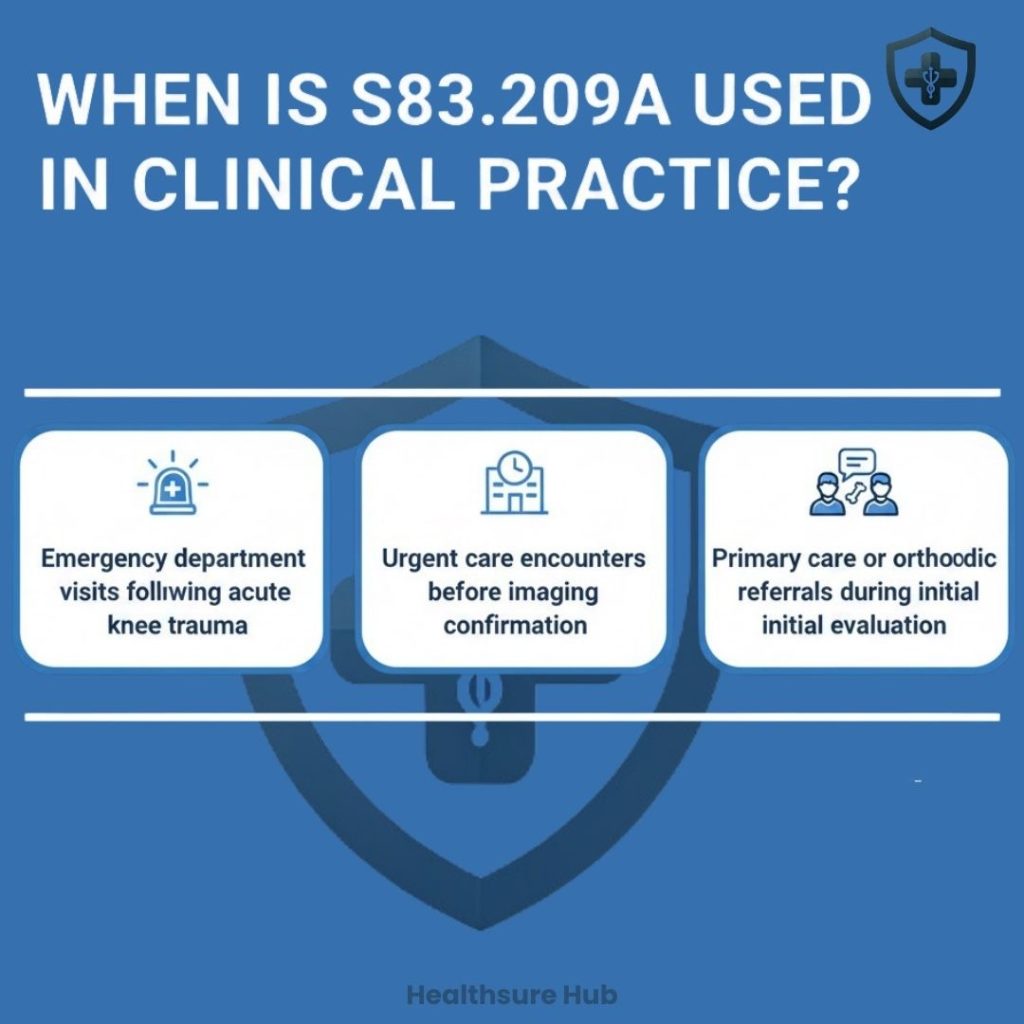
When Is S83.209A Used in Clinical Practice
S83.209A is commonly applied in several real-world scenarios, particularly during early assessment stages:
- Emergency department visits following acute knee trauma
- Urgent care encounters before imaging confirmation
- Primary care or orthopedic referrals during initial evaluation
This code is especially appropriate when imaging results are pending, laterality has not yet been documented, or the specific meniscus involved remains unclear. Its use allows clinicians to accurately capture the presence of a meniscal injury while acknowledging diagnostic uncertainty.
What S83.209A Means for Your Treatment and Recovery
If you see S83.209A on your medical paperwork, it means your doctor believes you have a meniscus tear in your knee, but they don’t yet have all the details. This is very common during the early stages of care, especially before imaging tests like an MRI are completed.
In simple terms: your knee is injured, your care has started, and your provider is still gathering more information.
What Happens During This Stage of Care
At this point, your healthcare provider focuses on relieving symptoms and confirming the diagnosis. This may include:
- Asking about how the injury happened
- Checking for pain, swelling, stiffness, or instability
- Ordering imaging tests such as X-rays or an MRI
- Referring you to a specialist if needed
Using an “unspecified” code allows treatment to begin right away while details are still being evaluated.
Common Treatment Options
Treatment depends on how severe your symptoms are and how active you are. Many patients start with conservative care, such as:
- Rest and ice to reduce swelling
- Pain-relief medications like anti-inflammatories
- Physical therapy to improve strength and movement
- Knee braces or activity changes to protect the joint
If symptoms don’t improve or the tear is more serious, your provider may recommend seeing an orthopedic specialist to discuss further options, including surgery.
How Long Does Recovery Take
Recovery time varies, but here’s a general idea:
- Mild tears: Often improve in 4–6 weeks
- Moderate tears: May take 6–12 weeks with therapy
- Severe tears or surgery: Recovery can take several months, including rehabilitation
Your provider will adjust your treatment plan as your knee heals and more information becomes available.
What This Code Means for Insurance and Follow-Ups
As tests are completed and the exact tear is identified, your doctor will update the diagnosis code to be more specific. This helps:
- Support insurance claims
- Reduce billing delays or denials
- Ensure your medical record accurately reflects your condition
What You Can Do to Support Your Recovery
You can play an active role by:
- Following activity restrictions and therapy plans
- Keeping track of changes in pain or mobility
- Asking questions about next steps, recovery time, and coverage
Clinical Overview of Meniscus Tears
The knee contains two menisci, medial and lateral, which act as shock absorbers and stabilizers between the femur and tibia. Tears can occur in either structure and vary widely in severity and pattern. Common mechanisms of injury include:
- Sudden twisting or pivoting movements
- Sports-related trauma involving rapid directional changes
- Slips, falls, or direct impact in occupational settings
Patients with meniscus tears often present with:
- Localized knee pain and swelling
- Locking, catching, or clicking sensations
- Reduced range of motion
- Feelings of instability or weakness
Because these symptoms overlap with other knee injuries, definitive diagnosis often requires imaging and specialist evaluation.
Coding Considerations and Common Errors
S83.209A should be used only when clinical documentation truly lacks specificity. Once diagnostic clarity is achieved, more precise codes should replace the unspecified designation.
Common coding errors include:
- Continuing to use unspecified codes despite detailed imaging findings
- Failing to update the encounter character as care progresses
- Selecting an incorrect encounter type for follow-up visits
Adhering to coding guidelines and routinely reviewing updated documentation helps ensure accuracy, compliance, and proper reimbursement.
Insurance, Billing, and Reimbursement Implications
While unspecified injury codes are acceptable when justified, insurers may scrutinize them more closely. Clear documentation demonstrating diagnostic uncertainty is key to claim acceptance.
Timely updates to more specific ICD-10 codes after imaging or specialist evaluation can reduce denial risk and support smoother claims processing. Effective coordination between providers, coders, and billing teams ensures that clinical realities are accurately reflected in submitted claims.
Conclusion
S83.209A serves an important role in capturing meniscus injuries during the initial phase of care when diagnostic details are still emerging. Proper use of this code supports accurate clinical documentation, compliant billing, and continuity of patient care.
By emphasizing documentation quality, updating codes as specificity improves, and aligning coding practices with clinical findings, healthcare organizations can improve outcomes, reduce claim denials, and maintain regulatory compliance. When applied correctly, S83.209A becomes a valuable tool within both clinical and administrative workflows—reinforcing trust, expertise, and authority in healthcare documentation.
About the Author