Accidental injuries involving another person are more common than many realize. From a crowded subway platform to a friendly game of basketball, physical contact can result in unexpected harm. While these incidents are often minor, accurate documentation in medical records is essential for treatment, insurance, and public health data.
This is where ICD-10-CM code W51.XXXA comes into play. It describes the mechanism of injury—specifically, situations where an individual accidentally strikes someone else or is struck by another person. Unlike codes for intentional harm, W51.XXXA focuses on accidental, unintentional contact. Our team at HealthSure Hub clearly explains what the code is about, and why correct billing is necessary.
What Does W51.XXXA Mean?
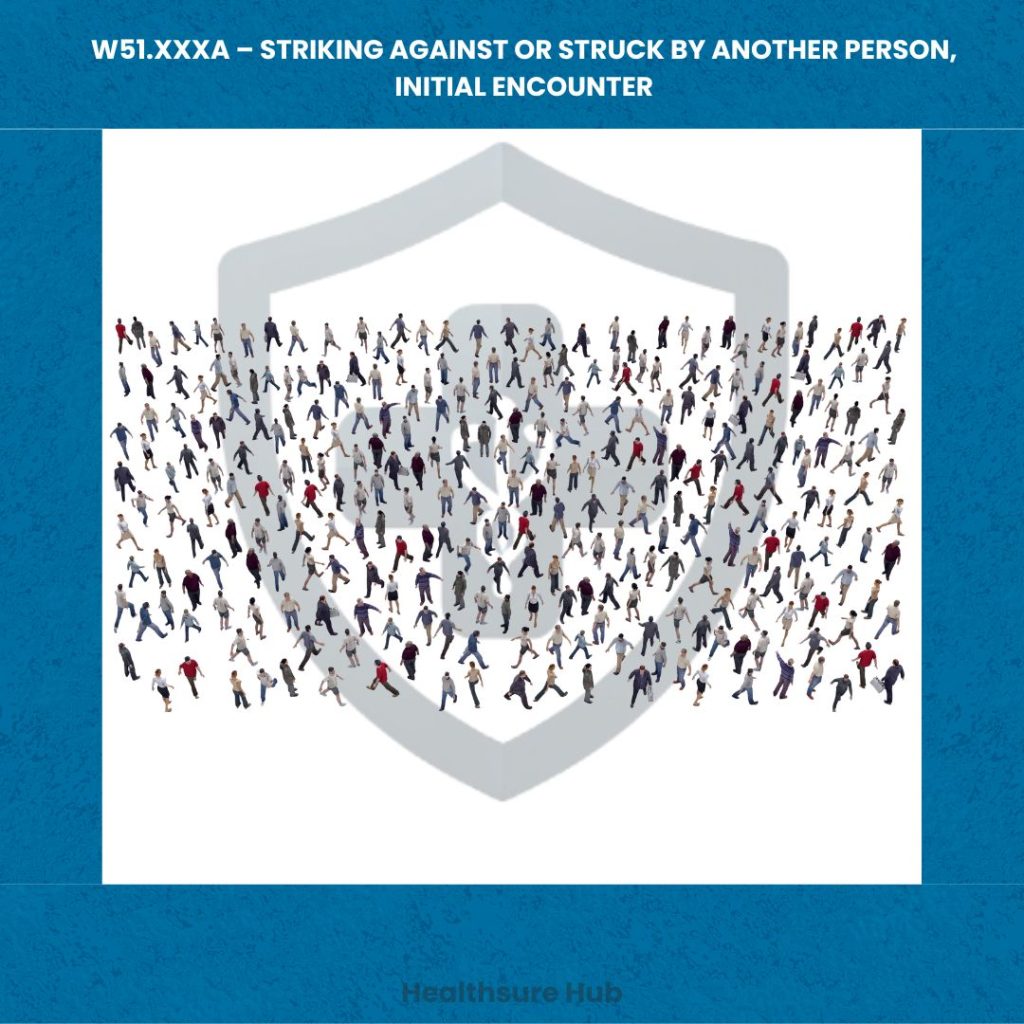
W51.XXXA is an external cause code used to record the circumstances of an injury rather than the injury itself. More specifically it stands for accidental striking against or bumped into by another person, initial encounter.
Key points about the code include:
- It captures accidental interpersonal contact, either as the striker or the struck
- It is used alongside the primary injury code (e.g., contusion, sprain, fracture)
- It helps healthcare providers, coders, and researchers track injury patterns for prevention, treatment, and reporting
By using this code correctly, clinicians ensure that both the injury and the circumstances leading to it are accurately represented in medical records and insurance claims.
Breaking Down the Code Structure
The ICD-10 code can be broken down as follows:
| Code Part | Meaning |
| W51 | Accidental striking against or being struck by another person |
| XXX | Placeholder characters required to complete ICD-10 format |
| A | Initial encounter (active treatment phase) |
Subsequent encounters or sequelae are coded differently, emphasizing that the code is strictly for the first encounter. Proper formatting is essential to avoid billing issues or claim denials.
Real-World Examples of The Specific ICD-10 Code
W51.XXXA is not just a theoretical code—it applies to everyday situations. Some examples include:
- Sports collision: Two soccer players accidentally elbow each other while contesting a header, causing a minor facial bruise.
- Crowded public space: A commuter is unintentionally struck in the shoulder by someone rushing past in a subway.
- Workplace incident: Employees moving large boxes accidentally bump into one another, resulting in minor contusions.
- Recreational activities: A participant in a dance class is lightly struck by another dancer during a lift, sustaining a wrist strain.
In each scenario, the injury is accidental, distinguishing W51.XXXA from codes used for intentional harm.
Common Injuries Associated With the ICD-10 Code
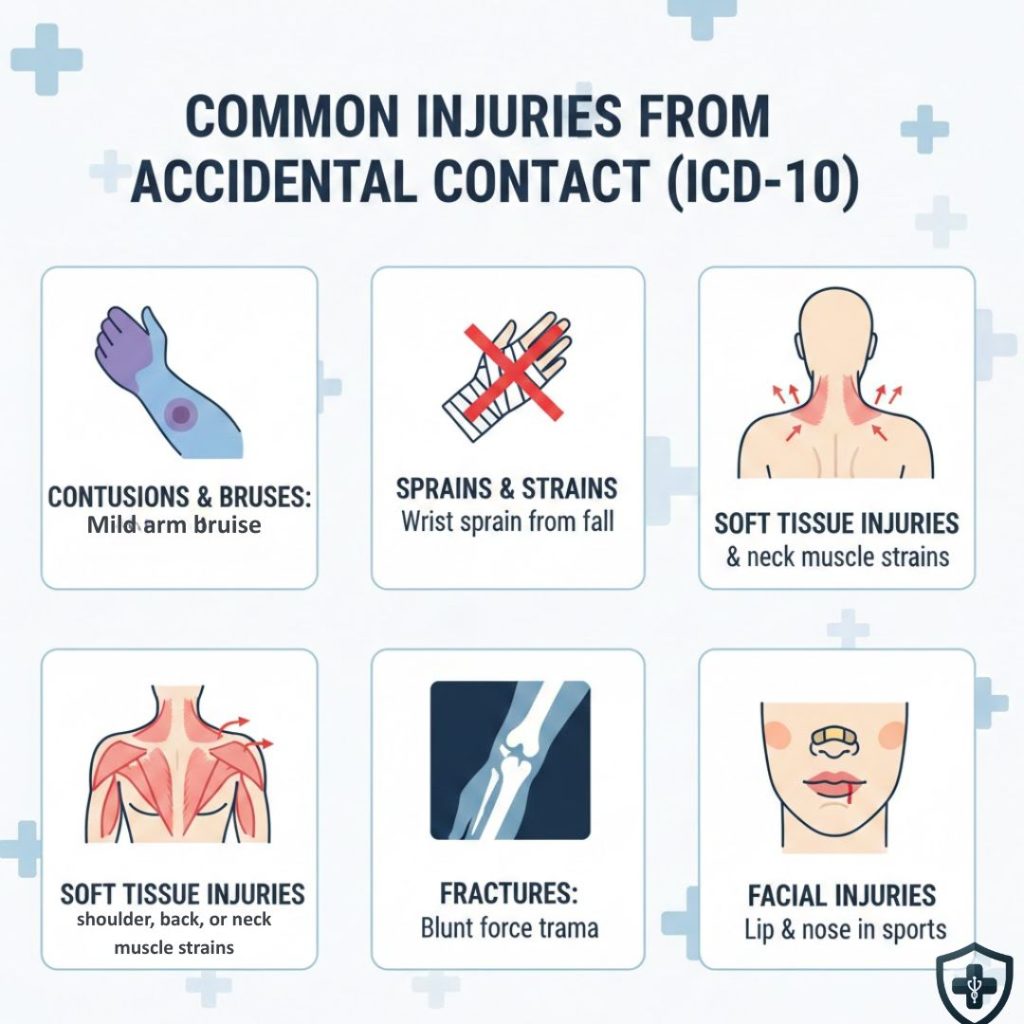
Although the specific ICD-10 code describes the mechanism rather than the injury itself, it is typically used alongside injuries such as:
- Contusions and bruises – e.g., a mild arm bruise after accidental contact
- Sprains and strains – e.g., a wrist sprain from falling after a collision
- Fractures – minor or moderate fractures caused by blunt force from accidental contact
- Soft tissue injuries – e.g., shoulder, back, or neck muscle strains
- Facial injuries – e.g., lip or nose injuries in crowded or sporting environments
By pairing the code with the primary injury code, healthcare providers ensure a complete picture of both the injury and its cause.
When to Use W51.XXXA in Medical Coding
Accurate coding is critical for clinical, legal, and billing purposes. The code is used as a secondary code, supplementing the primary injury diagnosis. It should be documented carefully to show:
- The injury was accidental
- The setting of the injury (e.g., workplace, sports, public area)
- The type of contact involved (struck or striking another person)
Correct usage prevents claim denials, supports injury surveillance, and maintains accurate medical records.
Differentiating W51.XXXA from Assault Codes
It is essential to distinguish this code from codes describing intentional harm:
- W51.XXXA – accidental, unintentional contact
- Assault codes (X92–Y09) – intentional, harmful contact
Misidentifying intent can lead to legal or insurance complications. Provider documentation should always clarify whether the injury was accidental or intentional, ensuring the correct code is applied.
Clinical and Public Health Importance
External cause codes like this specific ICD-10 code are more than just administrative tools. They help:
- Researchers track injury trends in communities, workplaces, and recreational environments
- Public health officials design prevention strategies for accidents and collisions
- Clinicians provide targeted advice for patient safety and injury avoidance
Even when optional, using external cause codes improves the quality of medical data and helps protect future patients.
Conclusion
W51.XXXA when applied correctly, ensures accurate patient records, proper billing and insurance processing, and supports injury surveillance and prevention efforts. Proper understanding and documentation of this code not only improve the quality of medical records but also reinforce trustworthiness and authority in healthcare reporting.
By accurately capturing both the injury and its circumstances, healthcare providers and coders play a key role in enhancing patient care and maintaining reliable, comprehensive medical data.
About the Author