Breathing is one of the most fundamental processes in the human body, yet respiratory irregularities affect millions of people worldwide each year. For healthcare providers and medical coders, capturing these irregularities accurately in the medical record is critical for patient care, billing, and compliance. This is where ICD-10-CM R06.89 comes into place.
That’s why our team at breaks down the code and explains the importance of proper billing and coding.
What is ICD-10-CM R06.89?
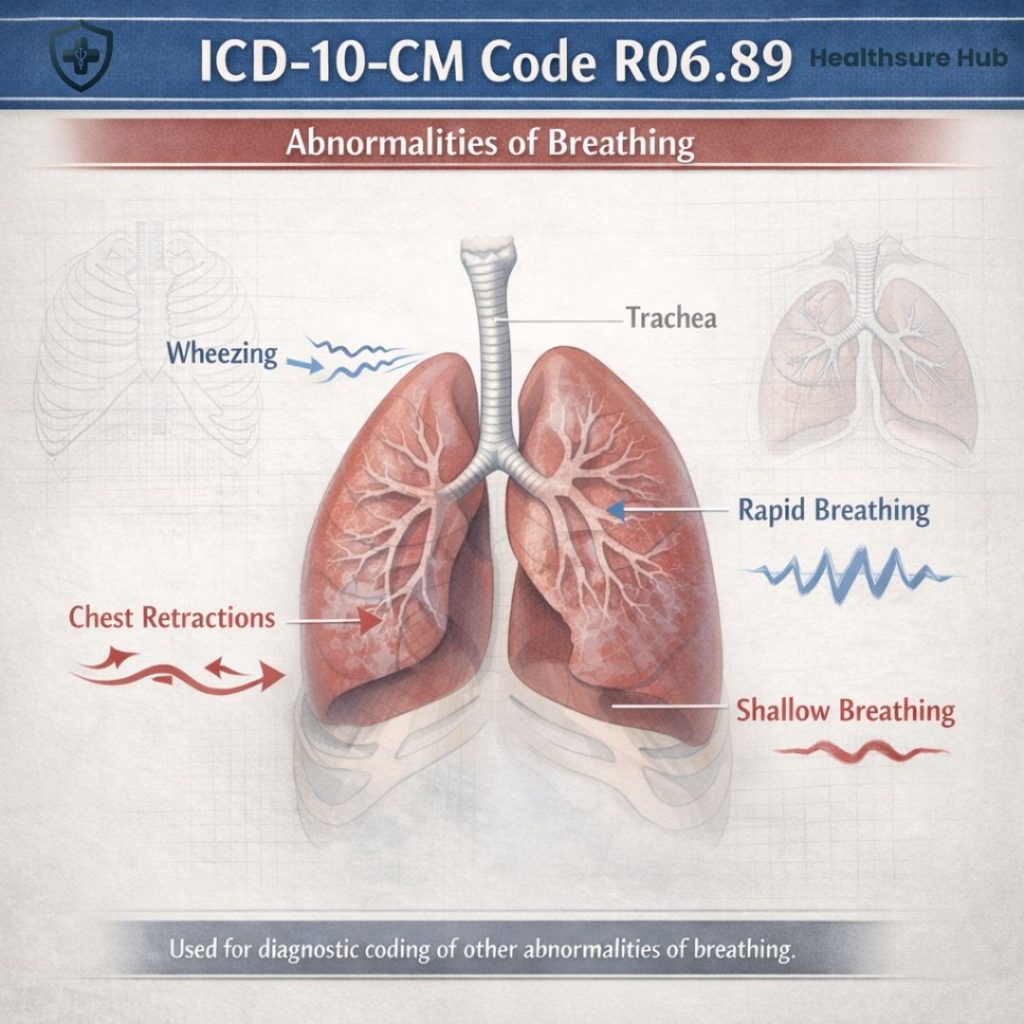
ICD-10-CM R06.89 is a diagnostic code used for abnormalities of breathing. It is used to classify breathing irregularities that do not fall under more specific respiratory diagnoses. In simple terms, it covers unusual breathing patterns, shortness of breath, or other respiratory abnormalities that cannot be coded elsewhere.
Code Breakdown
| Code Component | Meaning |
| R06 | Abnormalities of breathing |
| .89 | Other specified abnormalities (catch-all for unspecified patterns) |
Because this code serves as a “catch-all” for unspecified respiratory conditions, it is important to use this code only when no more precise diagnosis is possible. This ensures accurate documentation and supports proper medical billing.
Simplified Explanation for Medical Billing
In medical billing, this ICD-10 code is typically used when a patient exhibits clinically significant breathing issues, but diagnostic tests do not confirm a specific respiratory disorder. Common scenarios include:
- A patient experiences irregular breathing during routine examinations, but lab tests and imaging cannot pinpoint a cause.
- Emergency visits for shortness of breath where no definitive diagnosis is made.z
- Hospitalized patients with transient or unexplained respiratory abnormalities.
Using R06.89 correctly is critical for claims processing. Unspecified codes may sometimes result in lower reimbursement compared to more specific codes such as R06.00 (dyspnea) or R06.02 (shortness of breath). Overuse of unspecified codes may also trigger audits from insurers, highlighting the importance of detailed documentation.
Clinical and Administrative Relevance
Beyond billing, R06.89 plays a vital role in clinical and administrative processes. Clinically, it allows healthcare providers to track patients with atypical respiratory patterns, prompting additional testing or monitoring. Administratively, it ensures that all cases are categorized in medical records and databases, even when a definitive diagnosis is not yet established.
Over 25 million adults in the United States experience some form of chronic respiratory condition, specifically asthma, many more present with non-specific breathing abnormalities that do not fit neatly into traditional diagnostic categories. Proper use of this code helps improve healthcare analytics and ensures accurate population health reporting.
Common Scenarios
Healthcare providers and coders encounter R06.89 in a variety of situations:
- Abnormal breathing patterns in adults with no confirmed respiratory condition.
Transient irregularities observed during hospitalization without a clear cause. - Follow-up visits where previously suspected conditions are ruled out.
It is important to note that this code should not be used for conditions that have their own codes, such as asthma (J45 series), COPD (J44 series), or pneumonia (J12–J18). Using the code appropriately prevents billing errors and ensures that clinical records reflect the patient’s actual condition.
Documentation Requirements for Accurate Coding
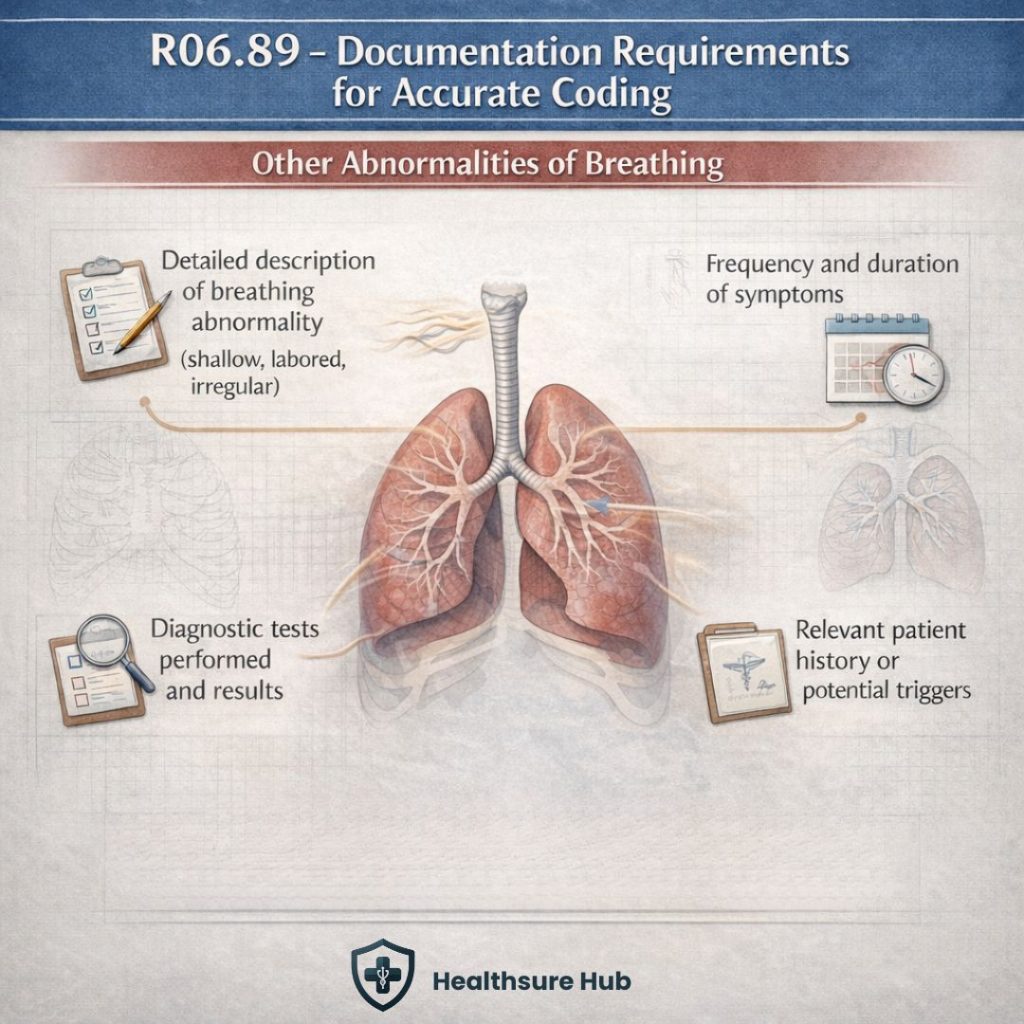
Accurate documentation is essential when assigning this code. Providers should include:
- A detailed description of the observed breathing abnormality (e.g., shallow, labored, or irregular).
- Frequency and duration of symptoms.
- Any diagnostic tests performed and their results.
- Relevant patient history or potential triggers for the breathing irregularities.
Comprehensive documentation not only supports the use of R06.89 but also reduces the risk of claim denials or audit queries. Including this information helps coders select the most accurate code while maintaining compliance with CMS and payer guidelines.
A patient presenting with intermittent shortness of breath and vague chest discomfort may require coding with both R06.89 and R09.89 to accurately capture all observed symptoms during the visit.
Clinical and Billing Implications
Impact on Billing and Reimbursement:
- Using this ICD-10 code may result in lower reimbursement compared to specific codes.
- Overuse of unspecified codes increases audit risk.
- Proper documentation supports claim approval and compliance.
Clinical Implications:
- Tracks patients with atypical respiratory patterns.
- Guides additional diagnostic testing or referrals.
- Contributes to hospital and public health data for monitoring respiratory trends.
For example, a patient presenting with intermittent shallow breathing, normal imaging, and no other identifiable respiratory condition would appropriately be assigned R06.89. Clear documentation of the observed abnormality and clinical context ensures accurate billing and continued care.
Conclusion
ICD-10-CM R06.89 serves as a critical tool for capturing non-specific abnormalities of breathing. While it functions as a catch-all, its proper use requires detailed documentation, differentiation from related codes, and thoughtful application in billing and clinical records. By understanding and correctly applying this code, healthcare providers and coders can maintain compliance, optimize reimbursement, and contribute to accurate patient care and public health data.
About the Author