Medical coding is as much about precision as it is about clarity. Some patient encounters don’t result in a neat, definitive diagnosis, yet the symptoms documented are medically significant and impact care and reimbursement. ICD‑10 code R09.89 fills that gap for clinical scenarios involving circulatory and respiratory symptoms that aren’t captured by more specific codes.
Our team at Healthsure Hub explains how and when to use this code is essential for accurate documentation, appropriate billing, and meaningful clinical data analysis.
What Is ICD‑10‑CM Code R09.89?
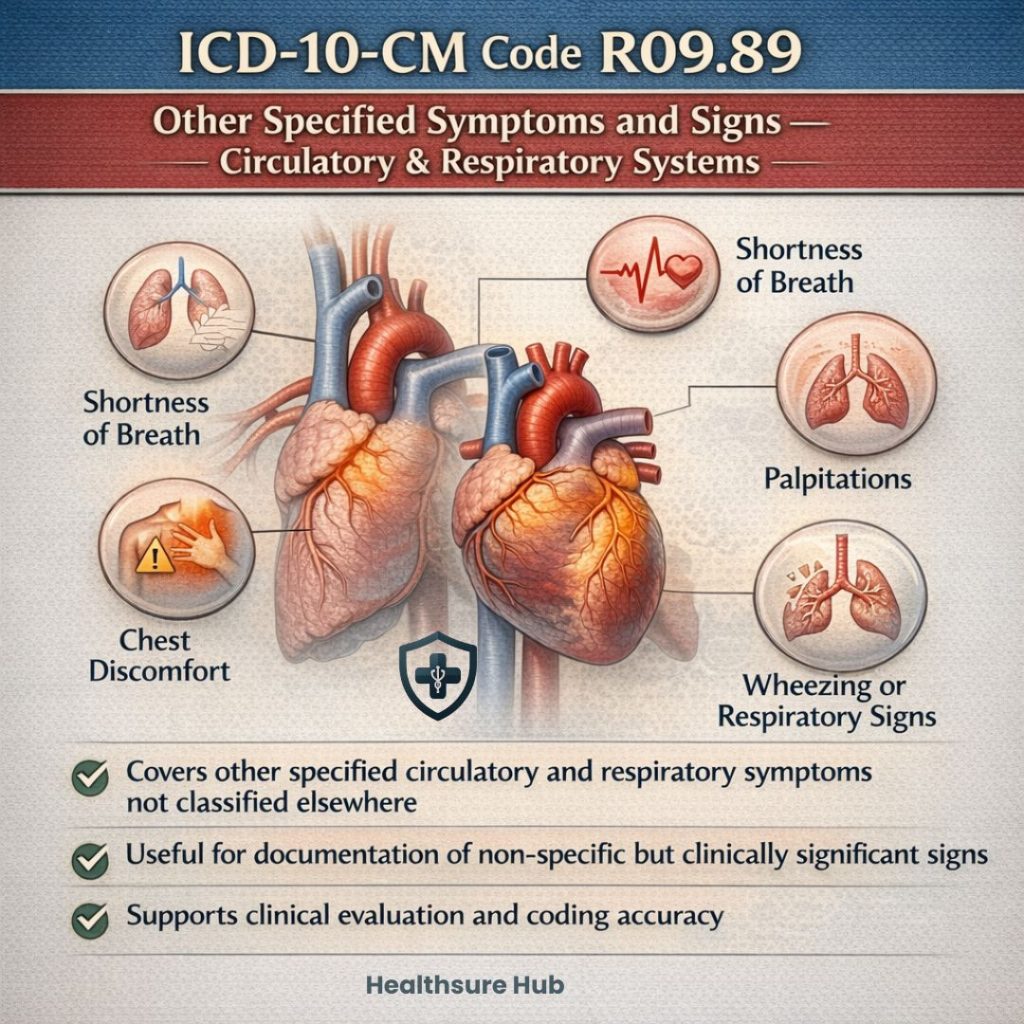
ICD‑10‑CM code R09.89 stands for other specified symptoms and signs involving the circulatory and respiratory systems. It belongs to Chapter 18 of the ICD‑10‑CM classification — Symptoms and signs involving the circulatory and respiratory systems.
In practical terms it is a billable code used to report specific symptoms related to the heart or lungs for which no more targeted ICD‑10 code exists. More than that, it should not be used when a definitive diagnosis has been established that explains the symptom(s).
Why This Code Matters in Medical Billing
From a billing perspective, this code is critical for the following reasons:
Captures Symptom‑Driven Visits
Many patients present with chest pain, dyspnea (shortness of breath), palpitations, or other circulatory/respiratory complaints without a clear etiology at the time of visit. Chest pain accounts for ≈5–6% of ED presentations annually, often coded as R07.89 or R09.89 when no definitive diagnosis is established
Respiratory symptoms like shortness of breath (“dyspnea”) are also common, with prevalence estimates of around 10% among adults in population studies. Using this code allows coders to document real symptoms while the diagnostic workup is ongoing.
For broader nonspecific symptoms that may accompany such presentations — like fatigue, malaise, or generalized pain without a confirmed diagnosis — coders may reference other general symptom codes such as R68.89.
Supports Reimbursement for Evaluation Services
Proper use of this code justifies medical services delivered when definitive diagnosis is absent. For example:
- A patient with unexplained rales or a choking sensation may require imaging, cardiopulmonary testing, or specialist referral before a final diagnosis is made.
- Reporting this code ensures that insurers recognize the clinical necessity of services tied to documented symptoms.
Note that if a more specific symptom code exists, that code should be used instead. For instance, wheezing has its own code (R06.2) and is explicitly excluded from the code mentioned.
Enhances Clinical Data and Population Health Metrics
Symptom codes like this ICD-10 code contribute to clinical datasets that help researchers and healthcare planners understand patterns of undiagnosed or atypical symptoms. Symptoms such as dyspnea and chest discomfort may signal underlying respiratory or cardiovascular disease, chronic or acute. For example, dyspnea has been shown to be a common presenting complaint and frequently requires emergency evaluation due to its association with serious conditions.
Clinical Situations When R09.89 Is Appropriate
R09.89 is typically used when specific circulatory or respiratory symptoms are documented, but there’s no definitive diagnosis yet. Examples include:
- Atypical chest pain that doesn’t meet criteria for angina or myocardial infarction.
- Palpitations or irregular heartbeat without confirmation of arrhythmia.
- Unexplained shortness of breath (dyspnea) after initial evaluation – in such cases, coders may also reference abnormalities of breathing documented under ICD‑10 R06.89
- Weak peripheral pulses without diagnosed vascular disease.
- Rales or abnormal chest sounds during auscultation in the absence of a clear disease classification.
These signs often prompt further testing (e.g., ECG, chest imaging), which can lead to later specific diagnosis codes once results are available.
Differentiating R09.89 from Other Codes
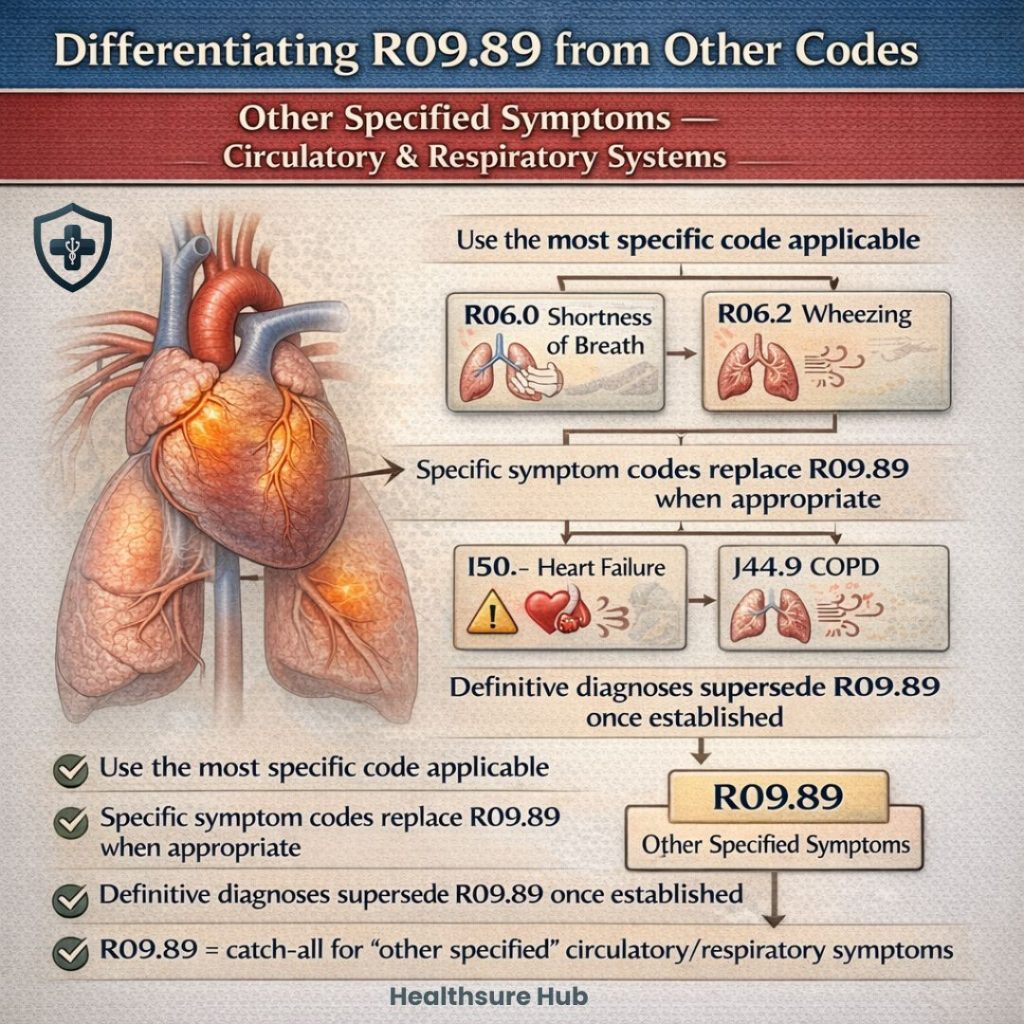
ICD‑10‑CM is structured so that the most specific applicable code is used. In this context:
- Specific symptom codes, such as R06.2 for wheezing, should be used when appropriate rather than this code.
- Definitive diagnoses, such as heart failure, COPD, or pulmonary embolism, have their own ICD‑10 codes and replace R09.89 once established.
- R09.89 serves as a catch‑all for “other specified” circulatory/respiratory symptoms not otherwise classified, hence the “other specified” designation.
Using this code accurately prevents miscoding and supports both proper care documentation and billing compliance.
Coding Best Practices & Documentation Tips
To ensure correct use of this ICD-10 code:
- Document Symptoms Precisely: Include onset, duration, severity, and relevant clinical context.
- Record Clinical Findings: Note abnormal exam findings (e.g., rales, abnormal percussion).
- Order Appropriate Tests: Link ordered tests to the symptom documented to support medical necessity for billing.
- Update Coding: If a specific diagnosis is later confirmed, code the specific condition instead of R09.89.
- Avoid Overuse: R09.89 should not replace a specific code when one exists; inappropriate use can trigger claim denials and lower data quality.
Conclusion
ICD‑10‑CM code R09.89 plays a vital role in clinical documentation and billing when a patient presents with significant circulatory and respiratory symptoms that lack a definitive diagnosis. It bridges the gap between symptom presentation and confirmed disease classification, supporting appropriate care delivery, reimbursement, and data collection.
By understanding the nuances of this code, its clinical scope, exclusions, and documentation requirements, healthcare professionals can enhance coding accuracy and contribute to better patient outcomes and more reliable health data.
About the Author