Every year, millions of people experience fractures in their wrists and forearms, making distal radius fractures one of the most common bone injuries treated in emergency departments. These injuries can range from minor cracks to severe breaks that affect mobility and daily function.
Understanding the specific ICD-10-CM code for an unspecified fracture of the lower end of the left radius, S52.502A, is crucial for healthcare providers, coders, and insurance professionals. Our team at Healthsure Hub breaks down the code exploring its definition, clinical relevance, treatment considerations, and importance in medical billing.
What is ICD-10 Code S52.502A?
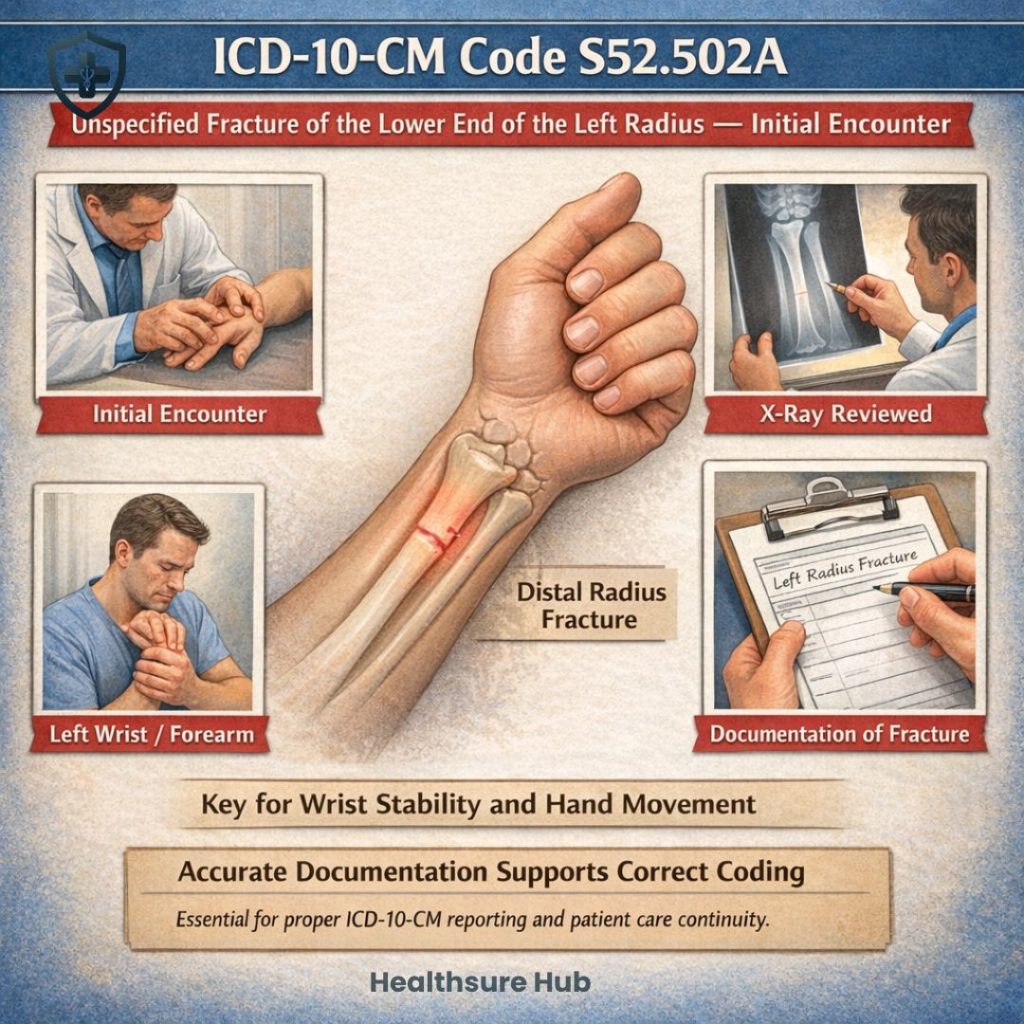
S52.502A represents an unspecified fracture of the lower end of the left radius, initial encounter. The distal radius is the portion of the forearm bone near the wrist, playing a vital role in wrist stability and hand movement.
Think of it like this—if you fall and hurt your left wrist, and the doctor sees a break in the lower part of your forearm bone but doesn’t yet know exactly what kind of break it is, they use this code. It tells medical staff, insurance companies, and billing systems, “There’s a fracture here, we’re treating it, but the exact type isn’t specified yet.”
From a medical billing perspective, this ICD-10 code allows providers to bill for the treatment of the left distal radius fracture even if the exact fracture type is unknown. It is typically used alongside procedural codes for X-rays, casting, splinting, or surgical interventions.
Understanding the Context and Use of S52.502A
ICD-10-CM provides both specific and unspecified codes. While more specific codes improve documentation and can support detailed outcome tracking, unspecified codes like S52.502A are essential when detailed fracture characteristics are unavailable.
Typical scenarios for using this code include:
- A patient falls on an outstretched hand and presents with wrist pain.
- X-rays confirm a distal radius fracture, but the precise fracture type is not described.
- The healthcare provider documents this as the initial encounter for billing and clinical purposes.
Proper documentation should include the mechanism of injury, laterality (left side), initial treatment plan, and diagnostic imaging results, ensuring compliance and accurate billing.
Epidemiology and Risk Factors
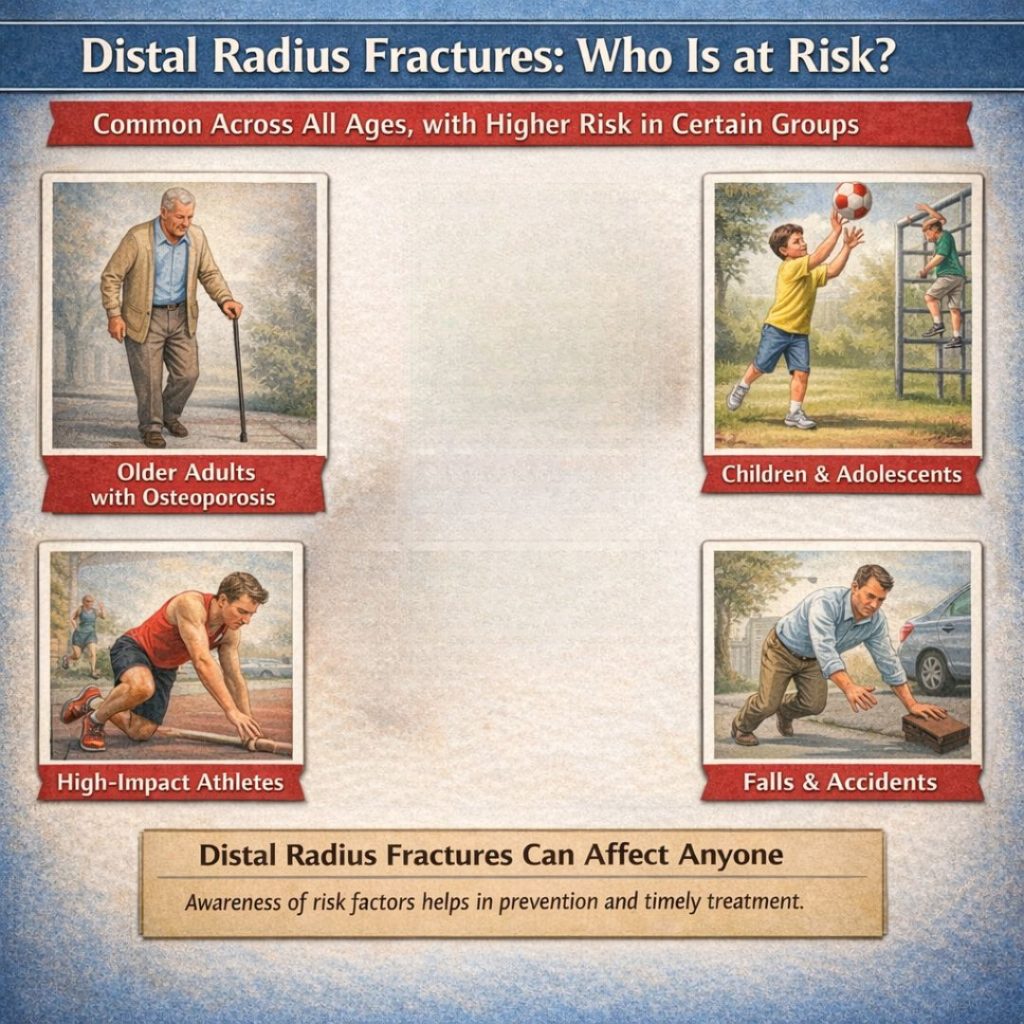
Distal radius fractures are prevalent across all age groups but are especially common in:
- Older adults with osteoporosis
- Children and adolescents during play or sports
- Athletes participating in high-impact activities
- Individuals experiencing falls or motor vehicle accidents
In the U.S., distal radius fractures account for 17% of all fractures and 75% of forearm fractures, making them a leading cause of emergency orthopedic visits. Understanding coding patterns helps public health agencies track incidence, plan preventive programs, and evaluate outcomes
Symptoms and Diagnosis
Patients with a distal radius fracture may present with:
- Pain and tenderness around the wrist
- Swelling and bruising
- Visible deformity (e.g., “dinner fork” wrist shape)
- Limited range of motion or difficulty using the hand
Diagnosis typically involves:
- Physical examination to assess pain, swelling, and deformity
- X-rays to confirm the fracture
- CT scans in complex cases for more detailed imaging
Accurate documentation of symptoms and imaging findings ensures the correct assignment of S52.502A, which is crucial for proper billing.
Importance in Medical Billing and Insurance
Accurate coding of this ICD-10 code has several benefits:
- Ensures proper reimbursement for initial treatment
- Reduces the likelihood of claim denials
- Provides a clear record for insurance and legal documentation
Healthcare providers commonly use this code alongside CPT codes for:
- Imaging procedures (e.g., wrist X-rays)
- Casting or splinting procedures
- Orthopedic consultations
Imagine a patient showing up to the ER after a fall, reporting left wrist pain. X-rays confirm a distal radius fracture. The provider documents the fracture as unspecified and codes S52.502A for the initial encounter. CPT codes are used for the X-ray and cast application.
Conclusion
In conclusion, ICD-10-CM code S52.502A plays a critical role in documenting and treating fractures of the lower end of the left radius when the exact type of break is not specified. Accurate use of this code ensures that healthcare providers can properly track treatment, bill for services, and communicate effectively with insurance companies.
About the Author