Post-procedural infections are a significant concern in healthcare, affecting patient recovery, increasing hospital stays, and raising medical costs. Recognizing and documenting these infections accurately is essential, both for optimal patient care and for proper medical coding. The ICD-10 code T81.4XXA is specifically used for infections that occur after a medical or surgical procedure during the initial encounter.
At HealthSure Hub we help you understand this code, its application, and clinical implications is crucial for healthcare providers, coders, and billing professionals.
What is T81.4XXA?
T81.4XXA falls under the category of complications of procedures, not elsewhere classified. It is defined as an infectio that occurs as a direct complication of a medical or surgical procedure, affecting the patient during the initial encounter for treatment. This code is applicable to infections following any invasive procedure, including surgeries, diagnostic interventions, or therapeutic procedures.
The ICD-10 structure is as follows:
- T81: Complications of procedures, not elsewhere classified
- .4: Infection following a procedure
- XX: Placeholder for additional specificity
- A: Initial encounter
It is important to distinguish initial encounters (A) from subsequent encounters (D) and sequelae (S), which reflect follow-up care or long-term complications, respectively. Using the correct code ensures accurate medical documentation and billing, as well as better tracking of procedural complications.

Causes and Risk Factors
Infections following a procedure can result from several factors. While surgical site contamination is a common cause, other elements increase susceptibility. Key risk factors include:
- Poor aseptic technique during surgery
- Presence of foreign bodies such as implants or prosthetics
- Patient comorbidities, including diabetes, obesity, or immunosuppression
- Prolonged hospitalization or repeated procedures
- Inadequate post-procedural wound care
Healthcare providers can reduce the likelihood of infection by addressing these risk factors preoperatively, maintaining sterile techniques, and closely monitoring patients during recovery.
Signs and Symptoms
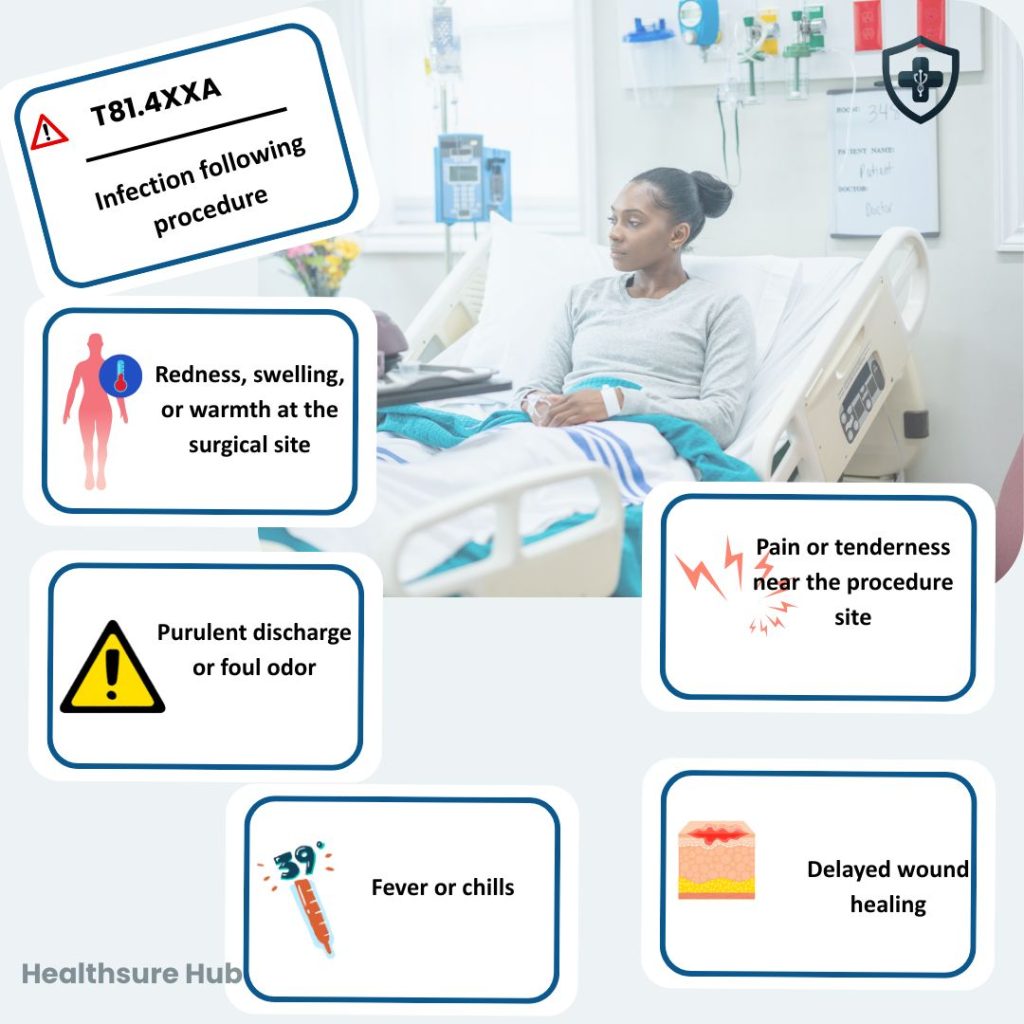
Post-procedural infections often present with recognizable clinical signs, enabling early detection and prompt treatment. Common symptoms include:
- Redness, swelling, or warmth at the surgical site
- Purulent discharge or foul odor
- Fever or chills
- Pain or tenderness near the procedure site
- Delayed wound healing
Real-life example
A patient undergoes laparoscopic appendectomy and develops redness, swelling, and purulent discharge at the incision site on postoperative day three. This patient would be documented using the code during the initial treatment of the infection.
Early recognition of these symptoms is critical, as untreated infections can progress to systemic complications such as sepsis.
Diagnosis
Accurate diagnosis of post-procedural infections involves a combination of clinical evaluation, laboratory testing, and sometimes imaging studies. Healthcare providers may use:
- Physical examination of the wound or procedure site
- Laboratory tests such as complete blood count (CBC) and C-reactive protein (CRP)
- Blood or wound cultures to identify causative pathogens
- Imaging studies like ultrasound or CT scans if abscesses or deep infections are suspected
Proper documentation of diagnosis, including the site and type of infection, is crucial for coding and ensures that the code is used correctly.
Coding Guidelines and Documentation
Proper use of T81.4XXA is critical for both coding accuracy and clinical documentation. Key points include:
- Use the code only for infections directly related to a procedure.
- Document the procedure performed, the infection site, and the type of infection.
- Differentiate between initial encounters (A), subsequent encounters (D), and sequelae (S).
- Avoid using T81.4XXA for infections unrelated to a procedure, which would require other codes.
Accurate documentation ensures appropriate reimbursement, helps track quality metrics, and improves patient outcomes by reflecting the severity and treatment needs of procedural complications.
Conclusion
The ICD-10 code T81.4XXA is an essential tool for documenting infections following a procedure during the initial encounter. Accurate coding supports proper patient care, facilitates correct billing, and helps healthcare systems track procedural complications. By understanding its definition, risk factors, clinical presentation, diagnosis, treatment, and preventive measures, healthcare providers can improve patient outcomes and maintain high standards of care.
T81.4XXA is not just a coding requirement—it is a reflection of clinical vigilance and proactive healthcare. Prompt recognition and management of post-procedural infections can prevent serious complications, reduce hospital stays, and promote faster patient recovery.
About the Author