In today’s healthcare landscape, preventive care is more important than ever. Among the tools used to detect potential health issues early, mammography plays a crucial role in identifying breast cancer before symptoms appear. In medical coding, ICD-10-CM code Z12.31 is used for screening mammograms aimed at detecting malignant neoplasms of the breast.
Our team at Healthsure Hub helps understand this code as is essential for accurate documentation, compliance, and reimbursement.
What is ICD-10-CM Code Z12.31?
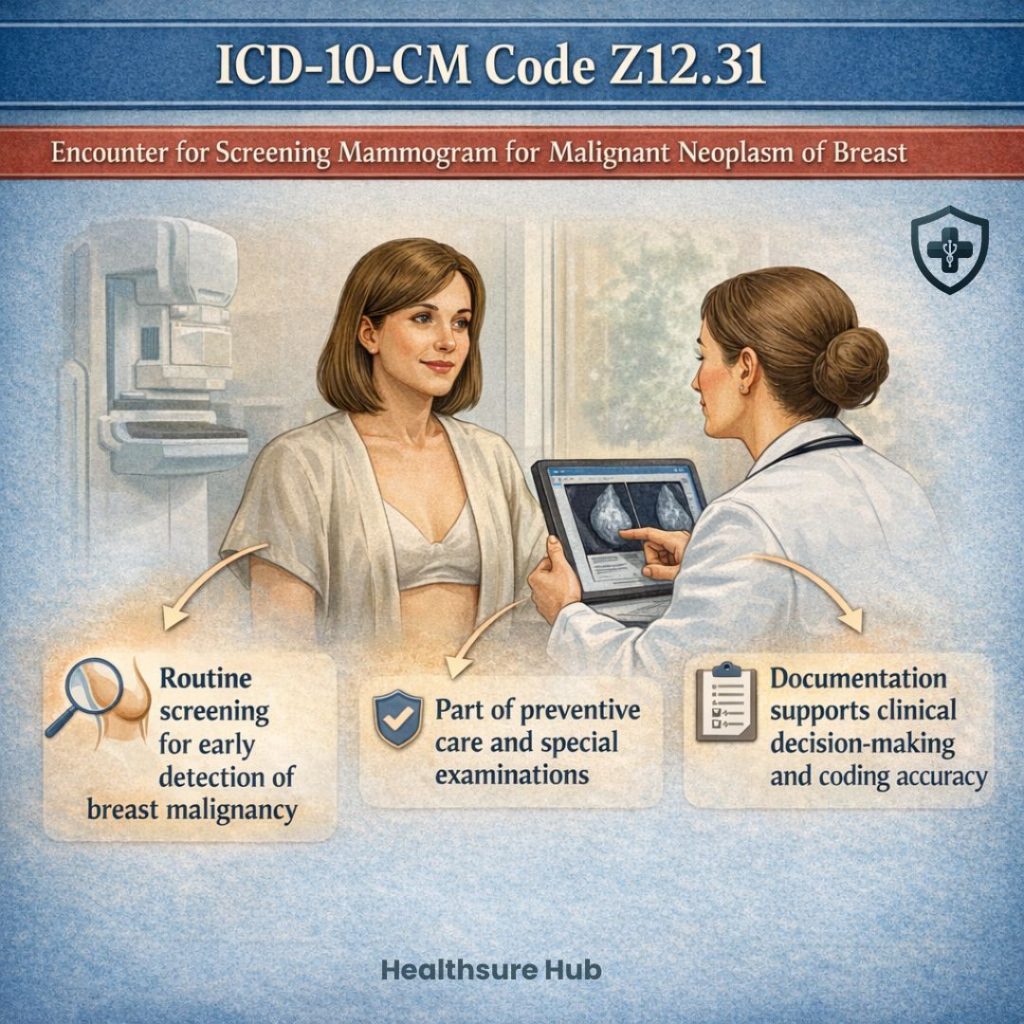
Z12.31 is defined as “Encounter for screening mammogram for malignant neoplasm of breast.” It falls under Category Z12, which covers special screening examinations for neoplasms. Unlike diagnostic mammograms that evaluate specific symptoms or findings, the code is reserved for asymptomatic patients undergoing routine screening. The primary goal is early detection of breast cancer, a step that can significantly improve patient outcomes.
Proper coding ensures that healthcare providers can track preventive care services, and it helps insurers process claims efficiently. Using the code correctly signals that the patient’s visit is preventive in nature rather than diagnostic.
Purpose of Z12.31
The primary purpose of this ICD-10 code is preventive healthcare. Screening mammograms are X-ray examinations of the breast intended to detect abnormalities before symptoms develop. Early detection is critical because breast cancer caught in its initial stages is often more treatable and associated with better survival rates.
Evidence-based guidelines, such as those from the American Cancer Society, recommend that women begin routine mammography screening at specific ages and intervals depending on risk factors. Using Z12.31 accurately reflects adherence to these preventive care recommendations and ensures that patients receive timely screenings.
Clinical Documentation Guidelines
Accurate documentation is key when coding for Z12.31. Providers should clearly indicate:
- The patient is asymptomatic.
- The visit is for routine breast cancer screening.
- The type and date of mammogram performed.
- Any relevant risk factors or family history of breast cancer.
Distinguishing between screening and diagnostic mammograms is vital. Diagnostic mammograms, performed to investigate specific signs such as a lump or nipple discharge, require different ICD-10 codes. Correct documentation of Z12.31 is crucial not only for insurance reimbursement but also for compliance with regulatory and preventive care standards.
Importance for Compliance and Reimbursement
Correct use of Z12.31 directly affects compliance and reimbursement. Insurers often cover routine mammograms fully under preventive care mandates, but claim denials can occur if the wrong code is submitted. Proper coding demonstrates adherence to preventive care regulations, such as those under the Affordable Care Act (ACA) and CMS guidelines.
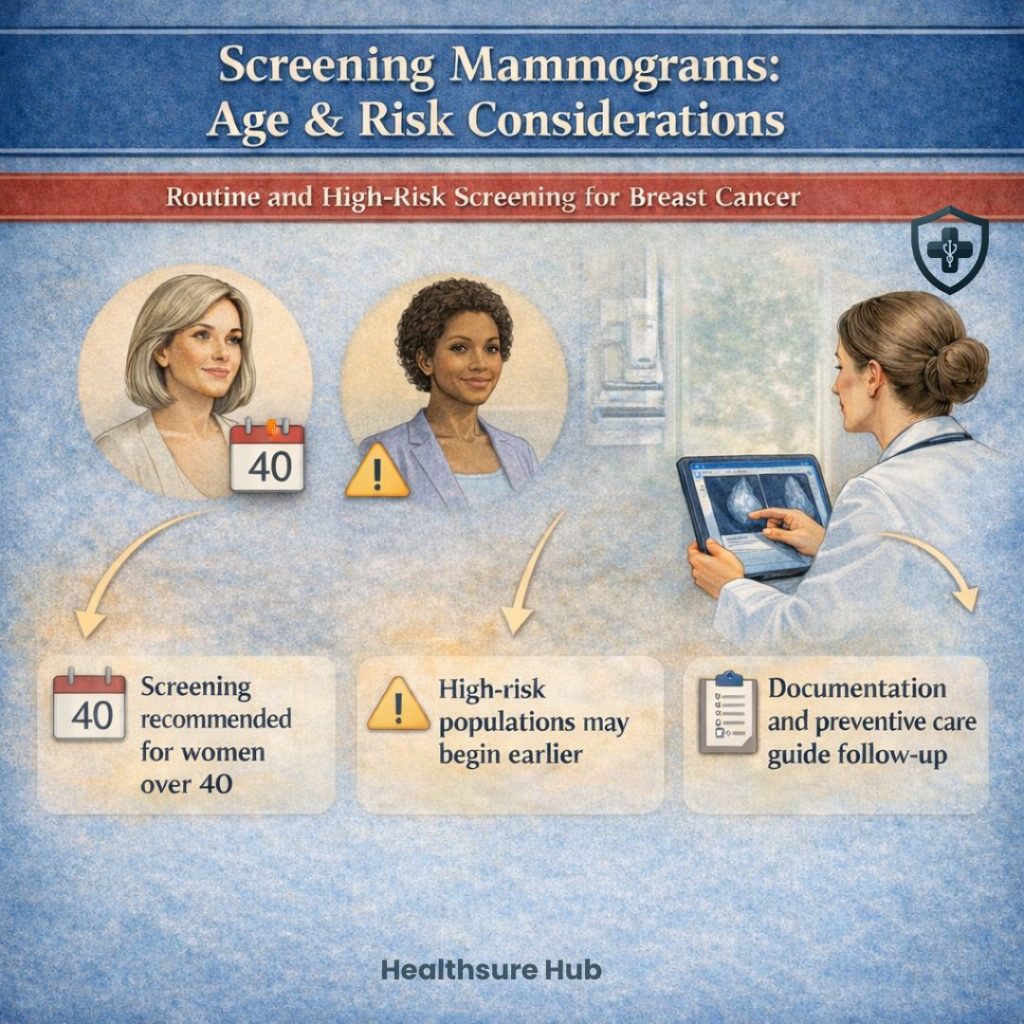
Screening mammograms are especially important for women over 40, though some high-risk populations may begin earlier. Consistent use of the code helps track preventive care metrics and supports quality reporting programs.
Frequency and Coding Practices
Z12.31 is typically used for annual or biennial screenings depending on age and risk factors. Providers should ensure the patient is asymptomatic, and the visit is preventive in nature.
While the code can be used alone, high-risk patients may require secondary codes to document additional factors, such as a strong family history of breast cancer. Using the code accurately ensures data integrity for population health management, research, and insurance purposes.
Patient Education and Communication
Healthcare providers should communicate clearly with patients about the purpose of a screening mammogram. Patients should understand that the visit is preventive, the procedure involves a low-dose X-ray, and that early detection significantly improves outcomes. Documenting patient education and counseling reinforces the justification for preventive services and supports compliance with coding guidelines.
Role in Public Health and Data Analysis
Data from Z12.31 encounters is invaluable for public health initiatives. It helps track screening rates nationally, identify gaps in preventive care, and inform programs aimed at increasing breast cancer awareness. Consistent coding enhances the reliability of research and allows healthcare systems to monitor trends in preventive care delivery.
Conclusion
ICD-10-CM code Z12.31 serves a vital role in preventive healthcare by documenting encounters for screening mammograms in asymptomatic patients. Accurate use of this code supports early detection of breast cancer, ensures proper insurance reimbursement, maintains compliance, and contributes to reliable public health data. Healthcare providers, coders, and patients all benefit from understanding the significance of Z12.31 in promoting proactive breast health management.
About the Author