When a patient walks into a clinic, it’s not just their current symptoms that matter; their medical history often guides critical decisions. One history that clinicians frequently consider is a past cerebrovascular event. That’s where ICD-10-CM code Z86.73 comes in.
This code appears in a variety of clinical settings, from annual wellness exams to neurology follow-ups, and is essential for accurate coding, clean claims submission, and reliable interpretation of medical records. At Healthsure Hub, we break down what the code means and when it should be used.
Overview of ICD-10 Code Z86.73
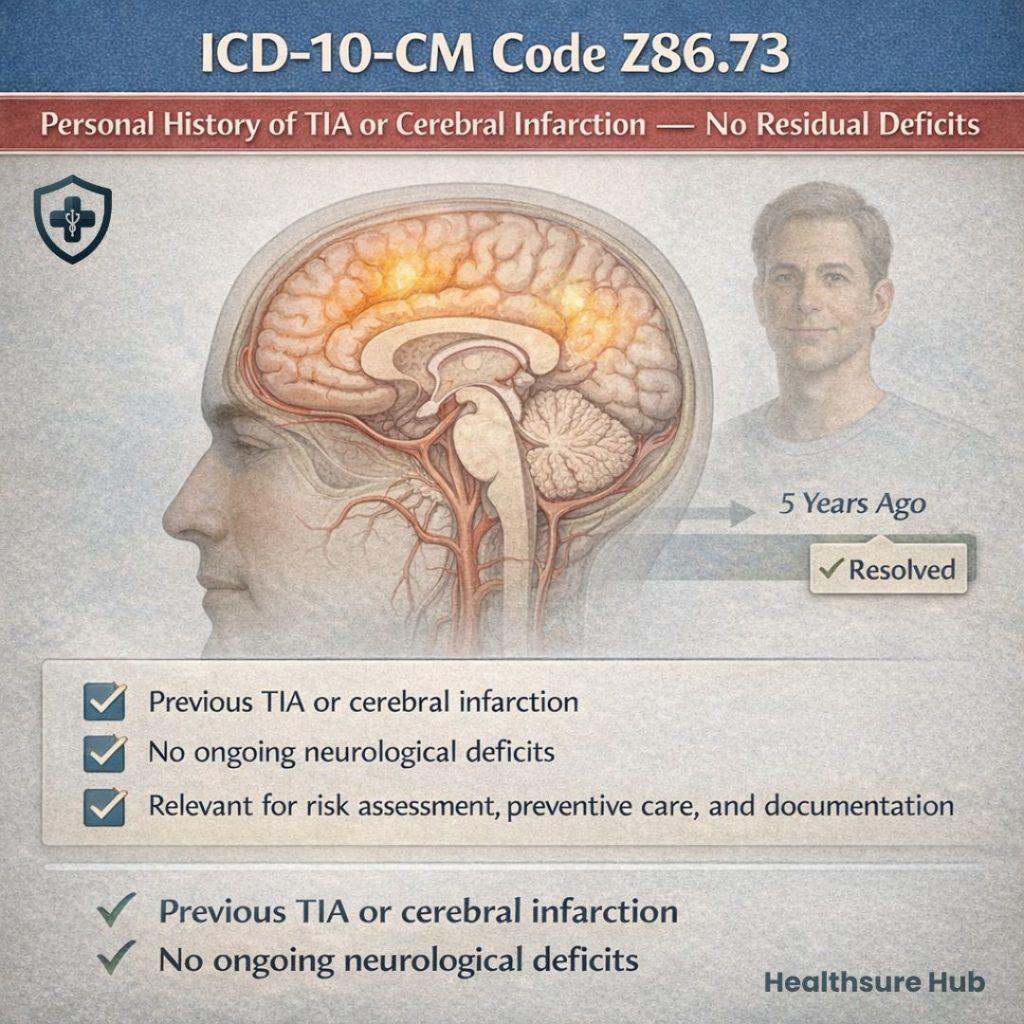
The ICD-10-CM code Z86.73 represents a personal history of transient ischemic attack (TIA) or cerebral infarction without residual deficits, indicating that the patient previously experienced a cerebrovascular event but no longer has ongoing neurological impairments.
Z86.73 belongs to the ICD-10-CM “Z” chapter, which includes factors influencing health status and encounters when no active illness is present. Unlike diagnosis codes that describe active stroke or TIA, this code captures resolved cerebrovascular events without residual deficits.
Healthcare providers commonly report this code during preventive care visits, cardiovascular risk assessments, and follow-ups for patients with prior TIAs or strokes. Proper use of this code ensures the patient’s cerebrovascular history is documented accurately without misclassifying them as having an active neurological condition.
Breaking Down the Code
Each component of Z86.73 has a specific meaning:
- Z – Factors influencing health status and contact with health services
- 86 – Personal history of certain other diseases
- .73 – Personal history of TIA and cerebral infarction without residual deficits
This structured coding approach supports consistent documentation, facilitates claims processing, and ensures accurate population health reporting.
Proper use of this specific ICD-10 code ensures that a patient’s cerebrovascular history is documented accurately, often alongside lifestyle risk factors such as personal history of nicotine dependence.
What “Personal History of TIA and Cerebral Infarction Without Residual Deficits” Means in Coding
In ICD-10, a personal history code indicates a condition that has resolved but may continue to influence healthcare decisions. When this specific ICD-10 code is assigned, it confirms that the patient previously experienced a TIA or cerebral infarction and has fully recovered without residual neurological deficits.
The code does not indicate an active stroke or ongoing neurological treatment. Documenting Z86.73 ensures clinicians are aware of prior cerebrovascular events, which is important for preventive measures, anticoagulation management, and risk stratification for future cardiovascular events.
When Z86.73 Should Be Used
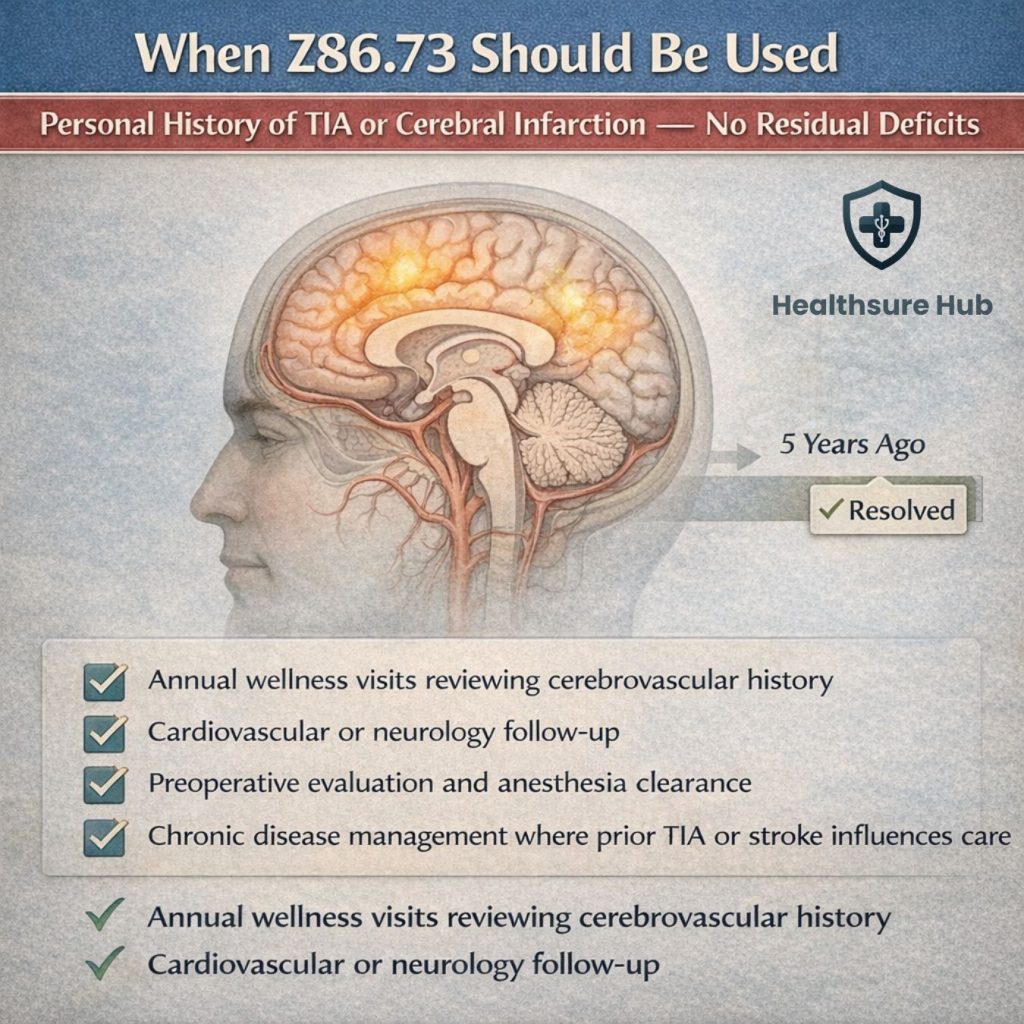
This ICD-10 code should be reported when clinical documentation clearly indicates a resolved cerebrovascular event with no remaining deficits. Common scenarios include:
- Annual wellness visits where cerebrovascular history is reviewed
- Cardiovascular or neurology follow-up visits
- Preoperative evaluations and anesthesia clearance
- Chronic disease management encounters where prior TIA or stroke influences care
With every 40 seconds, someone in the United States having a stroke, correct use of Z86.73 depends on confirmation of full recovery and absence of residual neurological impairments.
Importance of Accurate Coding
Proper assignment of this code is important for:
- Billing compliance – Avoids claims denials for misclassified active conditions
- Clinical clarity – Supports preventive care and future risk evaluation
- Population health reporting – Accurately captures patients with resolved cerebrovascular events
- Continuity of care – Ensures all providers are aware of relevant cerebrovascular history
Although the code reflects a resolved event, it remains a meaningful part of the patient’s medical record. During cardiovascular follow-ups, Z86.73 may be assigned along with codes such as R73.03 for prediabetes to capture comprehensive risk factors.
Conclusion
ICD-10 code Z86.73 provides a standardized way to document a personal history of TIA or cerebral infarction without residual deficits. Supported by population-level statistics and clinical relevance, this code plays a vital role in preventive care, cardiovascular risk assessment, and long-term patient management.
Understanding how and when to assign this specific ICD-10 code ensures accurate medical records, compliant billing, and reliable health data. At Healthsure Hub, we are committed to helping healthcare professionals navigate ICD-10 coding clearly, accurately, and confidently.
About the Author