Medical injury codes involving the thoracic region are commonly used in emergency care, urgent care, and trauma-related evaluations. However, many unspecified injury codes can create confusion for providers, billers, and coders when documentation lacks detail or when a more specific diagnosis has not yet been confirmed.
ICD-10 code S29.9XXA is one of those codes frequently assigned during the initial stages of treatment. Understanding when it should be used, what documentation supports it, and when a more detailed diagnosis is required can help improve coding accuracy and reduce claim issues.
What Does ICD-10 Code S29.9XXA Mean?
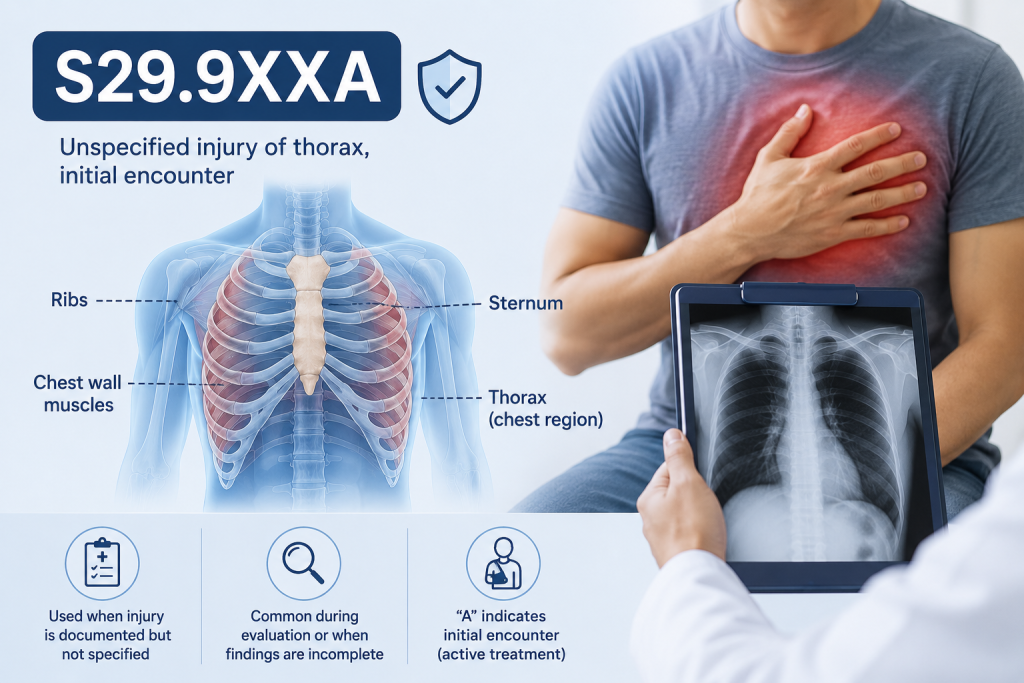
ICD-10-CM Code S29.9XXA is used to report an unspecified injury involving the thorax during an initial encounter. The thorax refers to the chest region of the body and includes structures such as the ribs, sternum, chest wall muscles, connective tissue, and internal areas protected by the rib cage. This code is considered “unspecified” because the provider has documented a thoracic injury without identifying the exact condition or affected structure.
It is most often used when the patient is still undergoing evaluation or when imaging and diagnostic findings are incomplete. During these evaluations, providers may order diagnostic imaging such as a thoracic spine X-ray to assess possible injuries involving the chest or upper back region. The “A” extension at the end of the code indicates that the patient is receiving active treatment during the initial encounter.
When Is S29.9XXA Typically Used?
ICD-10 code S29.9XXA may be assigned in situations where a patient presents with chest trauma or thoracic pain following an injury, but the documentation does not yet support a more specific diagnosis.
In some cases, providers may also evaluate related symptoms such as other chest pain before determining whether the condition involves a confirmed thoracic injury. Common scenarios may include:
- Blunt chest trauma after a fall
- Minor motor vehicle accidents involving chest discomfort
- Sports-related thoracic injuries
- Workplace accidents involving impact to the chest area
- Initial emergency room evaluations before imaging results are finalized
In many cases, providers use the code temporarily until additional testing confirms whether fractures, contusions, strains, or internal injuries are present. Some accident-related injuries may also require coding for car occupant injuries during transport accidents depending on the circumstances documented during the encounter.
Why Documentation Matters With This Code
Because ICD-10 code S29.9XXA is an unspecified injury code, documentation quality becomes especially important. Similar documentation concerns also apply to conditions such as unspecified lower back injuries, where greater diagnostic specificity can help reduce coding and reimbursement issues.
Insurance payers often review unspecified diagnoses more carefully, particularly if the medical record appears to support a more detailed condition. Coding issues commonly occur when providers document broad terms such as “chest injury” or “thoracic trauma” without explaining:
- The affected anatomical structure
- Whether imaging was performed
- The severity of the injury
- Associated symptoms or findings
- The mechanism of injury
Incomplete documentation can lead to coding inaccuracies, delayed reimbursements, or claim denials.
Understanding the Initial Encounter Designation
The seventh character “A” identifies the visit as an initial encounter. In ICD-10-CM coding, an initial encounter does not necessarily mean it is the patient’s first-ever visit. Instead, it means the patient is still receiving active treatment for the injury. Active treatment may include:
- Emergency department care
- Diagnostic imaging
- Surgical evaluation
- Pain management
- Physician assessment and treatment planning
Once the patient moves into routine healing or follow-up care, a different encounter extension would typically apply.
Common Coding Mistakes With S29.9XXA
One common mistake is continuing to use S29.9XXA after more specific findings become available. For example, if imaging later confirms a rib fracture or chest wall contusion, coders should generally report the confirmed diagnosis instead of the unspecified thorax injury code.
Another issue occurs when coders assign S29.9XXA for symptoms alone without documentation supporting an actual injury. Providers and coders should also ensure that the encounter character is accurate, especially when treating follow-up visits related to recovery or healing.
Can S29.9XXA Be Used as a Primary Diagnosis?
Whether S29.9XXA can be reported as the primary diagnosis depends on the provider’s documentation and the level of diagnostic detail available during the encounter. In many trauma-related visits, the code may be appropriate early in the evaluation process before a more specific injury has been confirmed.
When the Code May Be Appropriate
ICD-10 code S29.9XXA may be used as the primary diagnosis when the thoracic injury is the main reason for the encounter and the provider has not yet identified a more specific condition. This often happens during emergency room or urgent care evaluations when a patient presents with chest trauma, tenderness, swelling, or pain after an accident or impact injury.
Why the Code Is Common During Initial Evaluations
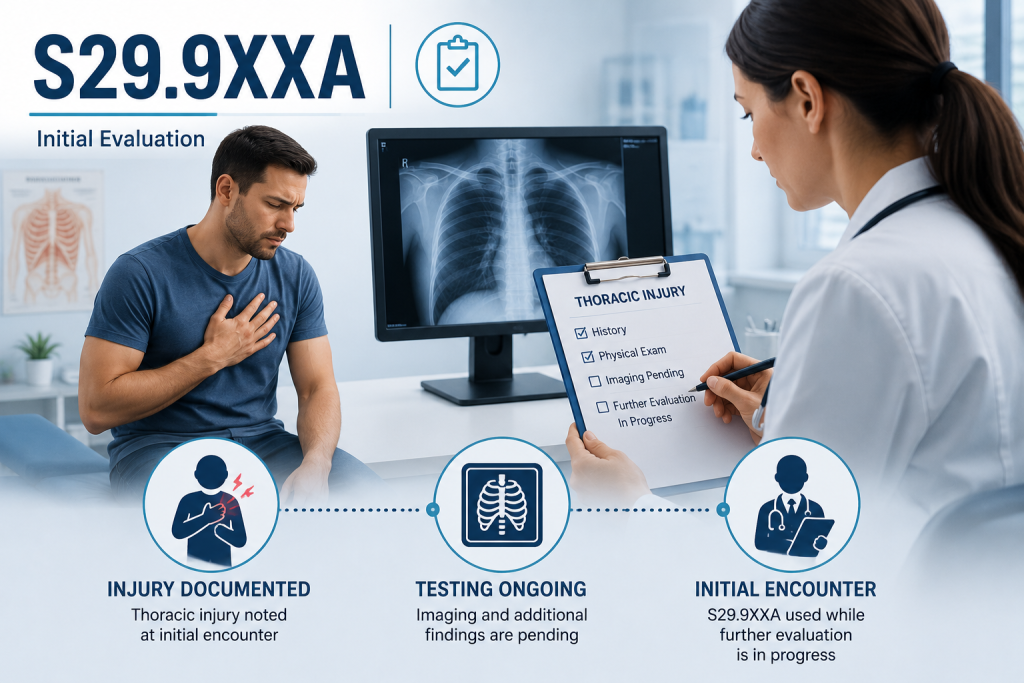
In many cases, providers are still waiting for imaging results or additional clinical findings during the initial encounter. Because of this, the documentation may only support a general thoracic injury diagnosis at the time of treatment. Using S29.9XXA allows the provider to report the injury while further evaluation is still in progress.
When a More Specific Code Should Replace It
The code should generally not continue to be used once the medical record confirms a more detailed diagnosis. For example, if imaging later identifies:
- A rib fracture
- A chest wall contusion
- A sternum injury
- Internal thoracic damage
then coders are expected to assign the more specific ICD-10 code supported by the documentation.
Importance of Accurate Code Selection
Using unspecified injury codes correctly helps maintain coding compliance while still supporting medically necessary treatment during the early stages of care. At the same time, providers should aim for clear and detailed documentation whenever possible to improve claim accuracy and reduce reimbursement delays.
Final Thoughts
ICD-10 code S29.9XXA is used for unspecified thoracic injuries during an initial encounter when the available documentation does not support a more detailed diagnosis. While the code may be appropriate during early evaluations or pending diagnostic review, providers should still aim for clear and specific documentation whenever possible.
Accurate injury coding helps support proper reimbursement, cleaner claim submission, and more reliable clinical records throughout the patient’s treatment process.
About the Author