Vision insurance coverage continues to expand globally, driven by aging populations, rising screen exposure, and increased employer adoption. In the U.S., more than six in ten employers now offer vision benefits, while employees with vision coverage are twice as likely to receive annual eye exams—a factor linked to lower long-term health care costs in 2026. But what happens with those who don’t have any type of vision insurance coverage?
Our team at HealthSure Hub gathered important vision insurance statistics, why the need for vision care is growing and just how important vision benefits have become. This report examines current coverage levels, historical growth, cost impacts, and the structural forces reshaping vision benefits across employers and populations worldwide.
What Vision Insurance Is and How It Works
Vision insurance is a type of health benefit designed to cover routine eye care, including annual eye exams, corrective lenses, and sometimes discounts on procedures like LASIK. Unlike general health insurance, vision coverage is preventive and supplemental, focusing on maintaining eye health rather than treating acute injuries or diseases. It differs from medical insurance in several ways:
- Vision insurance often comes as a separate plan, either employer-provided or purchased individually.
- Coverage usually includes fixed allowances for glasses or contacts rather than unlimited cost coverage.
- Its primary function is preventive care, which can indirectly reduce broader healthcare costs through early detection of systemic conditions.
By keeping vision care accessible and affordable, vision insurance acts as a gateway to overall health monitoring, which traditional health plans may not provide. The problem here with vision insurance, just as with dental insurance, is that the U.S. health system has never added vision or dental care to the standard suite of insurance benefits.
Key Vision Insurance Statistics
- More than 2 billion people worldwide have a vision condition, with over 50% preventable or treatable through access to care.
- Approximately 62% of U.S. employers offer vision insurance as part of their benefits package.
- Employees with vision insurance are twice as likely to receive an annual comprehensive eye exam.
- Employers offering stand-alone vision benefits realized an estimated $5.8 billion in aggregate savings over four years from reduced health costs and productivity losses.
- Roughly 75% of adults use some form of vision correction, indicating widespread demand for vision care coverage.
- Around 63% of Americans lack vision insurance leading to out-of-pocket expenses.
- About 40% of Americans didn’t see an eye doctor or received an eye exam in 2024.
- 25% of U.S. adults have unmet needs for routine vision care due to costs.
- 42% of Americans aged 12–52 are nearsighted, up from 25% in 1971, highlighting the growing need for corrective lenses and eye exams.
Historical Trends & Evolution
| Year | Key Metric | Primary Driver |
| 2019 | Myopia prevalence ~25% (1970s baseline) | Near-work increase |
| 2020 | Vision benefits expansion | Workforce competition |
| 2021 | Screen time up 50% | Pandemic behavior |
| 2023 | Higher utilization among insured | Preventive awareness |
| 2026 | Vision linked to health cost reduction | Early detection economics |
The data shows that access—not awareness—is the primary constraint in vision care utilization. Individuals with vision insurance are significantly more likely to receive annual exams, enabling earlier diagnosis of chronic disease and reducing downstream costs. Conversely, coverage instability tied to employment or state Medicaid policy results in deferred care and worsening outcomes.
Global and U.S. Vision Insurance Statistics Challenges
Vision problems are widespread, with over two billion people affected worldwide, and more than half of these conditions preventable or treatable with proper care. In the U.S., vision issues are equally significant. Based on the vision insurance statistics, nearly 75% of adults use some form of vision correction, highlighting the pervasive need for access to routine eye care. These statistics illustrate that vision insurance is not merely a perk; it is a necessity for ensuring early detection of vision-related and chronic health conditions.
Adoption of Vision Insurance in the U.S.
Despite the growing need, adoption of vision insurance remains inconsistent. As stated in the vision insurance statistics. As per the data from 2022 Employee Benefits Survey, approximately 62% of U.S. employers provide vision benefits, though this varies widely by employer type: 70% of public employers, 83% of multiemployer plans, and 57% of corporate employers include vision coverage.
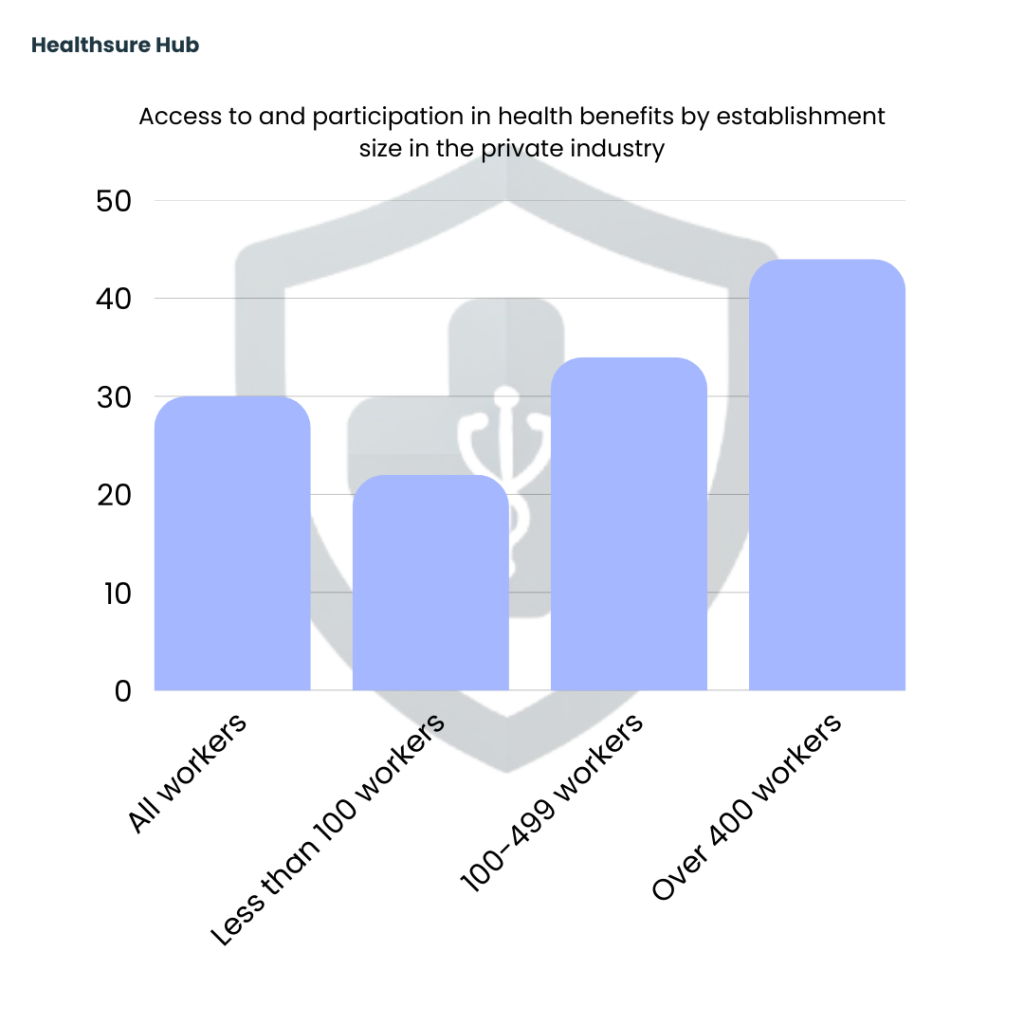
Large companies are far more likely to offer vision benefits than smaller employers. As per the vision insurance statistics based on the Bureau of Labor Statistics (BLS), vision care benefits were available for 22% of workers in companies with less than 100 employees, 34% of private industry workers in companies over 100 to 499 workers, and 44% in establishments with over 500 workers. These gaps reveal opportunities for improved access and strategic benefit design.
Not All Americans Have Access to Vision Insurance
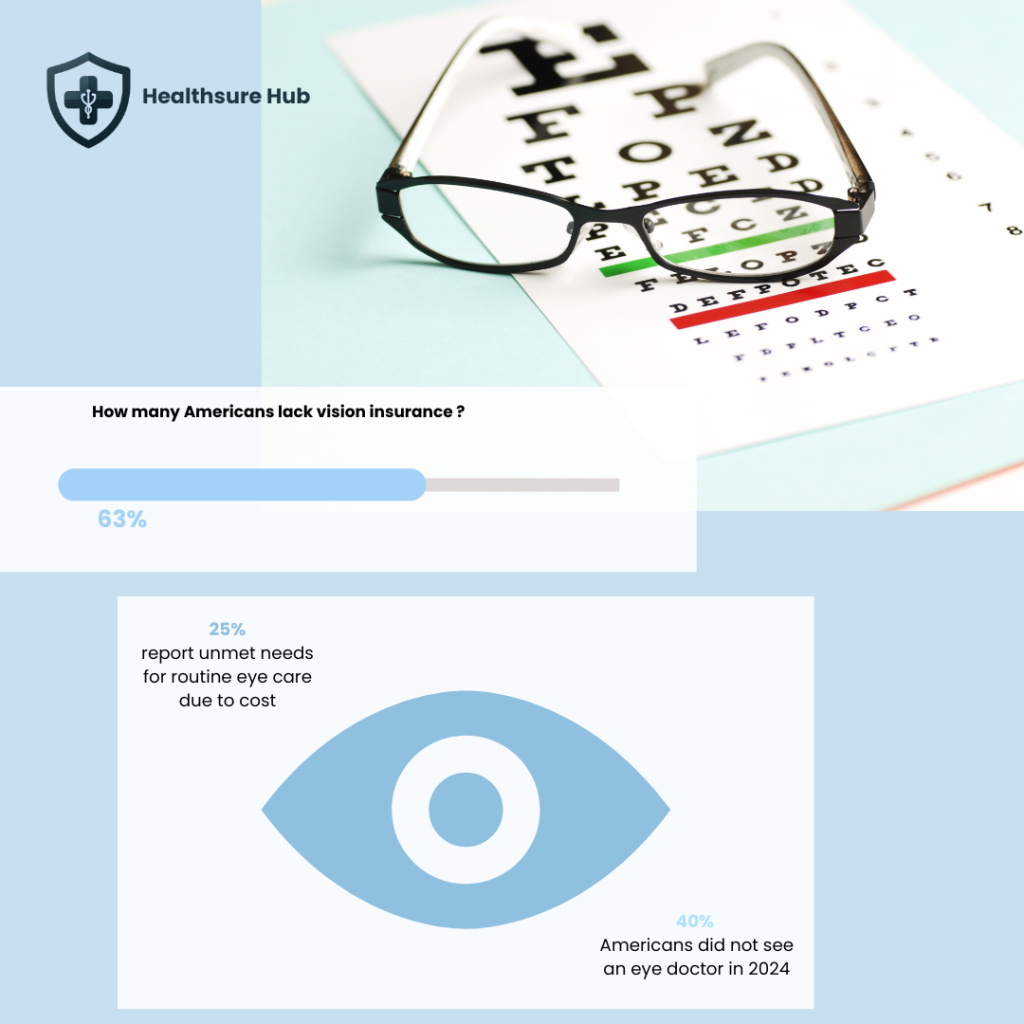
Not all Americans benefit from employer-provided vision insurance. Based on the latest vision insurance statistics, roughly 63% of Americans lack vision coverage, leading to significant out-of-pocket expenses. Among adults, studies show that 25% report unmet needs for routine eye care due to cost, and about 40% of Americans did not see an eye doctor or receive an eye exam in 2024. These statistics highlight the persistent coverage gaps that leave millions without access to preventive eye care, emphasizing the relevance of vision insurance statistics in workforce planning and public health discussions.
Eye Care Behavior and Utilization
Access to vision insurance significantly influences how people engage with eye care services. As shown in the vision insurance statistics, employees with coverage are twice as likely to receive an annual comprehensive eye exam compared to those without. Regular eye exams not only help maintain visual health but can also serve as early detection for chronic conditions like diabetes, high blood pressure, and high cholesterol. This demonstrates that vision insurance statistics are not just about coverage—they reflect behavioral patterns that have tangible health and economic consequences.
The Growing Need for Vision Care
The need for vision care continues to rise. As per the vision insurance statistics, approximately 42% of Americans aged 12–52 are nearsighted, up from 25% in 1971, illustrating the growing prevalence of myopia. Combined with a larger aging population, these trends signal increased demand for corrective lenses, eye exams, and comprehensive coverage. Additionally, 75% of adults rely on some form of vision correction, further underscoring the importance of vision insurance. These trends reveal how vision insurance statistics can inform benefit design and health policy.
U.S. Vision Insurance Market Overview
Over the past five years, the U.S. vision insurance market has expanded steadily, driven by digital transformation and increased adoption of digital health tools that improve access to eye care and enhance consumer engagement. Insurers are leveraging tele-optometry, online benefit management, and data-driven care models to support market growth.
The vision insurance statistics market shows that demand has been further accelerated by the rising prevalence of common vision disorders, an aging population, and increased daily screen time, all of which have pushed insurers to offer more specialized vision insurance products and preventive care initiatives.
In parallel, the growth of online and direct-to-consumer distribution models has reshaped the competitive landscape, requiring insurers to support omnichannel benefit utilization and broader provider networks. As a result, the U.S. vision insurance market reached an estimated $50.6 billion in 2025, reflecting approximately 3.0% revenue growth. Overall, the vision insurance industry has grown at a 1.8% compound annual growth rate (CAGR) over the past five years.

Why Lenses and Frames Matter to Vision Insurance
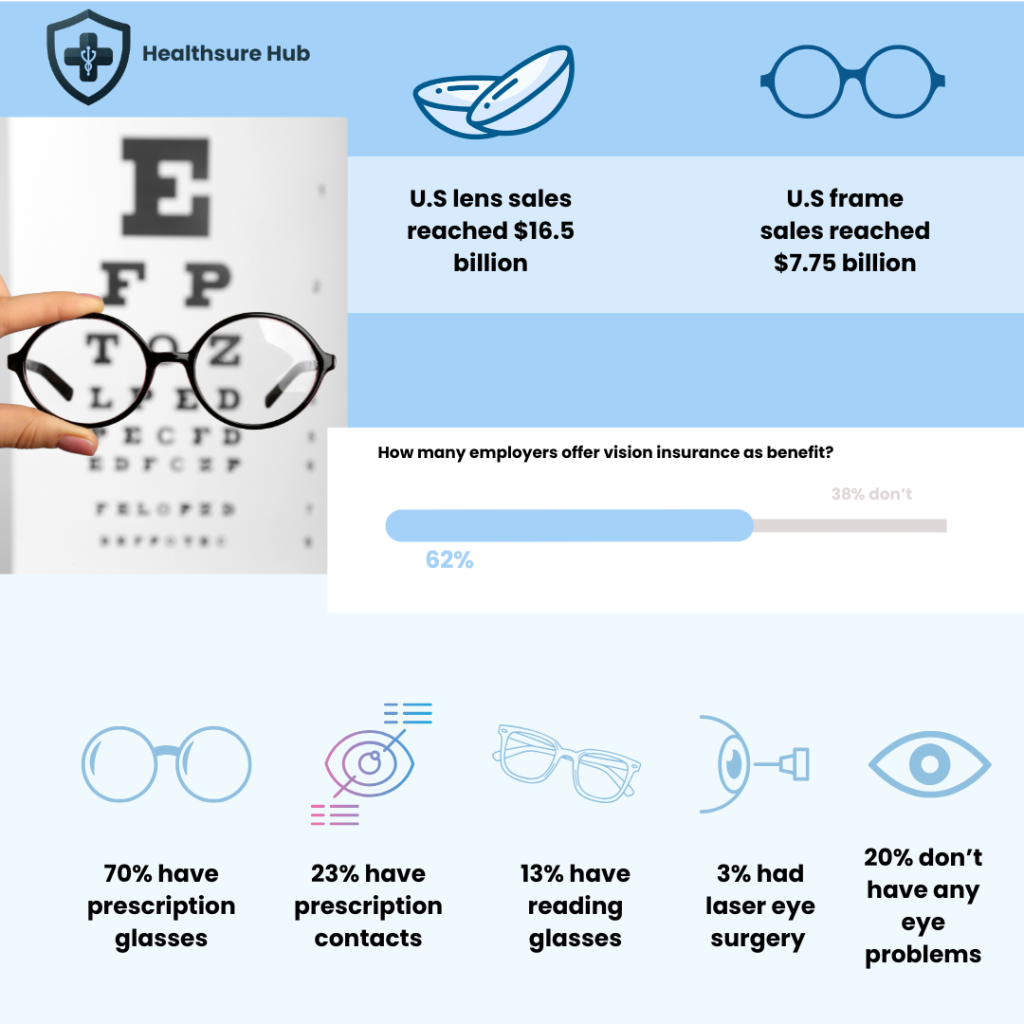
Vision insurance is more than a fringe employee benefit—62% of U.S. employers now offer it. While primarily intended to cover eye exams and corrective lenses, it also plays a critical role in managing predictable consumer demand for eyewear. Lenses and frames are the financial backbone of vision insurance, accounting for the majority of claims. Vision insurance statistics from 2023 show that U.S. lens sales reached $16.5 billion and frame sales $7.75 billion, reflecting a strong, recurring demand fueled by 2–3 year replacement cycles. This behavior translates into reliable claims for insurers and predictable out-of-pocket expenses for policyholders.
This aligns with consumer usage: 70% of Americans wear prescription glasses, 23% wear contact lenses, and 13% use reading glasses, while 3% have had laser eye surgery. Only 20% of the population has no corrective eyewear, demonstrating why vision benefits remain essential for both insurers and policyholders.
Financial and Workplace Impact of Vision Insurance
Providing vision insurance is not just beneficial for health, it also makes economic sense. Employers offering stand-alone vision benefits reported an estimated $5.8 billion in aggregate savings over four years, primarily from reduced health care costs and improved productivity. Employees with vision coverage are more likely to maintain regular eye exams, detect chronic conditions early, and avoid costly medical interventions. These vision insurance statistics highlight that vision insurance is a strategic investment, benefiting both employees and employers.
Trends Driving Vision Insurance Uptake
Several structural factors are driving increased interest in vision coverage. The aging U.S. population experiences more vision-altering conditions such as presbyopia, macular degeneration, and glaucoma. Rising myopia rates among children and young adults are influenced by increased near-work activities and screen time. Additionally, regulatory frameworks like the ACA mandate pediatric vision coverage, creating awareness gaps for adult employees. Collectively, these trends explain why vision insurance statistics show steady growth in adoption and utilization.
Strategic Insights for Employers and Policymakers
Vision insurance is increasingly recognized as more than a fringe benefit. Coverage helps attract and retain talent, reduces absenteeism, and supports workforce productivity. As 62% of U.S. employers offer vision benefits and adoption continues to grow, organizations that prioritize eye care as part of a broader health benefits strategy can gain measurable advantages. For policymakers, these statistics underscore the ongoing need to address coverage gaps, particularly for low-income adults and employees of smaller firms.
Conclusion
Vision insurance has changed from a niche perk into an essential component of employee benefits, yet gaps remain. Coverage disparities, unmet care needs, and rising vision problems signal the ongoing importance of improving access. Our analysis of vision insurance statistics shows that adoption drives better health outcomes, supports early detection of chronic conditions, and offers measurable economic benefits. Understanding these trends is critical for employers, decision-makers, and researchers looking to optimize health benefits programs.
Sources:
https://www.who.int/news-room/fact-sheets/detail/blindness-and-visual-impairment
https://www.ifebp.org/detail-pages/resource/survey/employee-benefits-survey–2024-survey-report
https://www.bls.gov/news.release/pdf/ebs2.pdf
https://www.ibisworld.com/united-states/industry/vision-insurance/5914
https://visionexecutives.com/blog/the-us-vision-council-2023-stats
https://www.nvisioncenters.com/finding-an-eye-doctor
https://www.ramusa.org/05/uninsured-millions-have-no-health-dental-or-vision-insurance
https://pmc.ncbi.nlm.nih.gov/articles/PMC7982707
https://usrxcare.com/vision-coverage-can-reduce-overall-health-care-costs
About the Author