Medical billing and coding is often seen as one of the more challenging behind-the-scenes roles in healthcare. It involves working with detailed documentation, complex insurance requirements, and thousands of diagnosis and procedure codes. For someone new to the field, it can easily feel confusing or intimidating.
Because of this, many people ask the same question early on: Is medical billing and coding hard? The honest answer is that it can be difficult at first, especially while learning medical terminology, coding systems, and billing rules. However, once you understand the structure and gain hands-on experience, the work becomes far more routine and manageable.
Why Medical Billing and Coding Feels Difficult at First
For most beginners, the difficulty comes in the early learning stage. You are not just memorizing codes; you are learning an entire healthcare reimbursement system. This includes understanding how insurance companies evaluate claims, what documentation is required, and how small medical billing errors can lead to claim denials or payment delays.
What Makes It Easier Over Time
While the learning curve is real, medical billing and coding becomes significantly easier with experience. Getting the right amount of information is a major hurdle. There are over thousands of codes and they update regularly. On top of the codes there are different rules and guidelines for each insurance payer. Information required for one payer may be rejected for another.
Yet another reason it seems so hard is that the level of accuracy needed is so high. In medical billing and coding, a tiny error/incorrect modifier or the omission of a detail can result in the claim being rejected. So practitioners learn to aim for very high standard attention to detail and methodical processes.
The Most Common Challenges in Medical Billing and Coding
Medical billing and coding can feel overwhelming in the beginning, especially for those without a healthcare background. The work requires accuracy, strong attention to detail, and the ability to follow strict payer and compliance rules. Below are the most common challenges beginners face.
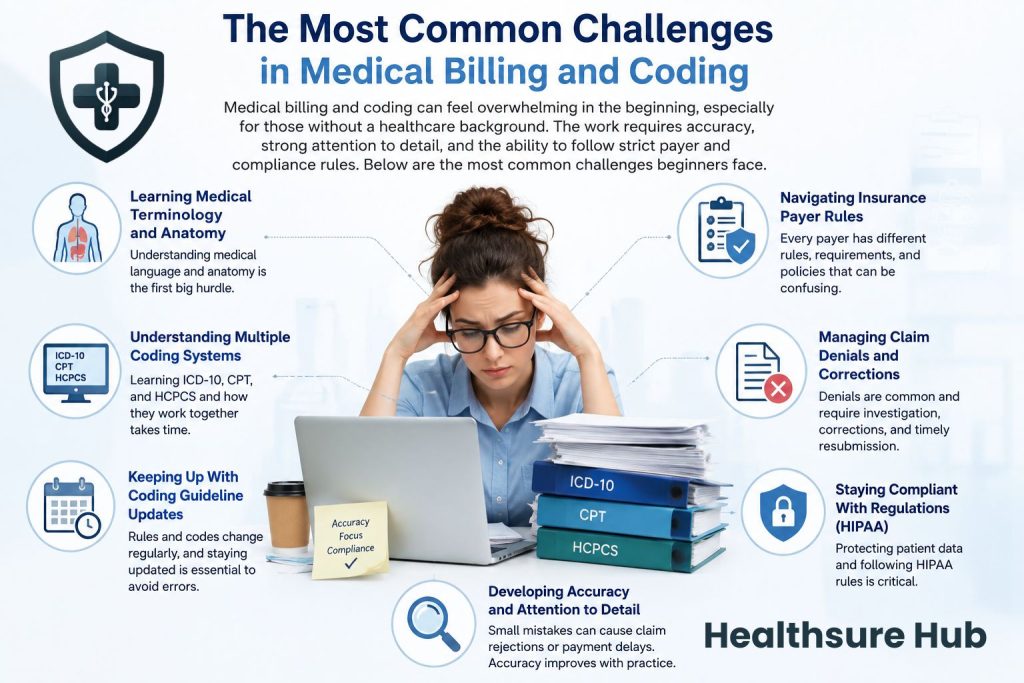
Learning Medical Terminology and Anatomy
One of the first hurdles is understanding medical language. Coders must recognize diagnoses, symptoms, procedures, and anatomy terms in order to apply the correct codes. Without this foundation, it becomes difficult to interpret provider documentation accurately.
Understanding Multiple Coding Systems (ICD-10, CPT, and HCPCS)
Medical billing and coding is not based on one code set. Coders often work with:
- ICD-10 for diagnoses
- CPT for procedures
- HCPCS for supplies, equipment, and certain services
Learning how these systems work together can take time, especially for new professionals.
Keeping Up With Coding Guideline Updates
Coding rules are updated regularly, and even small changes can affect reimbursement. Coders must stay current with annual ICD-10 updates, CPT revisions, and payer-specific changes to avoid mistakes that lead to denials.
Navigating Insurance Payer Rules
Different insurance companies often have different documentation requirements, coverage rules, and claim policies. What gets approved by one payer may be denied by another, which makes billing more complex than simply submitting codes.
Managing Claim Denials and Corrections
Denials are common in medical billing, especially when documentation is incomplete or coding is inaccurate. Billers must review denial reasons, correct errors, and resubmit claims in a timely way to prevent revenue loss.
Staying Compliant With Healthcare Regulations (HIPAA)
Medical billing and coding professionals work with sensitive patient data, which means compliance is critical. HIPAA rules must be followed carefully to avoid privacy violations and legal issues.
Developing Accuracy and Attention to Detail
Even small mistakes, such as a missing modifier or an incorrect code, can cause delayed payments or rejected claims. Over time, coders develop strong accuracy habits and begin recognizing patterns rather than relying on memorization.
Impact of Training and Certifications Courses
Training programs and certification courses also play a major role in it. Many learners start by focusing on foundational knowledge for example medical terminology, anatomy basics, and coding guidelines before moving into claim processing and billing workflows.
In real-world settings, beginners often start with simpler responsibilities such as charge entry or claim review. As they gain confidence, they gradually learn more complex tasks like denial management and coding audits.
The Role of Medical Billing in Healthcare Operations
Medical billing and coding is rarely a standalone function in healthcare. It plays a key role in the broader revenue cycle management (RCM) process, helping providers receive accurate reimbursement for the care they deliver.
In larger practices and hospital systems, billing workflows can become complex due to high claim volume, payer-specific rules, and frequent denial follow-ups. For this reason, many organizations rely on internal billing departments or external medical billing support to help manage claim submission, payment tracking, and appeals. When billing processes are organized and consistent, it reduces delays and improves overall financial efficiency.
So, Is Medical Billing and Coding Hard?
The answer is basically it is challenging at the beginning but very manageable with the right training and experience. Like many healthcare careers, it requires discipline, attention to detail, and a willingness to learn structured processes.
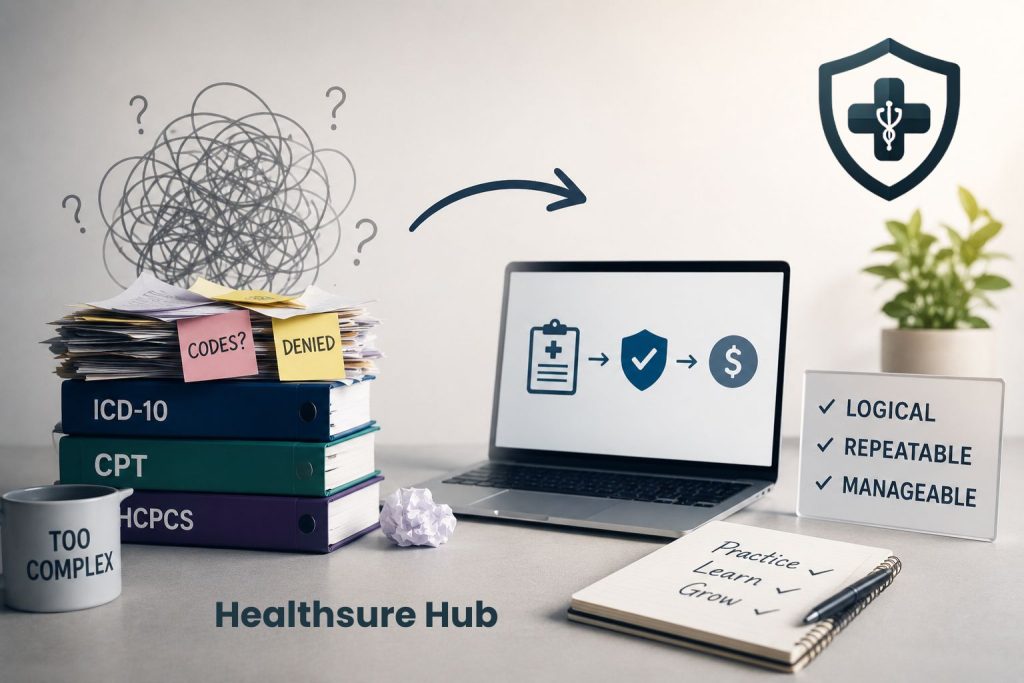
What makes it seem hard in the beginning is that the user is unfamiliar with the medical system and insurance flow. Though once users become familiarized with the flow, the flow is logical and can be repeated many times. Fortunately after a few months many professionals have said it’s second nature.
Conclusion
Medical billing and coding can feel difficult at first because there is a lot to learn, medical terminology, coding systems, payer rules, and documentation requirements. However, once you understand how the process works, the job becomes far more structured and predictable.
Like many healthcare roles, success comes from practice, attention to detail, and staying current with guideline updates. For individuals who enjoy organized, rule-based work and are comfortable working with data and documentation, medical billing and coding can be a reliable and long-term career with strong demand across the healthcare industry.
About the Author