Knee pain is a routine complaint in clinics, urgent care, orthopedics, and physical therapy. From a coding perspective, it’s also one of those symptoms that can be easy to bill or frustrating, depending on how specific the provider documentation is.
When the note doesn’t clearly state which knee is affected, coders often turn to ICD-10 code M25.569. It’s a valid diagnosis code, but it should be used carefully, especially when laterality is documented elsewhere in the chart. In this guide, Healthsure Hub breaks down what this code means, when it’s appropriate, and how to avoid common billing mistakes.
What is ICD-10 Code M25.569 in Medical Billing?
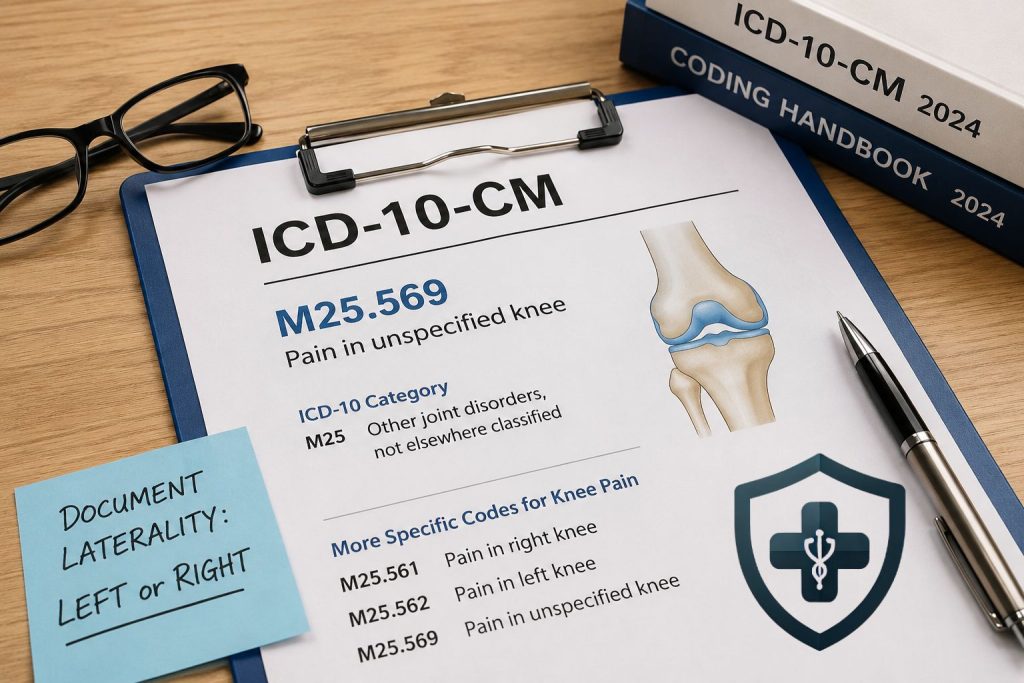
ICD-10 code M25.569 is defined as, pain in an unspecified knee. In plain terms, this ICD code is used when a patient has knee pain, but the documentation does not specify whether the pain is in the left knee or the right knee. Knee pain itself is an extremely common complaint. Research shows that knee pain affects approximately 25% of adults, and its prevalence has increased significantly over the past two decades, accounting for millions of primary care visits each year.
This code falls under the ICD-10 category M25 (Other joint disorders, not elsewhere classified). It’s considered an unspecified laterality code, meaning the condition is known, but the side is not documented. That detail matters because ICD-10 has more specific codes available for knee pain, including:
- M25.561 – Pain in right knee
- M25.562 – Pain in left knee
- M25.569 – Pain in unspecified knee
From a billing perspective, the code is valid and billable, but it should only be used when laterality truly isn’t documented anywhere in the medical record.
Why ICD Code M25.569 Is Used So Often
Knee pain is a broad symptom, and many patient visits begin with complaints before the provider has enough information to identify the true diagnosis. Early encounters often focus on evaluation, physical exam findings, and ordering imaging. In many cases, the provider won’t document anything more specific than “knee pain” until X-ray or MRI results come back.
That’s why ICD-10 code M25.569 appears so often on claims, especially during first-time visits, acute pain complaints with an unclear cause, follow-ups while diagnostic testing is pending, orthopedic evaluations, and physical therapy referrals where the chart simply lists “knee pain.” On its own, that isn’t a problem. The issue starts when the documentation actually includes laterality, but this code is still selected out of habit or speed.
When M25.569 Is the Correct Code to Use
The best way to think about M25.569 is simple: it’s appropriate when the record doesn’t support right or left. You should use this code when:
- The provider documents “knee pain” without specifying side
- The chief complaint lists knee pain but laterality is missing
- The note lacks any mention of right knee or left knee
- The visit is documented in a way that makes laterality unclear
This code is especially common in urgent care documentation, where notes are short and focused on symptom relief. It can also appear in administrative documentation where the referral is vague. For example, a referral might simply state “knee pain” without specifying which knee the patient is being evaluated for. In those cases, coders are limited to what is actually documented.
When You Should NOT Use ICD-10 Code M25.569
Even though M25.569 is a billable ICD-10 code, it should not be used when the chart contains enough information to code more specifically. You should avoid using it when:
- The provider mentions “right knee pain” anywhere in the note
- The assessment states “left knee pain”
- Imaging orders specify a side (example: “X-ray left knee”)
- Physical exam findings clearly reference one knee
- The diagnosis list includes laterality
One of the most common coding mistakes is ignoring the imaging order section. Providers often document “knee pain” in the assessment but place an order like “XR Knee Right 3 Views.” That imaging order is usually enough to justify using the right-sided code.
Common Billing and Coding Scenarios for M25.569
M25.569 is often billed with evaluation and management (E/M) services, imaging, or therapy referrals. But the code itself doesn’t explain the cause of pain, which is something coders should keep in mind. Here are examples of typical claim combinations:
- A primary care visit for knee pain may include an office visit code (99202–99215 depending on complexity) paired with the ICD-10 code.
- An urgent care visit may include a basic E/M code and possibly imaging services.
- An orthopedic evaluation might include this code initially, but later visits may switch to more specific diagnoses like osteoarthritis, meniscal tear, or ligament injury once confirmed.
This progression is normal and expected. Many knee pain visits start with symptom coding and later transition to definitive diagnosis coding.
Documentation Tips That Help You Avoid Unspecified Codes
Unspecified codes like M25.569 aren’t automatically incorrect, but they can lead to delays when insurance payers want clearer justification, especially if imaging or specialist care is involved.
The biggest fix is simple: laterality. If the provider documents right or left knee pain, you can code more accurately. If they don’t, you’re stuck using the unspecified option. Even a short note like “pain in the left knee” makes the claim cleaner and reduces billing issues later.
M25.569 vs. Injury and Arthritis Codes
A common coding mistake is using M25.569 anytime a patient reports knee pain. In reality, knee pain is often tied to a more specific diagnosis, and if that diagnosis is documented, it should usually be coded instead.
For example, if the provider confirms osteoarthritis, a meniscus tear, or a knee sprain, those condition-specific ICD-10 codes are typically more accurate and often better support imaging, referrals, and treatment plans.
The code is best used when the provider only documents knee pain and no confirmed underlying condition is listed.
Claim Denial Risk and Why Specificity Matters
Most payers will accept M25.569, especially for routine office visits. But the risk of insurance denial increases when knee pain is tied to expensive services like MRIs, surgical consultations, or repeated therapy sessions.
Some payers may question why imaging is being ordered if the diagnosis is too vague. Others may accept it but later request medical records during review. Specificity matters because it improves the medical necessity story behind the claim.
Even switching from M25.569 to M25.561 or M25.562 can make a difference. It shows the condition was documented clearly and the service was tied to a specific body location. In billing terms, cleaner diagnosis coding often equals cleaner reimbursement.

Best Practices for Coders and Billing Teams
If you work in coding or billing, the best approach to M25.569 is to treat it as a “use only when needed” code. It’s not wrong, but it’s not ideal. Here are a few practical best practices that can help reduce coding errors:
- Always check the HPI and physical exam sections for laterality
- Review imaging orders, referrals, and procedure notes for side-specific details
- Don’t rely only on the problem list if narrative documentation is clearer
- Query the provider if the record suggests laterality but doesn’t explicitly state it
- Avoid using M25.569 repeatedly across multiple visits if laterality is known
The goal is not to eliminate unspecified codes completely. The goal is to make sure you’re using them for the right reason.
Final Thoughts
ICD-10 code M25.569 is used for pain in an unspecified knee when the provider does not document laterality. It’s valid, but it should never be the default choice if the chart clearly identifies the left or right knee.
When possible, code to the highest specificity and use M25.569 only when the documentation truly doesn’t support a more detailed option. That simple habit helps prevent claim issues and keeps billing cleaner.
About the Author