Among respiratory symptom codes, R06.00 stands out as one of the most frequently applied entries when patients present with unexplained breathing difficulty. Its application supports accurate documentation during the early stages of patient evaluation, where diagnostic clarity may still be developing.
At HealthSure Hub, we explain how the code functions within the ICD-10 framework and how essential it is for clinicians, medical coders, and healthcare administrators who aim to maintain both clinical accuracy and coding compliance.
Overview of R06.00 and Its Clinical Role
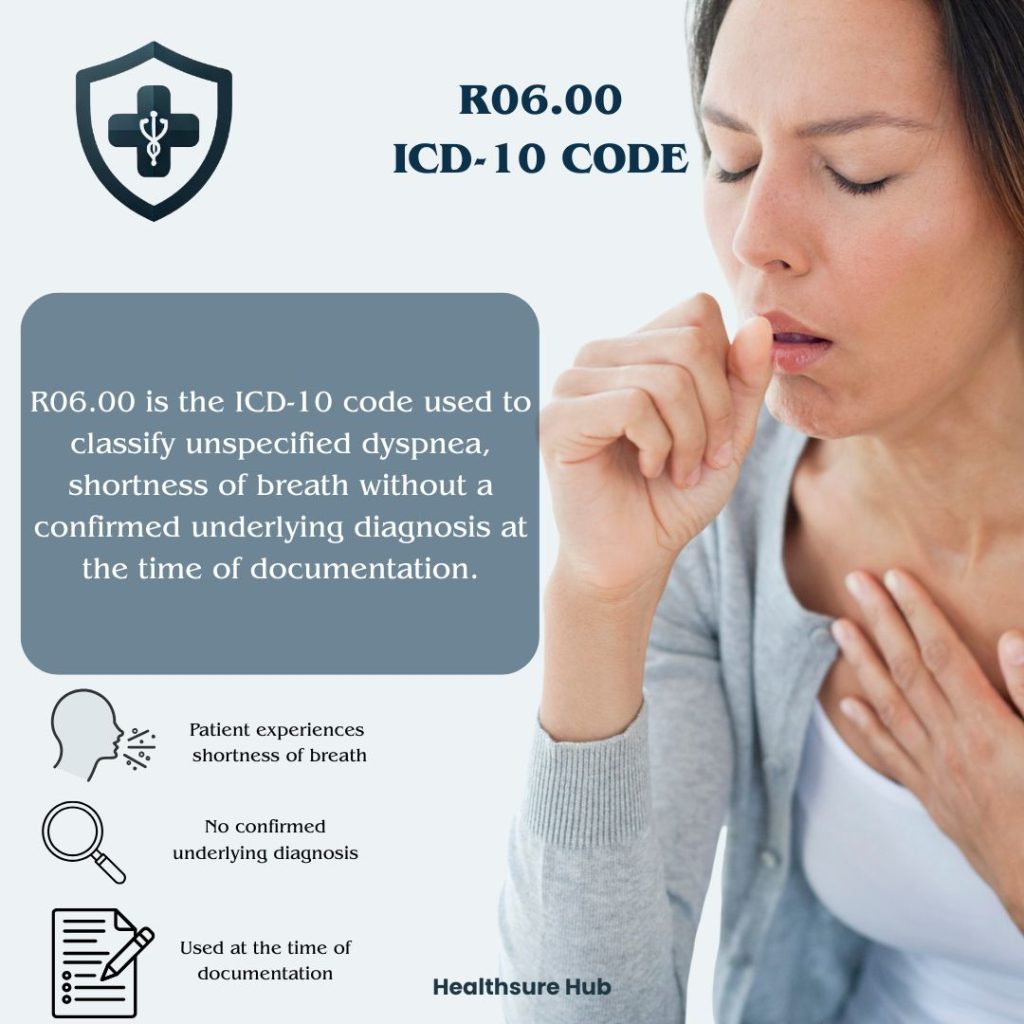
R06.00 is the ICD-10 code used to classify unspecified dyspnea, meaning the patient experiences shortness of breath without a confirmed underlying diagnosis at the time of documentation.
The ICD-10 classification system organizes symptoms and diseases into structured categories, and the said ICD-10 code falls under respiratory and thoracic symptom codes.
In clinical practice, this code is commonly used as an initial coding entry when patients present with breathing difficulty that may later be linked to cardiovascular, pulmonary, metabolic, or psychological conditions. This makes the code particularly important in early-stage evaluations where symptoms are clear, but the cause is still under investigation.
From a coding and documentation perspective, the ICD-10 code helps maintain clinical continuity across providers by ensuring that the symptom is consistently recorded while diagnostic work is ongoing. It supports accurate tracking of patient presentation until a more specific diagnosis can be confirmed and updated in the medical record.
Breaking Down the Structure
Understanding R06.00 becomes easier when analyzing its structure within the ICD-10 framework. The “R” category refers to symptoms, signs, and abnormal clinical findings not classified elsewhere. The “06” segment focuses specifically on respiratory abnormalities, while the “.00” suffix indicates an unspecified form of dyspnea.
This structure shows that R06.00 is not a disease diagnosis but a symptom-based classification. It allows clinicians to document patient presentation without prematurely assigning a definitive condition. In this way, R06.00 supports diagnostic accuracy and prevents misclassification during early evaluation stages. Other respiratory symptom codes, including R06.89, may be considered when breathing abnormalities are documented more specifically than unspecified dyspnea.
Clinical Meaning of Dyspnea
Dyspnea, the clinical term for shortness of breath, is a subjective symptom that varies widely among patients. In the context of this ICD-10 code, it may present as difficulty breathing at rest, during exertion, or even while lying down.
The symptom often reflects underlying physiological stress in the respiratory or cardiovascular system. Because of its non-specific nature, this specific code is used when dyspnea is documented but not yet linked to a confirmed diagnosis. This makes it a crucial early indicator in clinical workflows, especially in acute care environments.
Common Underlying Causes
Patients coded with the said code may present with a wide range of possible underlying conditions. Cardiovascular causes such as heart failure or ischemic disease are frequently investigated, along with respiratory conditions like asthma, chronic obstructive pulmonary disease, and pneumonia.
Metabolic imbalances, anemia, and anxiety-related disorders can also contribute to symptoms recorded under R06.00. In many cases, environmental triggers such as allergens or physical exertion may temporarily worsen breathing difficulty. This broad range of potential causes highlights why R06.00 is kept as a symptom-based code rather than a diagnostic label.
Clinical Evaluation and Diagnostic Approach
When this ICD-10 code is documented, clinicians typically initiate a structured diagnostic process to identify the root cause of dyspnea. This often begins with a detailed patient history focusing on onset, severity, and triggers of symptoms.
Physical examination may reveal abnormal breath sounds, oxygen desaturation, or signs of cardiovascular strain. Diagnostic testing can include chest imaging, electrocardiograms, blood gas analysis, and pulmonary function testing. These evaluations help narrow down the underlying cause and determine whether the code should later be replaced with a more specific diagnosis.
When R06.00 Is Applied in Medical Coding
The ICD-10 code is used when a patient presents with shortness of breath but no confirmed diagnosis is available at the time of documentation. It is commonly applied in emergency departments, urgent care settings, and initial outpatient evaluations.
Once further diagnostic clarity is achieved, R06.00 may be replaced with a more specific condition code. This ensures that medical records reflect the most accurate clinical picture over time while maintaining continuity during the diagnostic process.
Documentation Standards Supporting R06.00 Usage
Accurate documentation is essential when using this ICD-10 code in clinical records. Providers are expected to clearly describe symptom characteristics such as duration, intensity, and associated factors.
Well-documented cases improve coding accuracy and reduce claim denials in medical records. In addition, detailed notes support appropriate reimbursement and ensure that the specific code is justified within the clinical context. Clear documentation also facilitates smoother communication between healthcare providers.
Common Coding Errors
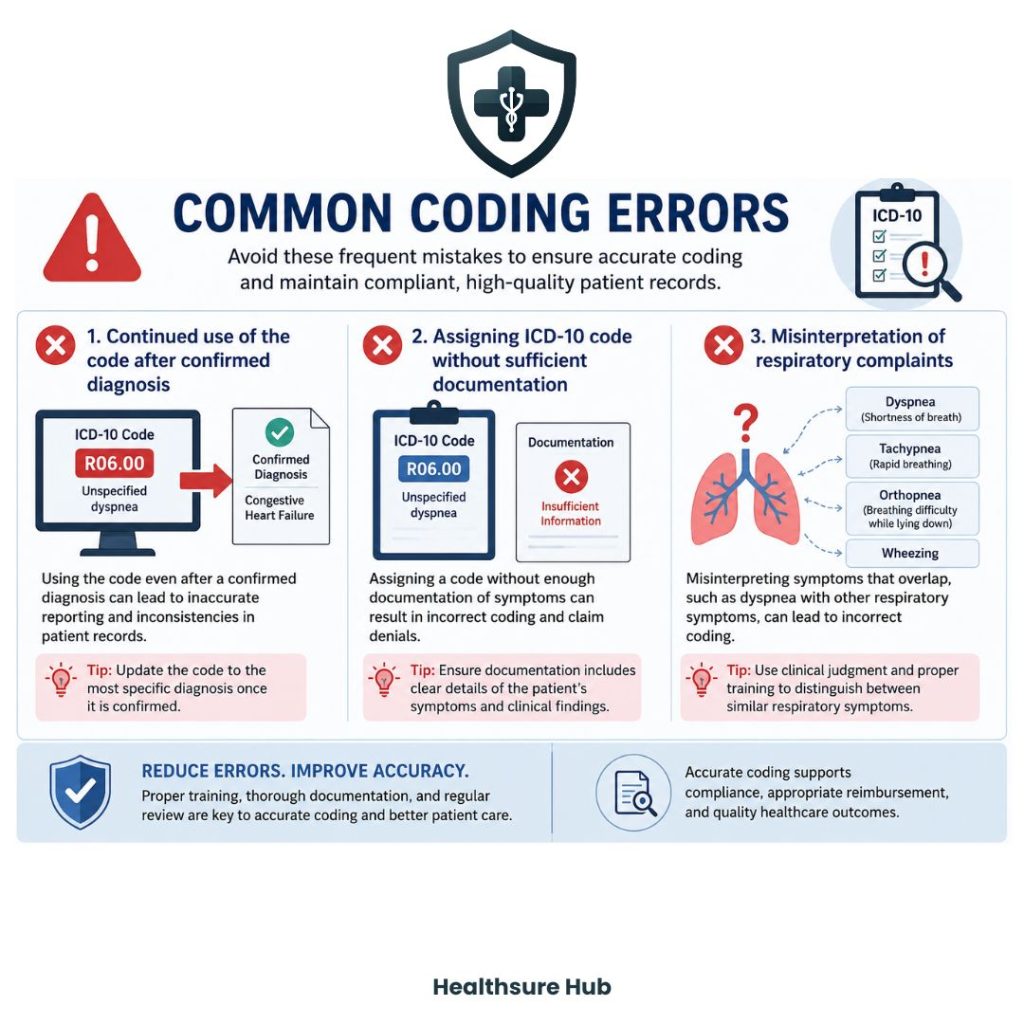
One frequent issue in clinical coding is the continued use of the code even after a confirmed diagnosis has been made. This can lead to inaccurate reporting and inconsistencies in patient records.
Another common error involves assigning ICD-10 code without sufficient documentation of symptoms. Misinterpretation of respiratory complaints can also result in incorrect coding, especially when dyspnea overlaps with other respiratory symptoms. Proper training and documentation review help reduce these errors significantly.
Conclusion
R06.00 plays a foundational role in capturing one of the most common yet complex clinical symptoms—shortness of breath. Its use allows healthcare providers to document respiratory distress accurately while continuing diagnostic evaluation.
By supporting structured assessment, clinical communication, and proper coding practices, R06.00 remains an essential part of modern medical documentation. When used correctly, it strengthens both patient care pathways and healthcare data reliability across clinical systems.
About the Author